
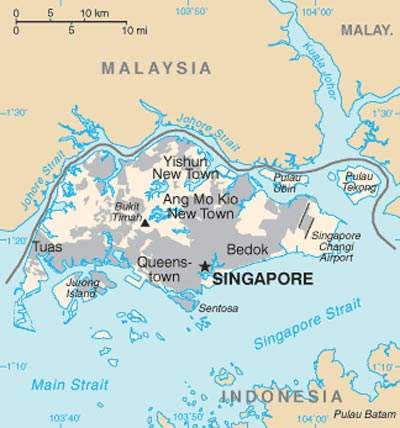
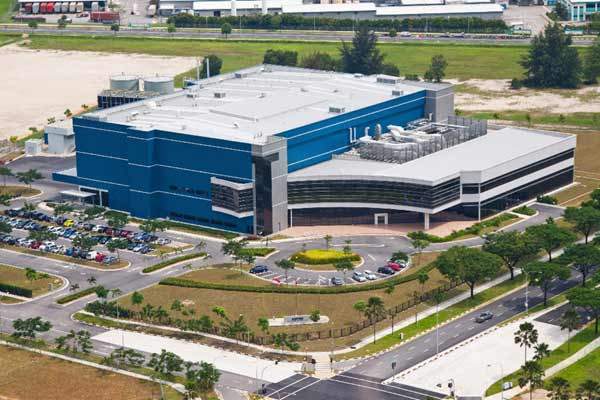
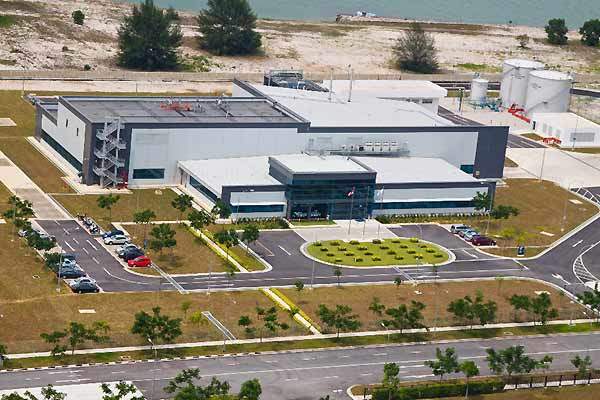
Lonza Biologics Singapore has built a large-scale cell culture manufacturing facility in Singapore’s Tuas Biomedical Park. The plant was purchased by Genentech Singapore on 31 August 2009 for approximately $290m.
To produce Avastin at this facility, Genentech had entered into an agreement with Lonza in November 2006. The agreement contained an option for Genentech to buy the facility between 2007 and 2012, while the option was executed in 2009. The plant is mechanically complete.
Recommended White Papers

Recommended Buyers Guides

The plant has been merged with Genentech Singapore’s own biologic manufacturing facility. Genentech leased land in Singapore in March 2007, for constructing and developing a 1,000l E coli manufacturing plant, for the production of Lucentis.
The plant’s construction began in June 2007. The combined facility is expected to play a key role in widening the global manufacturing network of Genentech’s parent company Roche.
In November 2010, the E coli manufacturing plant was awarded 2010 facility of the year award by ISPE. The award recognises advanced pharmaceutical manufacturing projects that adopt novel and innovative technologies to improve project delivery and produce high quality drugs at lower costs.
The facility was chosen for its innovative project execution. It underwent engineering start up through the initial GMP qualification within 24 months.
Genentech Singapore facility
The Genentech Singapore biologics plant has the capacity to ferment 80,000l. It is equipped with four large 20k bioreactors of stainless steel. Each of the bioreactors is complete with the necessary upstream and downstream equipment. There is also a 1k production reactor in the plant, with the necessary upstream and downstream equipment.
Genentech’s E coli manufacturing facility extends 60,000ft² with space for process as well as infrastructure. The plant is equipped with a 1,000l fermenter train and a purification train.
Process technology
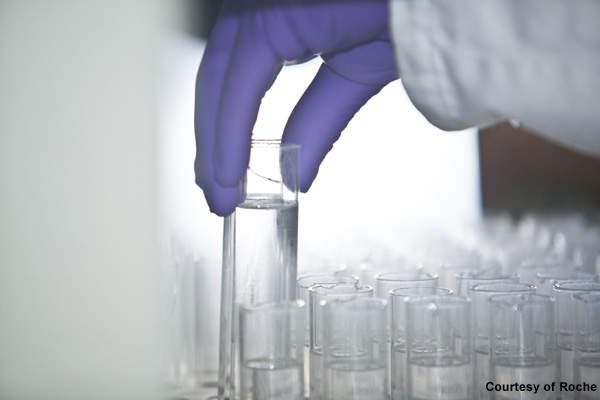
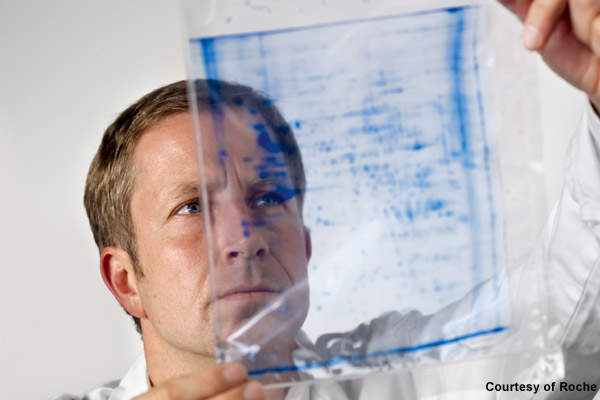
The biologics manufacturing facility uses bacteria cells to manufacture the drugs. Acting as mini factories, these cells produce the required proteins that are used to manufacture complex protein-based pharmaceuticals. To produce the proteins, cells are developed and transferred into large bioreactors, where they are multiplied, synthesised and then purified.
The process begins first by engineering the cell genetically. A cell line is created by reproducing the engineered cell and making thousands of copies. Until the manufacturing process begins, this cell line is frozen and stored.
In the production process, tiny bottles of thawed cells are allowed to grow under controlled conditions for a number of days. After several rounds of reproduction are completed, the cells are shifted to large bioreactors for fermentation.
In the bioreactors, the cells are allowed to grow for another two weeks. During this time, the protein or antibody is generated. As the protein or antibody is secreted into the cell culture media, the initial stages of the purification process separate the cells from the media.
To remove any unwanted elements including cellular remains, undesirable proteins, salts and minerals the media is further purified in several additional steps.
With the end of the purification process, the final product is released for human consumption. Before it is delivered to doctors, hospitals and pharmacies across the globe, the mass product is processed according to its final formulation.
Pharmaceuticals production
The Genentech Singapore facility will manufacture Avastin (bevacizumab) and Herceptin. Also used for treating wet or neovascular forms of age-related macular degeneration, Avastin primarily provides first or second-line treatment to patients with metastatic carcinoma of the colon or rectum. Herceptin is used for providing adjuvant treatment to patients suffering with HER-2 positive breast cancer.
The E coli plant will produce Lucentis, a drug used for treating patients with wet age-related macular degeneration. One of the most common causes of vision loss, age-related macular degeneration causes the central retina of the eye to deteriorate.
Genentech’s biotech manufacturing facilities
A fully owned subsidiary of Roche, Genentech is an industry leader in biologics manufacturing. It has about 330,000l of cell growth and fermentation capacity. Excluding the plant in Singapore, Genentech operates three facilities, all of them located in California.
