
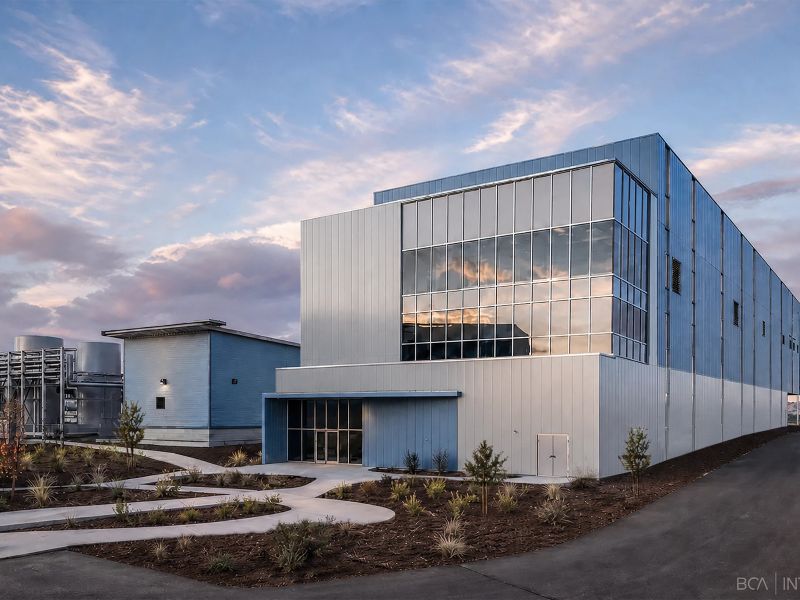
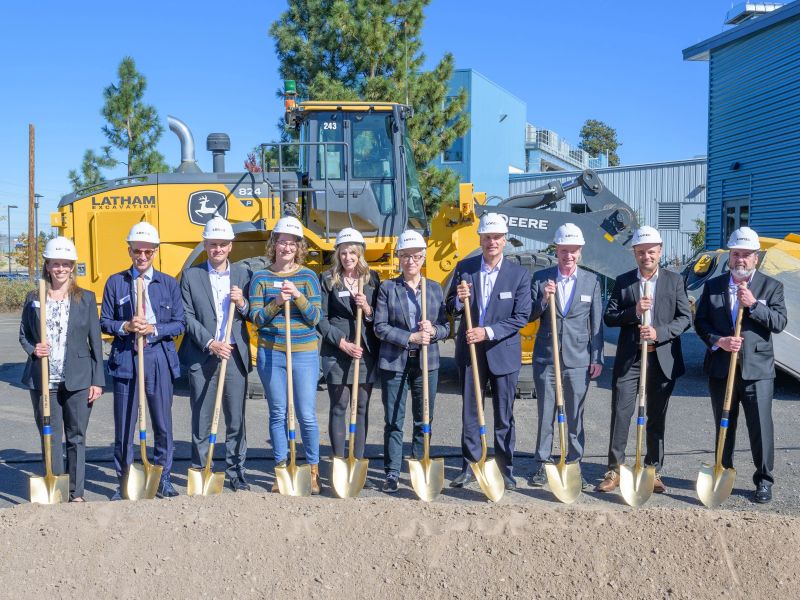
Lonza, a contract development and manufacturing organisation, is building a large-scale commercial spray-drying facility at its existing site in Bend, Oregon, US.
The new site will expand the company’s manufacturing base and provide commercial-scale spray-drying PSD-4 capacity in the US.
Recommended White Papers

Recommended Buyers Guides

Construction of the facility commenced in September 2026, with completion targeted for 2029.
The project is expected to generate around 650 construction jobs over the course of the build and more than 80 new operational roles once the facility is online.
Location
Lonza’s new commercial spray-drying facility will expand the company’s existing operations in Bend, Oregon, US, a site with a long-standing track record in scientific innovation and pharmaceutical manufacturing.
For close to five decades, the Bend site has supported pharmaceutical and biotechnology companies in developing and manufacturing medicines using advanced particle engineering and spray-drying technologies.
During this period, the site has been involved in the evaluation or development of more than 2,000 potential medicines and currently supports a broad spectrum of pharmaceutical programmes, ranging from early stage research to commercial-scale manufacturing.
Locating the new facility at the Bend site enables Lonza to bring capacity closer to key customers and support more regionalised, resilient supply chains for critical therapies in the US market.
Lonza commercial spray-drying facility details
The new commercial spray-drying facility will house two advanced PSD-4 spray-drying units, with design provisions that allow capacity to be expanded in line with future demand.
The facility will allow Lonza to meet the increasing demand for a full spectrum of spray-dried dispersion (SDD) capabilities to support customer projects from clinical development through to commercial supply.
Demand for SDD contract development and manufacturing services has expanded as pharmaceutical pipelines grow more scientifically complex and the proportion of poorly soluble active ingredients rises. A substantial share of clinical-stage molecules now requires bioavailability enhancement.
The expansion will address this market demand, particularly within the US, giving pharmaceutical clients direct access to an integrated, end-to-end development and manufacturing platform for small-molecule medicines and other modalities including biologics and mRNA therapies.
The project includes the implementation of energy-efficient utility and process systems, as well as upgraded emission control technologies, with the aim of lowering the site’s overall energy requirements.
Further enhancements at the Bend site will comprise additional supporting infrastructure for solvent handling and storage.
Incentives
Initial capital and equipment expenditures will be partially offset by a $1.6m grant from the governor’s Strategic Reserve Fund, which is a discretionary funding mechanism that supports a range of projects designed to advance economic development.
Spray-drying technology details
Spray drying is an advanced pharmaceutical manufacturing technique used to improve how medicines are absorbed in the body. The process converts liquid formulations into finely engineered powders with defined physical properties, which can enhance drug dissolution and uptake. As drug molecules become more complex, such technologies are increasingly important in enabling the development of new therapies.
Lonza’s SDD platform encompasses specific compositions, processes and dosage forms that are designed and qualified to meet performance, stability and manufacturability requirements across a wide variety of compounds.
The technology has been applied to thousands of molecules and multiple commercial products and has been associated with marked increases in oral bioavailability, often in the range of approximately three to 15-fold.
Details of Lonza’s existing facility in Bend
Lonza’s existing facility in Bend currently supports around 60 customers and is active on approximately 80 projects.
The site is equipped with spray-drying technologies at multiple scales to accommodate different stages of development, from early formulation through to commercial manufacturing. It offers SDD, hot melt extrusion, nanocrystal/nanoparticle and encapsulation technology.
Installed spray drying equipment at the facility includes a mini spray dryer with a capacity of 25mg–1g; a BLD-35 laboratory spray dryer with a capacity of 0.2–100g; and Niro PSD-1 and BLD-200 units for laboratory to pilot-scale work, with capacities from 50g to tens of kilograms. Additionally, Niro PSD-2 and HTP PSD-2 spray-drying units for pilot to commercial-scale production, with capacities from tens of kilograms to tonnes, are also installed.
