

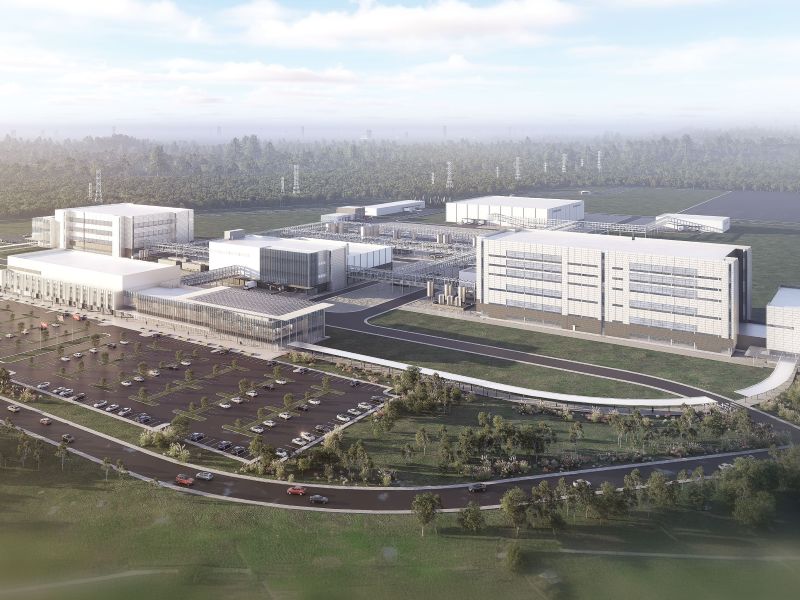


Eli Lilly and Company is developing a new active pharmaceutical ingredient (API) manufacturing facility in Houston, Texas, US.
The Houston plant will specialise in the production of small-molecule synthetic pharmaceuticals. The project represents an investment of more than $6.5bn, which is the largest API manufacturing commitment in Texas to date.
Recommended Buyers Guides

Lilly initially announced the project in September 2025, marking the second of four US facilities unveiled by the pharmaceutical company that year. The facility represents the company’s fifth domestic API site and its tenth overall US manufacturing location announced since 2020.
Groundbreaking took place in September 2026. The project is scheduled to generate more than 600 permanent positions across engineering, scientific research, operations and laboratory technical roles.
An additional 4,000 jobs are expected during the construction and commissioning phases.
Location
The facility is being developed within Generation Park, a commercial master-planned development in the Lake Houston area, north-east of Houston in Harris County.
Lilly selected the Generation Park site from a pool of more than 300 prospective locations. The selection criteria included access to utilities and transport infrastructure, local labour pool availability, municipal incentive packages and the broader regional operating environment.
The development forms part of Lilly’s broader $50bn domestic manufacturing programme, aimed at expanding domestic output for both US supply and international export. Earlier this year, the company announced a new injectable medicine and device manufacturing facility in Lehigh Valley, Pennsylvania, US, as part of the programme.
Eli Lilly API manufacturing facility details
The proposed Eli Lilly API manufacturing facility in Harris County will cover an area of more than one million square feet (92,903m²).
The Houston site will manufacture next-generation small-molecule synthetic medicines for domestic supply, including Foundayo (orforglipron), Lilly’s synthetic oral GLP-1 medicine. It will also produce other small-molecule products and advanced therapeutics, including oligonucleotides, which are designed to act at a genetic level by reducing production of specific proteins associated with disease.
Lilly intends to deploy machine learning, AI, digitally integrated systems and advanced data analytics across the site to support right-first-time manufacturing processes.
The company plans to incorporate digital automation throughout the facility to streamline operations and support the supply of medicines meeting required safety and quality standards.
Lilly also plans to work with local universities and fund education initiatives across Texas to develop a pipeline of skilled employees.
The company is committing $12.5m to work with San Jacinto College on training pathways for Houston residents seeking careers in advanced chemical synthesis manufacturing. The programme supports training for technicians, operators, maintenance professionals and other manufacturing roles.
Financing
The API manufacturing facility has been approved under the Texas state’s Jobs, Energy, Technology and Innovation programme, a competitive economic incentive scheme designed to attract large-scale, capital-intensive development projects to the state.
Lilly received a $5.5m grant from the Texas Enterprise Fund, which provides discretionary, performance-based grants to companies considering projects for which a Texas location is competing against sites in other states.Top of Form
Foundayo details
Foundayo (orforglipron) is approved by the US Food and Drug Administration for chronic weight management in adults with obesity, or those classified as overweight with weight-related comorbidities, in conjunction with a reduced-calorie diet and increased physical activity.
Administered orally once daily, the drug is a non-peptide, small-molecule glucagon-like peptide-1 receptor agonist that can be taken at any time without dietary restrictions.
Beyond weight management, orforglipron is under clinical evaluation for several other conditions including Type 2 diabetes, obstructive sleep apnoea, osteoarthritis knee pain and hypertension, as well as peripheral artery disease and stress urinary incontinence.
