
As shrinking HCP access, soaring therapeutic complexity and data overload redefine pharma’s commercial model, ACTO’s CEO and Co-founder Parth Khanna argues that “generic sales tools” are no longer fit for purpose. In this interview, he explains how ACTO’s Empathetic AI and AI-simulated roleplay product, CxZone, are turning static MLR-approved content in Veeva into governed, realtime clinical simulations; closing the gap between brand strategy and inclinic conversations; and standardising coaching and field readiness signals across markets—without losing the human at the centre of the HCP interaction.
ACTO was a dual-category award winner in the 2025 Pharmaceutical Technology Excellence Awards.
Go deeper with GlobalData

Discover B2B Marketing That Performs
Combine business intelligence and editorial excellence to reach engaged professionals across 36 leading media platforms.
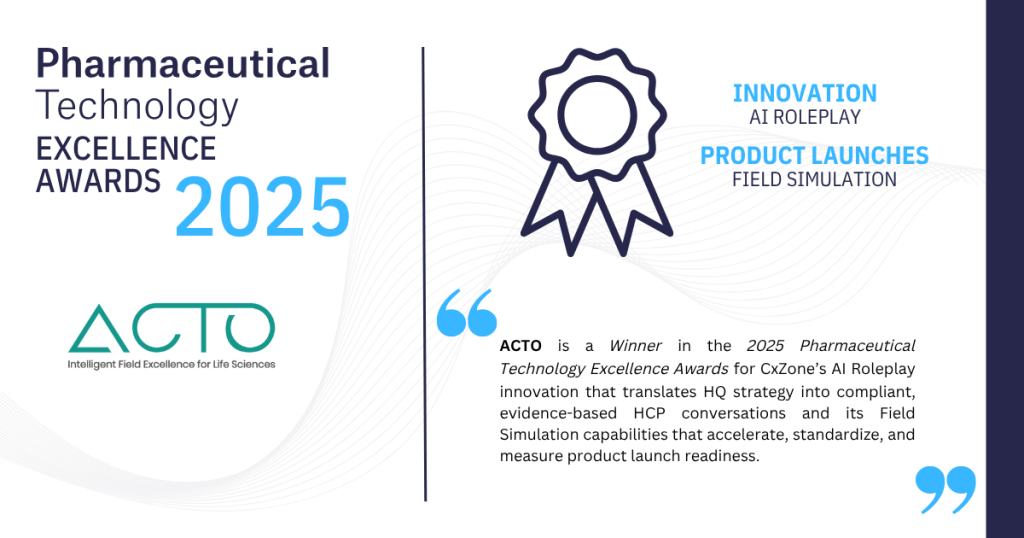
Pharmaceutical Technology (PT): Congratulations on winning the Innovation and Product Launches awards. What does this dual recognition validate about ACTO’s approach to solving real field training challenges in pharma?

Parth Khanna: This dual recognition validates our fundamental belief that pharma field teams deserve purpose-built technology, not generic sales tools, to help them effectively engage with healthcare providers (HCPs). It also is a boost for our Empathetic AI approach—technology designed not to replace human expertise, but to elevate it. If AI can help field professionals show up more prepared, more confident, and more human, patients win.
HCPs—despite being more digitally savvy than ever—are drowning in information while still not getting what they actually need. Many HCPs feel their interactions with field representatives fall short of meeting their needs, despite companies spending billions on field forces. That’s a massive disconnect. So we want to ensure that the strategies developed at headquarters translate effectively into those critical brief HCP interactions in the field. This award recognition shows us that we’re on the right track.
It also validates our belief that ACTO is fundamentally reimagining how pharma field professionals master clinical conversations to build trust and help drive prescribing decisions.
PT: What core industry problem did CxZone need to solve to be viable for pharma field teams?
Parth Khanna: The core problem is that traditional roleplay is broken. Field professionals see it as “Big Brother watching,” and frankly, they’re not wrong. Roleplay practice with a trainer or manager is not the same as a real HCP interaction. When you have limited HCP access—sometimes just one meeting every six months with a specialist—you can’t afford to practice in ways that feel performative or artificial.
And let’s also remember HCPs are not buying products; they’re treating patients. Field teams have, at best, 3 to 6 minutes during an HCP encounter to help HCPs understand why and how their product can benefit patients. HCPs are short on time, direct with questions, and expect reps to know the latest trial data, anticipate their own clinical concerns, and be well-versed in market access.
We had to solve three interconnected challenges: First, create a safe, judgment-free space where reps could practice without fear of failure. Second, deliver practice that actually mirrors real HCP thinking patterns—not just scripted objections but genuine clinical reasoning. And third, ensure everything stays current with approved content while maintaining compliance.
The challenge was whether we could build a solution that understands the difference between selling widgets and discussing treatment options that impact patient lives. Could we develop a useful AI-simulated roleplay solution to help pharma reps build clinical fluency, anticipate real-world objections, and speak the language of medicine with clarity and confidence? That’s what makes CxZone different—it’s built on our proprietary Empathetic AI engine that understands therapeutic landscapes, speaks medical language fluently, and recreates the intellectual rigor of real clinical discussions. It’s about making HCP interactions more valuable and building trust.
PT: How does CxZone align with ACTO’s broader vision for AI-first commercial learning and HCP engagement?
Parth Khanna: Our vision is to turn every human in life sciences into a superhuman by uniting human intelligence with Empathetic AI. CxZone is the embodiment of our “Team Human” philosophy. We don’t want to replace field professionals. We want to augment their abilities.
CxZone doesn’t exist in isolation. It’s a part of our comprehensive Intelligent Field Excellence platform for empowering field professionals to excel in every HCP interaction that includes training and certification to coaching, practice, and real-time field support, so field teams are prepared to perform at their best.
And ACTOverse, our digital marketplace, extends this vision even further. We’re creating an ecosystem where life sciences companies can seamlessly integrate specialized content, data, and service solutions from over a dozen pre-vetted partners directly into their field excellence programs. This means a company launching a new oncology drug, for instance, can instantly access therapeutic-specific training modules, regional compliance frameworks, and specialized coaching methodologies that can all work together within the ACTO platform.
We’re moving from a world of episodic training events to continuous performance support. CxZone represents the practice component of a comprehensive system that ensures field teams are competent, confident, and credible in every HCP interaction. Our people are committed to building an AI-first approach that enhances human capability rather than replacing it.
PT: Which market shifts such as shrinking HCP access or increasing therapeutic complexity most influenced your roadmap?
Parth Khanna: The shrinking access window is absolutely critical—when you only get 3-6 minutes with an HCP, every millisecond counts. But equally important is the explosion in therapeutic complexity. We’re not talking about “me-too” drugs anymore; we’re discussing novel gene therapies, combination treatments, and precision medicine approaches that require deep clinical fluency that must also be compliant.
We’re also seeing a generational shift in the field force. Younger reps expect gamified, on-demand digital experiences. They want to practice on their phones at 10:00 PM, not in hotel conference rooms during Plan of Action meetings (POAs). And the data explosion can make HCPs more informed than ever, but it can quickly become overwhelming, so they come to rely on field teams. It’s the move from frequency-based engagement to value-based engagement. It’s no longer about how many times you see an HCP; it’s about the quality and clinical relevance of each interaction. That fundamentally changes how life sciences companies need to prepare their field teams.
PT: In practical terms, how does CxZone close the strategy-to-conversation gap for brand, medical, and field leaders?
Parth Khanna: Brand teams create brilliant strategies, but they’re often translated into static training decks and roleplay scripts. By the time a rep is facing a skeptical oncologist asking about clinical results, those PowerPoints can feel pretty distant.
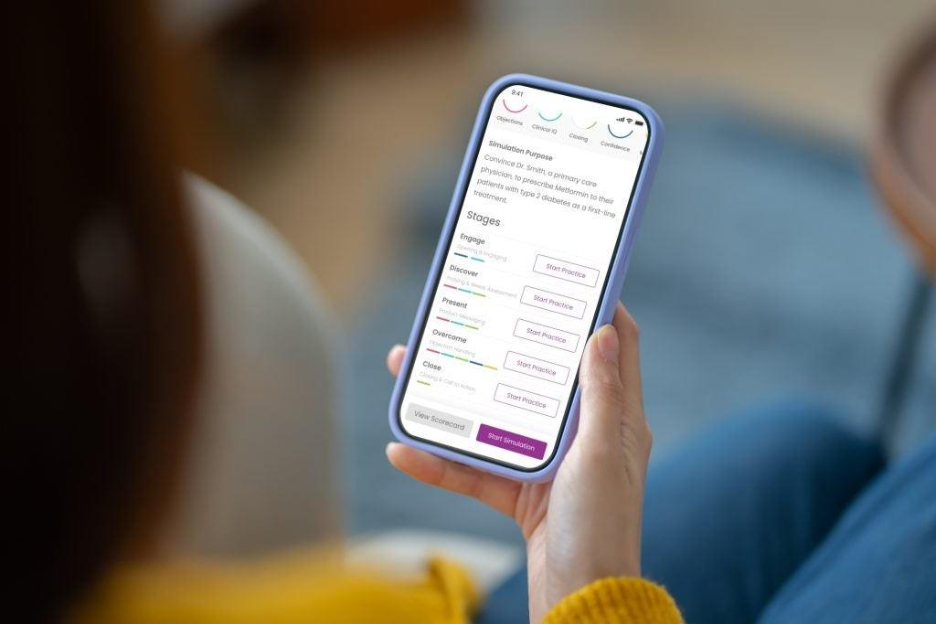
CxZone creates a direct line from strategy to conversation. When brand teams update messaging in Veeva PromoMats, it automatically flows into CxZone’s AI avatars. Reps practice with the exact same content they’ll use in the field, but in dynamic, conversational format with an avatar that mimics a real HCP interaction.
For medical affairs, we’re ensuring scientific accuracy in every simulated interaction. MSLs can practice responding to complex clinical queries with avatars that think and act like KOLs. And for field leaders, they get unprecedented visibility into capability gaps, which can highlight not just who completed training, but who actually handled and mastered tough clinical objections, and who might need some targeted coaching.
PT: What were the toughest design choices behind building Empathetic AI avatars that behave like real HCPs?
Parth Khanna: The toughest choice was resisting the temptation to make the avatars too agreeable. Real HCPs are skeptical, time-pressed, and often interrupted by staff or emergencies. If we made practice too easy, we’d be doing field teams a disservice.
We had to model different HCP archetypes authentically. These can include the “data-driven specialist,” who wants to see every subgroup analysis; the “relationship-focused family physician,” who prioritizes patient quality of life; and the “cost-conscious administrator,” who is worried about formulary placement. Each requires different conversational approaches. The ability to customize avatars by specialty, therapeutic area, and even emotional tone can add significant authenticity that encourages meaningful practice.

Another tough decision was building in unpredictability. Our Empathetic AI engine doesn’t follow scripts but generates responses based on clinical reasoning patterns we’ve observed across thousands of real HCP interactions. Sometimes the avatar might throw a curveball question about a competitor’s recent data. That’s not a bug; it’s a feature. That’s what happens in real life.
As we say, these avatars don’t just look like HCPs—they think and respond like them, posing challenging, clinically relevant questions that require reps to demonstrate true fluency in both product messaging and therapeutic knowledge. That’s how field teams can sharpen their “clinical edge.”
PT: How do you ensure simulations prioritize clinical reasoning over generic sales patterns?
Parth Khanna: This goes back to our Empathetic AI engine. It’s trained on actual clinical decision-making frameworks. When an avatar asks about drug interactions, it’s pulling from approved and compliant clinical content fromVeeva Vault. That content is always current and peer-reviewed. So, it can understand concepts such as numbers needed to treat, absolute versus relative risk reduction, and statistical versus clinical significance—issues HCPs care about.
Most importantly, we score conversations based on clinical accuracy and patient-centricity, not just sales skills like opening, closing, and message delivery. A rep might hit all their key messages, but if they can’t explain the mechanism of action or discuss appropriate patient selection, that will reflect in their score. This approach forces practice that mirrors what can drive prescribing decisions. This is what makes our AI-simulated roleplay different from industry-agnostic solutions.
PT: Why was native integration with Veeva Vault PromoMats and MedComms
essential, and what impact has it had for customers?
Parth Khanna: The vast majority of pharma companies use Veeva for CRM and content management, so our industry-first and out-of-the-box certified Veeva integration removes the friction typically associated with rolling out new field training tools. For us, it was absolutely essential to create real-time, interactive simulations with current, approved content. Without it, you’re asking field teams to practice with outdated or unapproved content—that’s both ineffective and risky from a compliance perspective.
The auto-synching with Veeva Vault PromoMats and MedComms means practice scenarios are automatically built around the most current, MLR-approved content. When Regulatory approves new safety data or Marketing updates messaging, it’s immediately reflected in practice scenarios. By turning static promotional materials that cost pharma companies millions of dollars into dynamic, interactive training experiences, the impact has been transformative.
Clients have told us this integration can be a game-changer by eliminating the lag between content updates and field readiness. Teams can access simulations directly from their iPads, practice in the comfort of their homes, and know they’re using the exact same approved materials they’ll reference in actual HCP conversations.
PT: What governance measures were most critical to scaling CxZone in pharma?
Parth Khanna: Three governance pillars were non-negotiable. First, SOC 2 Type II certification since pharma companies need assurance that their competitive intelligence and training data are secure. Second, FDA 21 CFR Part 11 validation ensures our electronic records and signatures meet regulatory requirements for the industry.
Third, and perhaps most important, is content governance through our certified Veeva integration. Every piece of content that flows through CxZone is traceable to its approved source. There’s an audit trail showing which version of which document was used in each practice session.
ACTO is a Silver Veeva Technology Partner and Veeva AI Partner. As a Certified Veeva Technology Partner it means that our solution has been thoroughly vetted so that our integration meets Veeva’s development, technical, and security requirements. Our customers can trust the quality of our Veeva integration and complete implementation projects faster. As an early member of the Veeva AI Partner Program, we are recognized as offering valuable AI solutions to complement and integrate with Veeva products,
PT: How do you deliver objective, repeatable feedback at scale without adding burden or bias to coaching?
Parth Khanna: The key is making the AI the objective third party. When feedback comes from an algorithm trained on best practices rather than a manager’s subjective opinion, it removes the interpersonal dynamics that can complicate coaching.
Our scoring engine evaluates multiple dimensions simultaneously from clinical accuracy to communication effectiveness, objection handling, and compliance with approved messaging. Each dimension has specific, measurable criteria. A rep knows exactly why they scored 72% on clinical fluency and what specific actions will improve that score.
The repeatability comes from standardization. Every rep practicing the same scenario faces the same evaluation criteria. And we also can personalize the difficulty based on their demonstrated competency. Advanced reps face tougher clinical challenges, while newer reps build foundational skills. This adaptive approach ensures everyone is appropriately challenged without being overwhelmed.
PT: What have you learned about overcoming roleplay resistance and sustaining rep participation over time?
Parth Khanna: I’d say that there were two large lessons: Firstly, we had to address “roleplay fatigue.” Secondly, we had to easily integrate within a rep’s daily workflow.
With roleplay fatigue, we made it feel like a game. Traditional roleplay exercises, conducted live with trainers or managers, have long been viewed as uncomfortable and artificial. Instead of being a valuable experience, it becomes a check-the-box exercise. This fatigue undermines engagement and limits effectiveness, especially when field teams need to master complex clinical information quickly.
So, we created a gamified, on-demand environment where reps can practice without the pressure of real-time observation. Privacy is paramount.
ACTO allows field reps to practice in a “safe space” at home, fail spectacularly in private, learn from it, and come back stronger. They can practice anonymously initially, only sharing scores when they’re confident.
And to speak to the workflow issue, 24/7 availability was a requirement. By accessing CxZone from their iPads, they can capture motivation in the moment—maybe after a tough HCP interaction where they wished they’d responded differently—rather than waiting for the next training session.
PT: Beyond confidence and knowledge gains, what usage patterns signal improved field readiness?
Parth Khanna: The most predictive pattern we’ve discovered is what we call “scenario seeking.” It’s when reps voluntarily practice difficult scenarios repeatedly until they master them. That self-directed challenge-seeking strongly correlates with field success.
Another key signal is response-time reduction. As reps become truly fluent, their response time to complex clinical questions drops significantly. They’re not mentally searching for the right message; they’re having natural conversations. We can track the transition from conscious competence to unconscious competence.
PT: Which elements of the day-one launch package (avatars, clinical zones, tailored scoring) drove early time-to-value?
Parth Khanna: The pre-configured HCP avatars were crucial. If customers had to build avatars from scratch, we’d still be in the pilot phase. Having cardiologists, oncologists, and primary care physicians ready to go meant teams could start practicing immediately.
And here’s what’s really powerful—our backend user interface is so intuitive that trainers can design a new HCP avatar, define the conversation, set evaluation criteria, and deploy the simulation to the field in a matter of minutes.
The clinical practice zones organized around specific therapeutic areas were equally important. A diabetes rep doesn’t want to wade through oncology content to find relevant scenarios. The zones create focused, relevant practice environments from day one, supporting rapid onboarding and enabling organizations to see measurable improvements in field readiness early in the launch process.
Finally, we found tailored scoring systems to be quite important; generic scoring is immediately rejected. The fact that scoring adapts to each company’s specific sales process and coaching methodology meant early practices produced actionable insights, not just arbitrary numbers. We’re seeing metrics like an 85% boost in confidence, a doubling of scientific knowledge, and a 71% increase in engagement. That isn’t incremental improvement, they’re transformational.
PT: How has out-of-the-box Veeva integration reduced procurement friction and accelerated adoption?
Parth Khanna: It’s transformative for enterprise adoption. The integration addresses the primary procurement objection: “We already have Veeva Vault for content management.” Now that becomes a reason to choose ACTO, rather than a barrier. We’re extending and amplifying their Veeva investment rather than duplicating it.
The auto-sync with Veeva Vault PromoMats and MedComms means their existing content workflows remain unchanged. We just make their content interactive and practice-ready. Security reviews can also move faster. Veeva has already passed their security assessments, and we’re exchanging data within that trusted environment. We’re not asking them to open new firewall ports or share data with another cloud provider. These advantages of our platform and our certified out-of-the-box integration can cut procurement cycles from six months to six weeks.
All of this is to say that as a Veeva Product Partner and a Veeva AI Partner Program member, we’ve built deep, native integration that can eliminate months of IT evaluation. By saying to a VP of Sales that CxZone can integrate seamlessly with their existing Veeva solution—no APIs to build, no data mappings to configure—we can remove a huge technical barrier.
And a broader impact is on global expansion. Since Veeva is the standard across life sciences, our integration means we can rapidly deploy in new markets and therapeutic areas. A company that starts with CxZone for their U.S. salesforce can expand to Europe or Asia-Pacific with minimal additional setup, knowing the Veeva integration will work consistently across all regions.
PT: How does CxZone standardize coaching signals across markets, and why does that matter in complex launches?
Parth Khanna: In a global launch, you might have 50 first-line managers across 20 countries, each with their own coaching style. Without standardization, you get 50 different versions of “good” performance. That can create brand inconsistency on an epic scale.
CxZone provides unified coaching signals, so every manager sees the same performance indicators, gap analyses, and improvement recommendations. A manager in Japan and one in Germany are looking at the same clinical fluency metrics for their teams. It creates a common language for performance discussions.
For complex launches in areas such as rare disease therapies or first-in-class mechanisms, such standardization is critical. You can’t afford regional variations in how you explain novel mechanisms of action or patient identification criteria. Standardized coaching signals ensure global message consistency while allowing for local market adaptation.
PT: What safeguards will make “My HCP” mode of CxZone a governed, compliant path to deeper personalization?
Parth Khanna: The “My HCP” mode in CxZone represents the next frontier in personalization by creating realistic digital twins of actual customers and integrating unique HCP data from Veeva Vault CRM. This includes prescribing behavior, hospital affiliations, patient volume estimates, and speaker program participation. It’s exciting and requires extraordinary governance.
The safeguards start with data segregation to ensure that each customer’s HCP profiles are completely isolated. There’s no cross-pollination of competitive intelligence. We’re implementing strict permissioning where only approved roles can create or modify HCP profiles, with full audit trails of any changes.
The AI can only access appropriate data sources that can include historical interaction data from CRM, public information, and behavioral patterns. But it will never infer off-label prescribing patterns or other sensitive insights that could raise compliance concerns. The system maintains clear boundaries between what’s permissible to simulate and what crosses ethical or regulatory lines.
Most importantly, ACTO has included built-in “guardrails” that prevent the AI from generating responses that could be seen as inducement or off-label promotion, even in practice. If a digital Dr. Smith asks about pediatric use of an adult-indicated drug, the system guides reps to appropriate medical information resources rather than allowing off-label discussion.
This deeper personalization means a rep preparing for a meeting with a specific cardiologist, for example, can practice with an avatar that mirrors that physician’s communication style, typical concerns, and clinical interests, while maintaining compliance with regulatory requirements. It’s personalization with protection built in.
PT: What new insights are customers deriving from simulation data that they couldn’t access previously?
Parth Khanna: The revelation has been seeing the gap between what reps know and what they can articulate under pressure. Traditional assessments might show 90% product knowledge, but simulations reveal only 60% can explain that knowledge clearly to a skeptical HCP in real-time.
We’re also uncovering “conversation paths,” that is, the routes reps can take through complex discussions. Some reps consistently dead-end when faced with safety objections. Others struggle to pivot from clinical data to patient benefit stories. These patterns were invisible before because we only measured outcomes, not process.
Perhaps most valuable are the competitive intelligence gaps. For example, if reps consistently struggle with questions about a competitor’s recent trial data, Medical Affairs must develop additional specific competitive positioning. It’s proactive insight generation based on hard data rather than reactive field feedback.
PT: What organizational capabilities do customers need—content readiness, coaching models—to get the most from CxZone?
Parth Khanna: Content readiness is foundational. If your promotional materials are scattered across SharePoint sites and email attachments, you’re not ready. You need centralized, version-controlled content management—that’s why Veeva Vault integration is so powerful.
The coaching model also needs to evolve from evaluation to enablement. Managers should see CxZone data as early warning signals, not report cards. If the data shows a team struggling with mechanism of action discussions, that’s an opportunity for targeted coaching, not punitive action.
Most importantly, organizations need to adopt a “practice and constant learning culture” and the recognition that mastery requires repetition. Too many companies treat training as an event rather than an ongoing process. Organizations that will get the most from CxZone will make practice an expected, measured, and rewarded behavior, just like call activity or sample management.
PT: Looking ahead, which near-term enhancements will further strengthen clinical fluency, message consistency, and governance at scale?
Parth Khanna: The immediate roadmap has three major components. First, we’re making the AI even more clinically sophisticated. We’re working on avatars that can discuss biomarkers, genetic testing, and combination therapies with the nuance these topics deserve. Think of an oncologist avatar that understands tumor mutation burden and can discuss checkpoint inhibitor sequencing strategies.
Second, we just launched ACTOverse—our digital marketplace that connects life sciences companies with over a dozen pre-vetted partner solutions. This ecosystem approach means CxZone users can seamlessly integrate specialized content partners, data providers, and service solutions directly into their practice environments. For example, a company launching in oncology can instantly access therapeutic-specific content modules or regional compliance frameworks through ACTOverse partners, dramatically reducing time to deployment.
The “My HCP” capability is particularly exciting—by integrating unique HCP data from Veeva Vault CRM, including prescribing behavior, hospital affiliations, patient volume estimates, and speaker program participation, field users will be able to practice with realistic digital twins of their actual customers. Imagine preparing for a meeting with Dr. Smith by practicing with an AI avatar that mirrors her specific interests, prescribing patterns, and communication style.
On the feedback front, we’re moving from general to hyper-specific guidance. Instead of “improve clinical fluency,” reps will get coaching like, “practice explaining the difference between progression-free survival and overall survival using patient-relevant examples.”
As we expand globally, the governance framework becomes even more critical. When new clinical data is published or regulatory guidance changes, CxZone will need to automatically flag affected practice scenarios for review. This proactive governance will ensure that practices always align with the latest medical and regulatory standards across all markets.
The north star is creating an environment where every field professional, whether they’re in Tokyo or Toronto, can practice with the same quality of challenge and feedback they’d get from the best field trainer in the organization, available 24/7, personalized to their needs, and always current with the latest approved content. That’s how we transform life sciences field excellence from aspiration to a daily practice.
PT: Thank you, Parth, for unpacking not just the technology behind CxZone, but the philosophy driving it. Your insistence on Empathetic AI that deepens, rather than displaces, human expertise speaks directly to the pressure pharma commercial teams are under as launches become more complex and access windows keep shrinking. We look forward to following how ACTO’s Empathetic AI and ACTOverse marketplace evolve and how they reshape what “field ready” really means in the next generation of launches.
About Parth Khanna
Parth Khanna is the CEO and Co-founder of ACTO, the only AI-powered field excellence platform built specifically for Life Sciences. With over 12 years of experience in artificial intelligence and 10 granted U.S. patents in AI, Parth is a recognized innovator in applying AI and mobile technologies to transform how pharma companies drive field performance and engage healthcare professionals. His deep cross-disciplinary background—spanning life sciences, law, and venture-backed tech—has positioned him at the forefront of digital transformation in the pharmaceutical industry.
Find Parth on LinkedIn: https://www.linkedin.com/in/parth-khanna/


