
1. Edwin Stone, CEO, Cellular Origins, explains what winning the Innovation award for Manufacturing Automation means for him and for Cellular Origins.
Go deeper with GlobalData


Discover B2B Marketing That Performs
Combine business intelligence and editorial excellence to reach engaged professionals across 36 leading media platforms.
ES: Winning this award is a strong validation of both the problem we set out to solve and the way we chose to solve it. Cell therapy manufacturing has struggled to scale not because the science is weak, but because the manufacturing systems around it were never designed for industrialisation. This recognition confirms that changing the manufacturing technology, rather than forcing developers to change their process, is the right path. For the team, it recognises years spent tackling problems many believed were not solvable. For the sector, it signals that scalable, factory led cell therapy manufacturing is no longer theoretical.

2. When you first conceived Constellation, what specific pain points in cell and gene therapy manufacturing were you most intent on fixing?
The Cellular Origins’ team experience includes many years developing semi-automated cell therapy unit operations. These have made big improvements to the manufacturing of therapies, but even the most automated unit operations still required significant labour to physically and digitally connect systems together. Without solving this problem, therapy developers were still blocked from manufacturing therapies at scale. The core pain point was how to address this without making developers redesign their biology. We were intent on removing the trade off between scale and biology, preserving what works in the lab while providing a credible route to industrial production.
3. Why was it so important to design Constellation around developers’ existing, validated tools rather than offering a new all in one system?
Cell therapies require many years of extensive optimisation, clinical development and regulatory evidence. The best biology requires the best tools. Asking developers to replace the tools that have delivered clinical results introduces unnecessary risk, time and reduction in therapeutic efficacy. Constellation takes proven tools and orchestrates them at factory scale. The manufacturing technology flexes around the therapy, not the other way around.
4. From your vantage point, which process bottlenecks are hurting CGT scale up the most today?
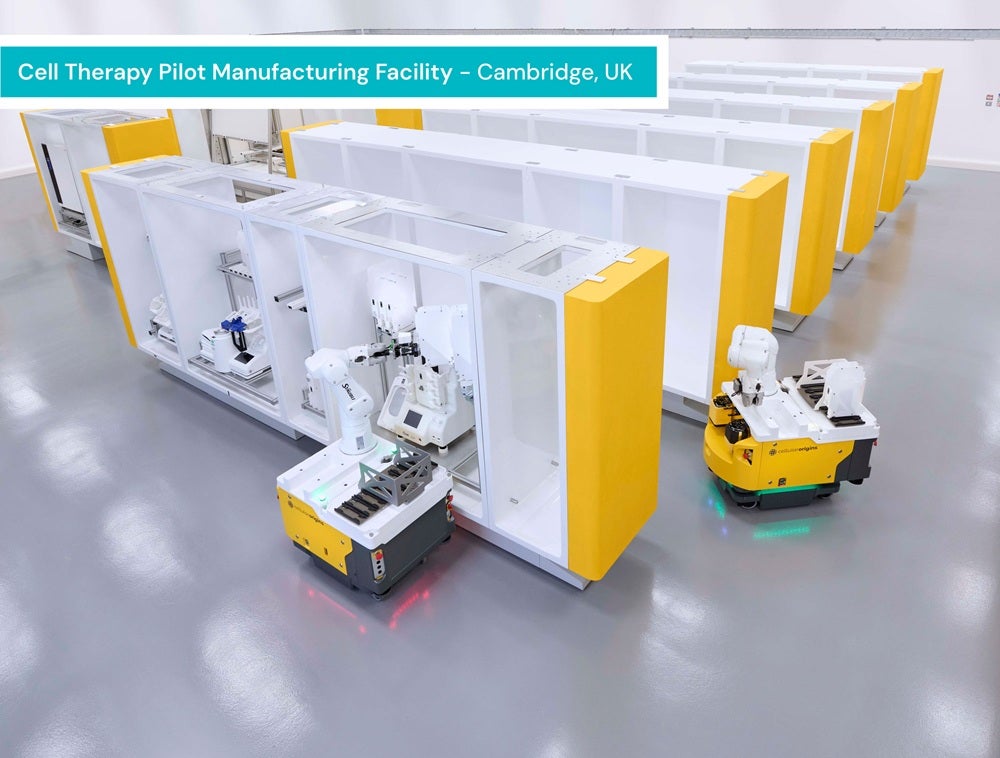
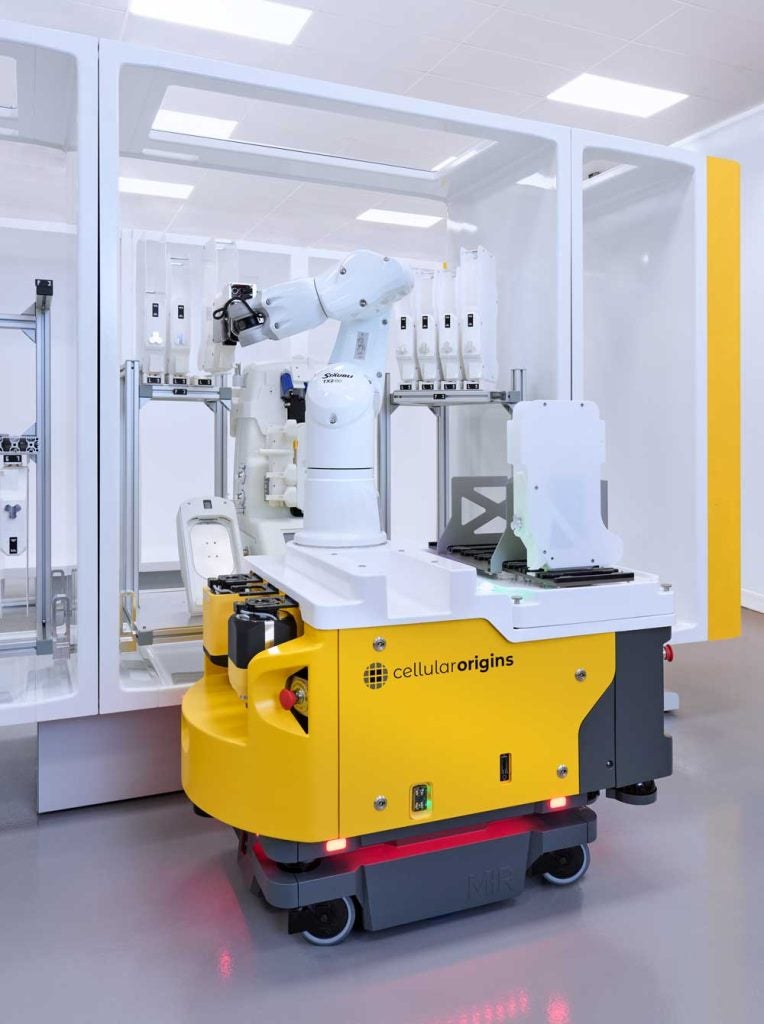
Each cell therapy process will have different bottlenecks. The only way to address efficiently is to develop truly optimised factories. Cellular Origins is the only approach that achieves this. By using mobile robots that can freely access any unit operation in a facility, it is possible to fully optimised facilities, with the number of every unit operation exactly matched to the throughput requirements. This ensures the most productive, efficient manufacturing facilities are possible, in turn ensuring the lowest cost of goods.
5. You are working with partners such as Cytiva, Fresenius Kabi, Thermo Fisher Scientific, Wilson Wolf and Johnson and Johnson. What do these partners gain from plugging into your ecosystem, and what do you look for in them?
These relationships serve different but complementary purposes. With leading bioprocess tool providers such as Cytiva, Fresenius Kabi, Thermo Fisher Scientific and Wilson Wolf, Constellation provides a route for their technologies to operate at true factory scale. We are able to take best in class instruments that are already trusted in clinical and early commercial settings.
By integrating them into our platform, we enable developers to scale without switching tools, while allowing those technologies to deliver far greater throughput, consistency and lifecycle value. What we look for is technical excellence, openness to integration and a shared commitment to ecosystem level collaboration.
Our engagement with Johnson and Johnson reflects real manufacturing ambition and commercial scrutiny. Working alongside a leading therapy developer sharpens our focus on robustness, regulatory credibility and long-term operability, ensuring Constellation performs as production infrastructure, not just automation, serving the needs of therapy developers and ultimately of patients.
6. How does a facility actually change, day to day, when it moves from manual or semi automated processes to a factory scale, mobile robotics model like Constellation?
The most noticeable changes are consistency and productivity. Material movement, sterile operations and scheduling are handled consistently by the system rather than relying on variable, error prone manual intervention. Operators spend less time transferring materials and more time overseeing quality and decision making. Workflows become predictable, deviations are reduced and production can run for extended hours without fatigue driven risk. The facility shifts from being constrained by people and layout to being governed by orchestration, control and repeatability.
7. Automating late stage and commercial processes always raises regulatory questions. How are you engaging with regulators and developers to make this approach acceptable?
We are not changing the process or the tools. We are wrapping automation and digital control around what is already understood. That makes conversations with developers and regulators far more grounded. Transparency, traceability and auditability are built into the platform from the start. We are taking proven tools and reducing risk by eliminating the variability and errors that humans introduce.
8. Your platform creates a single digital layer over multiple third party instruments. Beyond compliance, how do you expect this to change how plants are run?
It turns manufacturing from reactive to proactive. When every movement, weld and handoff is digitally captured, manufacturers can optimise scheduling, predict maintenance needs and continuously improve performance. Over time, this becomes a strategic asset rather than simply a compliance requirement. Not only does automation remove labour but it allows unprecedented access to process data. This allows therapy developers much greater ability to optimise manufacturing than is possible with traditional manufacturing methods.
9. Constellation enables 24/7 operation in human accessible spaces. What shifts in facility design and mindset are needed?
Once robotics handle sterile, repetitive tasks, people no longer need to be physically present for every operation. That unlocks new facility designs and operating models that were not previously viable. Currently , every dollar invested on improving a manual manufacturing facilities is providing diminishing returns as we approach ever decreasing opportunities for improvement. Constellation flips this around. We see Constellation as the start, providing the foundations that enable therapy developers to build ever more productive facilities.
10. How does Constellation address the challenges of reliability?
Reliability is mission critical when every batch is a patient’s life. Constellation has 3 layers of protection. First, and most importantly, the factory floor is fully human accessible. We know from experience that anything impedes immediate access to recovery creates unacceptable obstruction. Second, mobile robotics is unique in allowing automatic recovery. If a failure of a robotic arm is to happen, another robot can seamlessly take over. Finally, all the tools have redundancy. Whether the tube welder on the robot arm or the unit operations, we can swap to a different systems as and when required.
11. Reducing reliance on highly specialised manual operators is a major theme. How do you see this reshaping roles?
Highly trained staff spend less time performing manual transfers and more time applying judgement, overseeing quality and improving processes. It also broadens the talent pool by reducing dependence on scarce, highly specialised skills and extends this to automation and manufacturing experts.
12. What are you hoping to learn from the Innovate UK funded work with the Cell and Gene Therapy Catapult and Resolution Therapeutics?
We are validating Constellation in real, production relevant environments and learning how it performs across different therapeutic modalities. Experience has taught us that it is critical to ship systems and learn how they behave in customers hands. That insight directly informs how we deploy and scale the platform with future partners.
13. Resolution’s macrophage therapies differ from more familiar modalities like CAR T. How are you ensuring Constellation remains flexible?
Constellation is fundamentally an automated sterile fluid handling platform. It is agnostic to the biology. As long as there are defined unit operations, Constellation can orchestrate them without forcing standardisation of the therapy itself.
14. Many stakeholders see automation as key to lowering cost of goods and improving access. What impact could platforms like Constellation have?
By lowering cost of goods, reducing failure rates and accelerating time to scale, we can help therapies reach more patients, faster. Manufacturing should not be the limiting factor in patient access.
15. Moving from artisanal manufacturing to an automated factory model can be a cultural shift. What have you learned?
Involving people early matters. When operators see that automation is there to support them rather than replace them, adoption accelerates. Trust is built through reliability.
16. As more companies enter CGT automation, what do you want Cellular Origins to be known for beyond technology features themselves?
For being the company that made scalable cell therapy manufacturing practical. For proving that therapies can scale without changing their process. And for building the collaborative foundations of an ecosystem that works in the real world, not just in theory.
17. What are the next major milestones you are most focused on for Constellation and for Cellular Origins as a whole?
Expanding deployments, deepening ecosystem partnerships and continuing to demonstrate that industrial scale cell therapy manufacturing can be achieved without compromising the science. That remains our focus.
For more information, visit www.cellularorigins.com
