

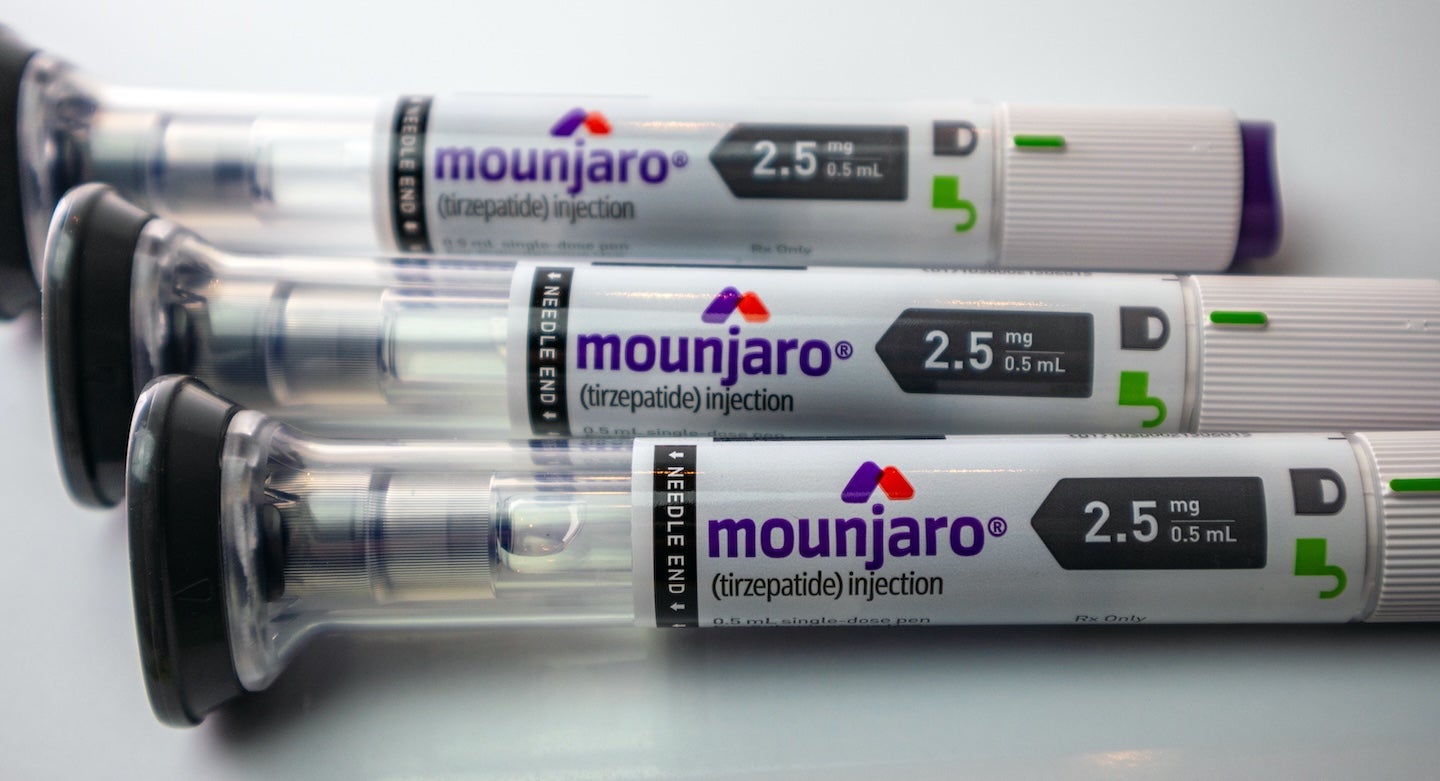
During the 2026 European Congress on Obesity (ECO) in Istanbul, a meta-analysis was presented analysing the use of tirzepatide, a dual glucose-dependent insulinotropic polypeptide (GIP) and glucagon-like peptide-1 (GLP-1) agonist, in treating type 1 diabetes (T1D). This review tracked the outcomes of several studies in patients with T1D using tirzepatide as an adjunct therapy to insulin.
GLP-1 agonists have had a dramatic surge in popularity in recent years as a treatment for obesity and type 2 diabetes (T2D). However, their effectiveness in other conditions, such as T1D, remains unclear. T1D patients also suffer from conditions such as obesity and metabolic dysfunction. Unlike T2D, T1D requires treatment with insulin to manage blood glucose levels. Although GLP-1 and GIP therapies will never become a frontline treatment for T1D, it is possible that they may have benefits as an adjunct therapy in certain T1D patient populations.
Go deeper with GlobalData

The review study analysed six observational studies of patients with T1D using tirzepatide as an adjunct treatment to insulin therapy. Primary outcomes identified included glycated haemoglobin (HbA1c) and changes in body weight. Secondary outcomes included changes in body mass index (BMI) and total daily insulin usage. Time in range (TIR), time above range (TAR), and time below range (TBR) were also measured using continuous glucose monitoring.
In T1D patients undergoing adjunct tirzepatide therapy, HbA1c and body weight were both significantly reduced compared to patients being treated without tirzepatide. Tirzepatide is already associated with weight loss in other patient populations; however, the decrease in HbA1c requires additional investigation. HbA1c is a primary health measure for T1D patients, and additional treatments to reduce it in these patients are important to the T1D treatment paradigm.
Among the secondary outcome measures, total daily insulin usage was reduced in patients being treated with tirzepatide. BMI was also decreased. This is likely due to reduced appetite and increased satiety caused by tirzepatide treatment. TIR for blood glucose was significantly increased, with an associated decrease in TAR. TBR was also slightly increased in the treatment groups of the relevant studies.
For GIP and GLP-1 manufacturers, this may provide an opportunity for label expansion. However, the patient population for T1D is significantly smaller than that of obesity or T2D. Strategically, companies may not opt to pursue the T1D patient population, as there may not be enough market demand for these treatments, as insulin therapy would still be required. Unlike T2D patients, tirzepatide would not be the only treatment needed for T1D patients.
Although this is a meta-analysis using observational data, it demonstrates a potential link between tirzepatide and improved glucose control for T1D patients. Additional randomised controlled trials are needed to establish a causal link between tirzepatide treatment and these reported outcomes. This initial review provides a framework for future studies, including relevant endpoints. If manufacturers decide to pursue label expansions for T1D and tirzepatide, it would be dependent on future studies.

