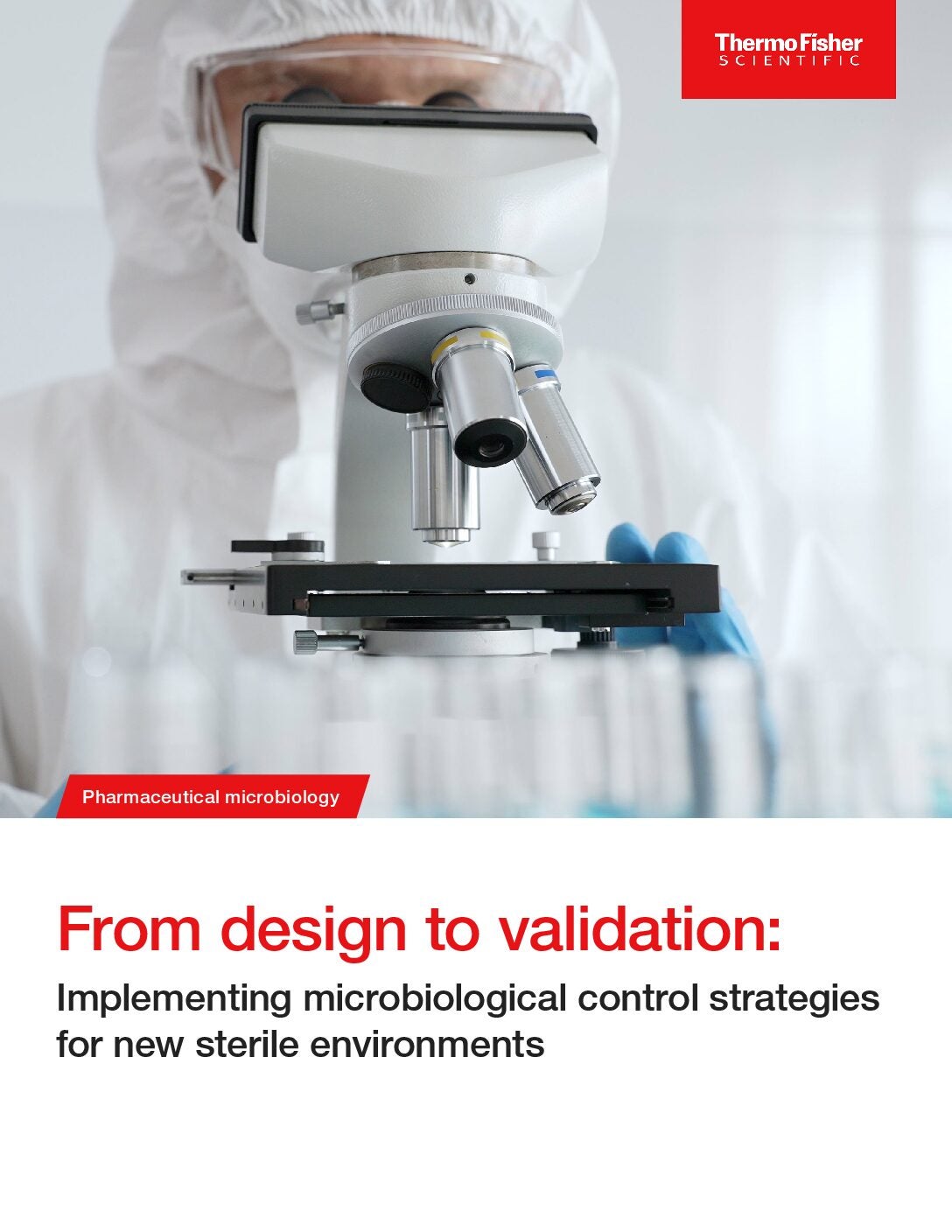

In pharmaceutical manufacturing, robust environmental monitoring is crucial for maintaining product quality and regulatory compliance. Historically, these practices have been highly manual and paper-based; in one workflow, microbiologists place settle or contact plates across a cleanroom’s critical control points (CCPs), log the action on a clipboard, then visually count the number of colony forming units (CFUs) that appear after incubation, recording the results in the logbook for compliance purposes.
Over time, paper has phased out in favour of laboratory information management systems (LIMS), which provide significant advantages in data integrity, regulatory compliance, and operational efficiency. With more data now in the digital realm, it became feasible to analyse contamination alerts more effectively, leading to corrective actions if necessary. Nevertheless, root cause analysis typically requires many hours for gathering data from various sources, cross checking it, and then manually interpreting patterns.
Now, the industry is in the early stages of a third, and perhaps even more transformational, shift – one where advanced technology could turn environmental monitoring from a digitally supported yet nevertheless labour-intensive and reactive process into a more automated practice enhanced with predictive intelligence.
Under this paradigm, it’s no longer corrective actions that are the goal: rather, it’s about identifying and preventing concerns far before they pose a genuine early risk to product quality or safety.
From reactive to proactive
Artificial Intelligence is, unsurprisingly, at the heart of this new approach. By using AI to mine the vast amounts of information stored within years of LIMS records, the idea is to process cleanroom data at a much larger scale than humans are capable of, with patterns identified at a much quicker pace. Crucially, this could support real-time deviation detection when paired with continuous data streams from IoT sensors. Rather than waiting for a human to review the data from a particle counter, for example, AI could monitor it instantaneously, flagging the potential for deviations before they cross a limit.
While a human’s interpretation of deviations may be inconsistent, AI tools have the potential to identify hidden risks that might evade traditional monitoring techniques, such as a micro-trend that might hint at a potential risk, or a specific environmental fluctuation that was linked to previous deviations at a CCP.
When alerts do occur, there is also growing potential for AI to support with more intelligent root cause analysis, drawing connections across large volumes of data to give teams a better understanding of why the risk or contamination occurred – whether it is operator behaviour, equipment maintenance, or seasonal changes, for instance – and how it might be avoided in future operations.
Sampling robots and automated plate reading
Beyond real-time monitoring and predictive analytics, new tools and platforms may also transform the way data is collected and inputted in the future. Just ten years ago, it was difficult to imagine a world where autonomous systems could conduct environmental monitoring within classified cleanrooms and aseptic environments. Yet we are now entering an era where mobile robots can navigate between designated sampling points, performing active air sampling, and even place and retrieve plates via a mechanical arm before returning to their base for a recharge.
Once samples have been collected, automated incubation platforms have the potential to perform colony enumeration and detection using advanced imaging technology that promises to be significantly more sensitive than the human eye. From there, CFU counts are uploaded seamlessly into the LIMS dashboard, eliminating the risk of data entry errors. Not only does this imply more standardised data with less errors, it also promises better operational efficiency and quicker results, with analysts freed up to focus on other tasks.
Understanding the concerns and drawbacks
Although these new tools are beginning to gain ground, the industry is expected to respond with measured caution – not least because of the high upfront investments involved. Cleanrooms are complex and dynamic environments, and sampling robots lack the adaptability of humans, as well as the ability to navigate crowded areas and gather samples from hard-to-reach areas or irregular surfaces. Meanwhile, while automated plate readers could speed up enumeration significantly, microbiologists may have concerns about false positives and negatives, particularly when it comes to atypical growth.
Broader concerns around validation burden and regulatory acceptance are also likely to contribute to slow and measured industry adoption of these platforms, since advanced technologies like automated colony counting and robotics require appropriate qualification and equivalence validation against traditional approaches.
Released as a draft in 2025, Annex 22 of the EU GMP Guidance offers a risk-based approach to AI adoption in GMP environments. According to the draft guidance, adaptive AI with continuous learning models should not be used in critical applications. AI models with probabilistic outputs are also excluded, ruling out the use of generative AI and large language models in preference for static, deterministic ones with strict controls.
When it comes to AI platforms, there are other potential downsides to consider in addition to the regulatory hurdles and costs. As with any algorithm, it is only as good as the data it is trained on, meaning incomplete or ‘noisy’ data could lead to incorrect predictions.
Integrating modern AI platforms and IoT sensors with legacy cleanroom equipment is also complex, meaning these next-generation technologies might be more appropriate for new facilities rather than older ones reliant on disparate systems. Moreover, with laboratories set to become more connected under this new paradigm, there are also important cybersecurity considerations to keep in mind.
Another concern is the potential for over-reliance. AI should always be supported by human oversight in mission-critical areas like pharma, but could operators possibly become complacent due to a false sense of security?
Final thoughts
There are many hurdles to overcome when implementing advanced technologies like AI and robotics in contamination control strategies and environmental monitoring plans, yet the promise is huge. Ultimately, advanced technologies are intended to enhance existing strategies rather than replace microbiologist review or GMP oversight. However, through careful adoption of these technologies, cleanrooms have the potential to transform from reactive to predictive environments while theoretically collecting more samples, harnessing vast data in real-time from continuous streams, and achieving faster results.
To learn more about contamination control strategies, please download the whitepaper below.