

The Alzheimer’s space has surpassed several key milestones over the past few years, with the first disease-modifying therapies (DMTs) and blood-based biomarker tests securing the regulatory green light and offering the opportunity to revolutionise treatment and care.
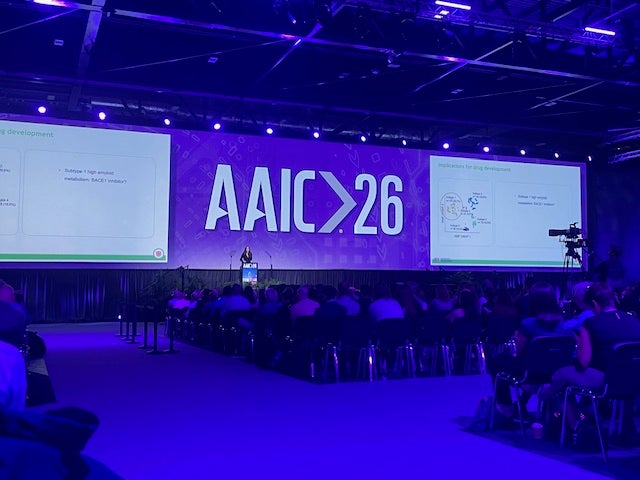
At the 2026 Alzheimer’s Association International Conference (AAIC), which was held in London from 12-15 July, experts were eager to unpack the key developments that are shaping the space in the wake of such milestones, while discussing the points of reflection and future strategies to improve Alzheimer’s R&D, treatment and care.
Go deeper with GlobalData


Discover B2B Marketing That Performs
Combine business intelligence and editorial excellence to reach engaged professionals across 36 leading media platforms.
During the congress, researchers highlighted the increasing importance of considering subtypes and diversity during R&D, while clinicians and drug developers touted the promise of biomarkers and new approaches to treatment.
Alzheimer’s subtypes could change the R&D picture
When German psychiatrist and neuropathologist Dr Alois Alzheimer first discovered the neurodegenerative condition back in 1906, it was generally considered a single disease impacting the brain.
However, as researchers unpick the complexities of this disease, they have uncovered a strong heterogeneity in patient symptoms, progression rates, and long-term outcomes. This has led some to question if there are better ways to characterise certain manifestations of Alzheimer’s.
One such individual is Betty Tijms, associate professor at the Alzheimer Center in Amsterdam, who presented research during a plenary session that contested the theory that Alzheimer’s is a single disease. Through proteomic and metabolomic analysis of spinal fluid samples from patients with the disease, Tjims proposed that there are at least five different subtypes of Alzheimer’s.
Driven by differing biological factors such as neuronal hyperplasticity, innate immune response and blood-brain barrier impairment, Tjims theorises that subtypes could play a role in the failure of certain therapies in clinical trials, as they may not have been given to the suitable patient population who could garner benefit. The identification of these subtypes could also point to potential mechanisms for drug developers to explore outside of the traditional amyloid and tau-based approaches, Tjims added.
If Tjims’ theory is true, it could have significant implications for Alzheimer’s drug development – potentially highlighting the need for subtype-specific biomarkers and therapeutics, as well as the increased role of spinal fluid-based proteomics in accurately diagnosing and treating patients.
In conversation with Pharmaceutical Technology, Samuel Dickson, SVP of statistics at biostatistics consultancy firm Pentara, noted that some sponsors are now choosing to tailor their development efforts to subtypes, but this depends on the mechanism they’re exploring. “Heterogeneity is a fact of life; you have to have pretty clear delineation to say ‘we’re going to rule out this entire subpopulation’ because you’ll be dealing with larger screen fail rates and costs, so the benefit to a trial has to be clear if you’re going to deal with the heterogeneity,” Dickson commented.
Francesca Capotosti, SVP of research at AC Immune, which is developing a range of drugs for Alzheimer’s disease, with targets that include pathologic tau, neuroinflammation and misfolded amyloid-beta, among others, echoed Dickson’s sentiments. She added that patient subclassification is where the field will probably go, though the approach is not yet largely implemented due to the infancy of this research.
Biomarkers come to the forefront, but imaging accessibility lags
Alongside debates around the characterisation of Alzheimer’s, there was plenty of discourse around the burgeoning role of biomarkers in the space at AAIC 2026, with blood-based tests for key disease indicators like p-tau217 increasingly being touted as the next frontier in accessible research and care.
Previously, the Alzheimer’s Association’s director of global science initiatives, Christopher Weber, told Pharmaceutical Technology that non-invasive screening methods like digital biomarkers, as well as blood tests, could bridge the gap between primary and neurology-specific care. This will become increasingly necessary, he noted, as demand for memory specialists remains higher than supply, and primary care professionals remain the first point of contact for patients.
However, researchers focused on the socioeconomics of Alzheimer’s disease repeatedly raised concerns around accessibility to diagnostic tools – including blood-based biomarkers – which are generally viewed as the cheaper and more accessible imaging option for Alzheimer’s compared with MRI or amyloid PET scans. During a session on implementing anti-amyloid therapies in the real world, Brazilian neurologist Elisa de Paula França Resende noted that access to spinal fluid and plasma biomarker tests is very limited in Latin America, as there is currently no public coverage – meaning patients must pay costs out-of-pocket.
This impact is compounded by the lack of readiness across global healthcare systems, Resende and University College London (UCL) professor of neurology, Jonathan Schott, agreed. In his talk, he noted that testing infrastructure will need to be bolstered in Europe if healthcare systems are to keep up with the rising demand prompted by early imaging and ongoing monitoring requirements linked to anti-amyloid therapies.
At the conference, Suchandrima Banerjee, general manager, neurology care pathway at GE Healthcare, said that more novel biomarkers used in the screening triage process have debuted recently, which can play a key role alongside MRI or PET-based methods. “We see these approaches as complementary because Alzheimer’s is a population-level disease,” she commented.
Because of this factor, Banerjee believes that a wide variety of screening and triaging tools should be developed, as this can help healthcare systems to select patients who are likely to have Alzheimer’s based on prior testing for confirmatory diagnosis through tools like amyloid PET. GEHC has developed several digital tools to optimise the imaging process, while also providing imaging machinery such as MRI, PET/MR, PET/CT scanners for use in the screening process.
Focusing on diversity for better R&D and outcomes
At AAIC 2026, one of the most crucial topics on everybody’s lips was equal inclusion, as experts warned that the notable lack of diversity within research threatens to compromise the ethics, validity and real-world applicability of both clinical and post-marketing studies.
This was a topic that one panel was laser-focused on, as speakers highlighted that diversity and inclusion in trials is a “must”, not a “should do”. To achieve this, researchers recommended fostering a community-first approach, involving them in the co-development process and considering specific cultural needs in research design.
Klaus Dugi, CEO of biotech Vandria, which is developing a drug for Alzheimer’s and other conditions, told Pharmaceutical Technology that one of the company’s first approaches to improve diversity is conducting a smaller but broader trial on its study drug, VNA-318. Via the assessment of patient characteristics, biomarkers and cognitive parameters, Vandria is looking to establish if certain subpopulations will gain more benefit from the therapy. “In the first study, we don’t want to restrict the patient population too much – we want to learn if there’s a group that may accrue a particularly high benefit, such as patients with two copies of the APOE4 gene as we have preclinical data suggesting that they may benefit especially,” Dugi commented.
Neil Warma, CEO of ProMIS Neurosciences, which is developing an Alzheimer’s therapy that targets toxic amyloid oligomers, added that artificial intelligence (AI) for trial design, as well as computational models for real-world evidence (RWE) generation, will likely play a key role in advancing the field forward in terms of accessibility and diversity.
Optimising treatment in Alzheimer’s
As disease-modifying anti-amyloid therapies like Biogen and Eisai’s Leqembi (lecanemab) and Eli Lilly’s Kisunla (donanemab) become increasingly embedded into the Alzheimer’s treatment paradigm, drugmakers and researchers alike are now looking for ways they can further improve patient outcomes – both through new medicines and the optimised use of currently available tools.
One method proposed widely by AAIC 2026 speakers was the combination therapeutic approach – a sentiment that Capotosti, Warma and Dugi all echoed. This could involve the pairing of anti-amyloid drugs like Leqembi and Kisunla that operate through different mechanisms, as well as their combination with tau-targeting therapies like Biogen’s diranersen, brain inflammation modulators and more. During the conference, Dugi, Capotosti and several presenting researchers touted the potential of mitigating neuroinflammation in Alzheimer’s as a potential treatment approach.
Pharma companies are also exploring the potential of anti-amyloid treatments in earlier settings, with Roche announcing it was initiating a Phase III study, dubbed PrevenTRON, on its late-stage, amyloid-targeting Alzheimer’s hopeful, trontinemab, at AAIC 2026. The Swiss pharma makes this call as researchers propose that amyloid plaque removal in the brain in the preclinical Alzheimer’s setting – where patients are yet to experience tangible cognitive decline – could improve care and benefit patients in the long-term.
With all this in mind, however, experts stressed the cruciality of early diagnosis, which they say will help unlock any further treatment benefits accrued from new therapeutic approaches as current options remain catered to patients in the early stages of the disease.


