

Following a series of industry-defining readouts for its personalised cancer vaccine intismeran autogene, Moderna is eyeing a future bigger than one of oncology’s stalwart therapies.
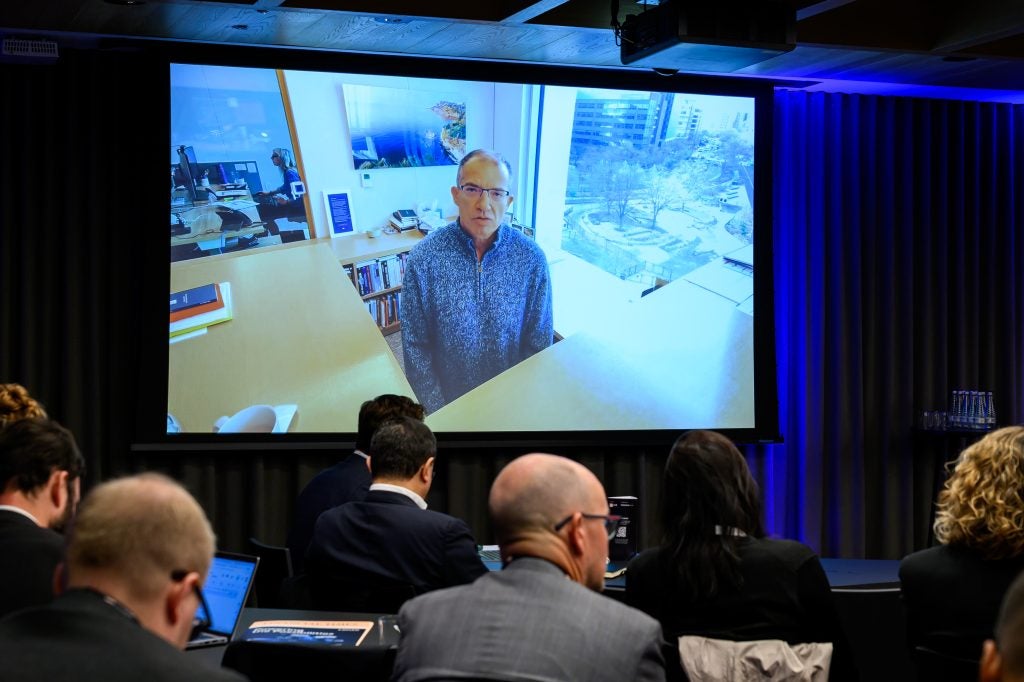
“Over time, it could actually be bigger than Keytruda”, Stéphane Bancel, CEO of Moderna, said in a keynote interview at the Financial Times Global Pharma and Biotech Summit on 10 November.
Go deeper with GlobalData


Discover B2B Marketing That Performs
Combine business intelligence and editorial excellence to reach engaged professionals across 36 leading media platforms.
“The reason is the following – we are going to try it everywhere Keytruda works. We believe that when you add intismeran to Keytruda, you have a better clinical outcome,” he added.
Moderna’s mRNA-based vaccine intismeran in combination with MSD’s Keytruda (pembrolizumab) cut the risk of melanoma death or recurrence by 42% in Phase III trial (NCT05933577) results revealed in October. The detailed readout was touted by analysts as a watershed moment in oncology, with the personalised approach ushering in a new way to treat the disease.
Moderna is currently trading 850% higher than this time last year, with stock rallying several times following readouts for the vaccine.
It acts by training a patient’s immune system to recognise and destroy specific cancer cells. It is used for those who have had a tumour surgically removed that can be analysed to identify unique mutations.
Bancel highlighted intismeran’s beneficial safety profile over current checkpoint inhibitors, for which long-term toxicity can be an issue.
There is also the potential to combine intismeran with other drugs in cancers where Keytruda is not as effective.
“We always follow the science and the biology. If it makes more sense to combine [with another drug] in a cancer where Keytruda doesn’t work, we will of course do that as well,” Bancel said.
Keytruda is by far the most widely used oncology drug. In the US, the immunotherapy holds over 40 indication approvals that span nearly 20 different types of cancer. In 2025, it generated $31.7bn in global sales, accounting for around half of MSD’s 2025 sales.
MSD has an ongoing strategic partnership with Moderna, a chief aim of which is the co-development and commercialisation of intismeran.
Alongside melanoma, intismeran is in clinical trials for non-small cell lung cancer (NSCLC), bladder cancer, and pancreatic cancer, amongst others.
Moderna’s commercial portfolio revolves around vaccines for infectious diseases. The company announced Q3 revenue of $1.3bn, up 29% compared to the same quarter in 2025. While analysts reacted positively to the financial results, many highlighted intismeran as key to Moderna’s long-term growth beyond Covid and influenza vaccines.
William Blair analysts said in a 6 November research note: “Despite our confidence in Moderna’s holistic clinical pipeline, this story revolves around intismeran, which showed impressive, standard-of-care changing efficacy in adjuvant melanoma, but development in additional tumours is not without meaningful clinical and biological risk.”


