

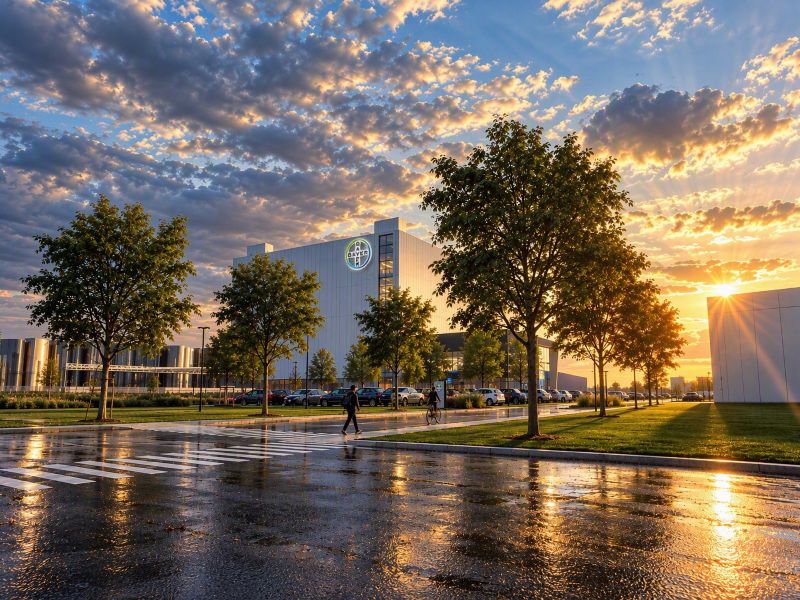
Bayer is developing a new pharmaceutical manufacturing campus in New Albany, Ohio, US, to supply pharmaceuticals to patients across both domestic and international markets.
The company announced plans to invest an estimated $2.2bn in the project in October 2026.
Recommended White Papers

Recommended Buyers Guides

The campus will be developed in two distinct phases. The initial phase, focused on active drug substance manufacturing, is scheduled to commence commercial operations in 2031. The second phase, dedicated to finished drug product formulation and manufacturing, is planned to follow in 2034.
The project is expected to require 1,500 construction personnel during the development phase and generate 600 permanent technical and operational positions once operational.
Bayer’s announcement follows more than $7bn invested by the company in US pharmaceutical research, development, and manufacturing over the preceding five years. The initiative forms a core part of the company’s long-term growth strategy and its plans to improve patient access in its largest pharmaceutical market.
Location of Bayer’s new pharmaceutical manufacturing campus
Bayer’s planned pharmaceutical manufacturing campus will be located at New Albany Innovation Park, within the New Albany International Business Park.
Situated within the Columbus metropolitan area, the site has access to major transport links. It lies near State Route 161, approximately eight miles (12.8km) from the Interstate 270–State Route 161 interchange and ten miles from John Glenn Columbus International Airport.
The New Albany International Business Park covers 12,000 acres and is part of the Ohio Discovery Corridor, which links nine medical and research facilities with academic institutions.
The corridor provides access to approximately 39,000 STEM graduates each year, research supported by $1bn in annual National Institutes of Health funding, and partnerships involving research and development.
Workforce readiness was a major factor in selecting Ohio for the new facility. Bayer is expected to use the Ohio Life Science Training Center, which is under construction and scheduled to open in mid-2027, to train Ohio residents for biomanufacturing operator and technician roles.
The planned campus will contribute to the state’s biomanufacturing infrastructure and add to the life sciences and biomanufacturing presence in the Columbus region.
Bayer pharmaceutical manufacturing campus details
The planned pharmaceutical manufacturing campus will use a flexible, modular design comprising two modules: one for drug substance manufacturing and another for drug product manufacturing.
The integrated facility will incorporate digital and automation technologies and initially support Bayer’s portfolio in oncology, cardiovascular disease and renal care.
The site will also form part of a US-based collaboration network intended to connect academic research with pharmaceutical manufacturing expertise. The collaboration will focus on pharmaceutical production capabilities.
Additionally, the campus will complement Bayer’s US pharmaceuticals headquarters in Whippany, New Jersey, and its other locations in Pittsburgh, Pennsylvania; Berkeley, California; Cambridge, Massachusetts; Research Triangle Park, North Carolina; and San Diego, California.
The company plans to apply for a Job Creation Tax Credit through the Ohio Department of Development and also intends to seek assistance from JobsOhio for the project.
Marketing commentary on Bayer
Bayer is a life sciences company operating primarily in healthcare and agriculture. The company’s commercial portfolio focuses on products and services related to pharmaceuticals, consumer health and crop science.
In pharmaceuticals, Bayer’s therapeutic areas of focus are cardiovascular diseases, oncology, women’s health, and rare conditions. The company partners with leading academic institutions and biotechnology companies and integrates AI into drug development and operations to identify potential drug targets, optimise clinical trials, and accelerate the delivery of therapies to patients.
In the 2025 financial year, Bayer employed approximately 88,000 people and recorded total sales of €45.6bn ($50bn). Research and development spending totalled €5.8bn ($6.34bn) during the period.
