


Back in 2014, Jonathan Clark’s world was flipped on its head when he was diagnosed with mantle cell lymphoma (MCL) at age 52.
While Clark began receiving treatment soon after this diagnosis – enduring a course of chemotherapy and an autologous stem cell transplant – he relapsed in 2017, leaving little-to-no therapeutic options to turn to.
Go deeper with GlobalData


Discover B2B Marketing That Performs
Combine business intelligence and editorial excellence to reach engaged professionals across 36 leading media platforms.
After exhausting all the available choices, Clark found himself in a position where most patients with his disease would be considered terminal. With little hope remaining, he placed his faith in a new type of treatment making its way through the clinical pipeline for MCL.
By participating in the ZUMA-2 clinical trial, which was testing the potential of Gilead-owned Kite Pharma’s now-approved CAR-T therapy, Tecartus (brexucabtagene autoleucel), Clark became the first patient in Europe with his disease to receive a therapy of this type. Eight years later, he remains in remission and attributes his life to the drug. “Not a day goes by when I don’t reflect on my amazing experience and celebrate being alive,” Clark states.
Though Clark’s story points to the true life-altering potential of cell therapies in oncology, cell and gene therapies (CGTs) are also demonstrating their promise in newer areas like immunology. However, challenges to accessibility continue to plague this drug class – with high development and manufacturing costs, logistical difficulties and reimbursement hurdles threatening to exclude patients from receiving therapies that could, in some contexts, represent their only chance for survival.
“It’s an ethical decision; what price is life,” Clark questions, as his treatment, although approved, is not reimbursed for patients with MCL in the Netherlands. “If I had MCL here today, I would die because CAR-T is simply not available.”
As this problem persists on a global scale, experts note that improving accessibility to CGTs requires several systemic changes – including how a drug’s benefit is classified.
Field progresses, but further improvement key
As the use of cell therapies balloons in blood cancer, so does the need for appropriate infrastructure suitable for the administration of such therapies.
According to Emad Abdelnaby, SVP and head of commercial at CAR-T specialist Legend Biotech, the US has made a “tremendous” amount of progress over the past half-a-decade to build infrastructure for treatment with CGTs, as over 80% of patients with multiple myeloma (MM) now live within 50 miles of a certified treatment centre equipped to administer a cell therapy for their condition.
This change is also happening in major markets across the globe, Abdelnaby adds, though he caveats that this progress is not yet mirrored in the second-tier markets, which he calls the “next horizon” for the drug class.
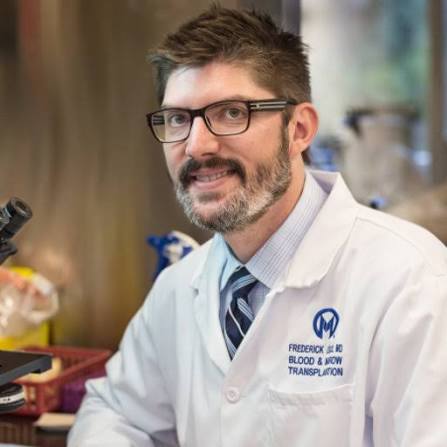
Though Abdelnaby points to improvements in US accessibility to cell therapies for MM, Dr Frederick Locke, a medical oncologist and translational researcher at the Moffitt Cancer Center, notes that the wider healthcare sector still has a long way to go in securing widespread access in the lymphoma space, as only around 20 to 30% of eligible patients currently receive treatment with CAR-Ts in the US.
This accessibility gap, Locke says, is primarily perpetuated due to the insufficient number of treatment centres available to patients, despite progress in this area. He also points to the time that treatment requires, as many find themselves having to travel potentially long distances to tertiary care sites to receive treatment. These factors, Locke says, can make it challenging or unfeasible for individuals from remote rural areas to receive treatment, especially for patients who cannot set aside time due to personal commitments.
On top of these hurdles, Abdelnaby highlights his concerns around the patients who may not have a required caregiver to accompany them through the treatment process – a factor Legend is looking to address through collaborations with patient advocacy groups. In Locke’s experience at the Moffitt Cancer Center, patient access to a caregiver doesn’t represent a meaningful bottleneck. However, he does acknowledge that patients may not attend his clinic in the first place due to their lack of a support network to help them come and seek evaluation.
Another issue Locke points to is the challenges in access before a drug’s approval through the US Food and Drug Administration’s (FDA) Expanded Access programme, which he says can often run inefficiently. Such a scheme also requires patients to meet the eligibility criteria laid out by a drug’s clinical trial – potentially staving off access for those that don’t fit the bill.
Meanwhile, Jaume Vidal, senior policy advisor at medicines accessibility advocacy organisation Health Action International (HAI), believes that advanced treatments such as CGTs are generally impacted by the same issues that plague many drug classes: price, regulation and a lack of transparency.

Communication’s role in accessibility
Though challenges certainly remain in securing access to CGTs, all three experts believe that there are several approaches the industry can harness to quell this issue.
One way, Abdelnaby says, is by placing the onus on industry players to spread awareness. “The best thing we can do as an industry is to demonstrate the value, and in the case of cell therapies, the cost savings associated with our treatments,” he comments.
For example, in the MM field, healthcare providers almost always administer CAR-T therapies as a ‘one-and-done’ treatment, which can lift the burden of continuous therapeutic approaches on both the patient and the healthcare systems – potentially freeing up space and cash for hospitals. By effectively sharing how a drug can benefit society as a whole, Abdelnaby notes that developers have the opportunity to sway decision-makers in a positive direction.
Locke echoes Abdelnaby’s sentiments, adding that industry members should focus on communicating with patient advocacy groups and community-based oncologists through educational programmes, which can help them to understand which types of patients would be eligible for treatment and would obtain the most benefit.
This transparency should also go the other way, Vidal mentions, as drugmakers do not often disclose costs linked to the development, manufacturing and commercialisation of a drug. This, he says, can hinder payers, the public and healthcare providers from understanding why a therapy is priced a certain way.
“We need informed discussions and accountability from all the actors,” Vidal notes in reference to the industry, patients, regulators, payers, government officials and patients. He also believes it is key to set some ground rules when it comes to reimbursement negotiations to ensure agreements are sustainable on both the reimbursor and drugmaker sides of the equation.
Optimising treatment delivery
Another key piece of the accessibility puzzle, Locke says, is moving treatment away from tertiary academic centres toward the community setting, as patients contend with logistical hurdles and potential out-of-pocket travel costs linked to treatment.
This follows a broader shift to community-based care for both treatment and research, as sponsors and healthcare providers look to provide a wider range of patients with opportunities to participate in research or receive convenient treatment that fits around their schedule.
Some also tout the potential of manufacturing therapies in the hospital setting, which is said to contribute to a reduction in CGT production and logistical costs – thus driving wider accessibility. However, Locke is sceptical of this method as a near-term solution due to its associated regulatory and financial complexities.

Focusing on reimbursement and tech transfer
With many academic institutions enduring funding cuts for several years, Vidal notes that the increasing pressure to monetise research is also presenting issues for the widespread access to CGTs.
Currently, public institutions, universities and research centres tend to secure patents to turn their discovery into a viable product – often resulting in lower- and middle-income countries becoming locked out of access to know-how and technical information required to take new steps forward. While tech transfer remains a point of contention in health diplomacy, Vidal believes that it is more productive to increase the focus on upping government funding for institutions producing research that facilitates public return, rather than demonising this practice.
He also touts the potential of boosting accessibility by keeping development and commercialisation cycles within public institutions, which he says would represent a significant step forward.
As the CGT field progresses, experts agree it remains crucial for industries, healthcare providers, payers and government organisations to work in tandem to secure widespread access for patients. This includes cost, location and convenience of treatment. While these issues persist, access will continue to be a challenge, dampening the potential transformative ability of these therapies to the wider healthcare landscape.
Cell & Gene Therapy coverage on Pharmaceutical Technology is supported by Cytiva.
Editorial content is independently produced and follows the highest standards of journalistic integrity. Topic sponsors are not involved in the creation of editorial content.
Editor’s note: This article was updated on 12th August at 10:20 to change mentions of Jonathan Clark to ‘Clark’ only, to avoid confusion. Following the publication of this article, Jonathan has sadly passed away.


