Non-profit organisations play a crucial role in supporting rare disease therapy development and rescuing shelved programmes, where commercial interest may be weak.
Gene therapies represent a fundamental approach to tackling the root cause of many rare diseases, since roughly 80% are genetic. While cell and gene therapies (CGTs) have faced a challenging investor environment in recent years, nonprofit organisations can offer a lifeline to the longevity of the sector. One such example is the Italian non-profit organisation Fondazione Telethon (FT), which developed the first gene therapy to gain approval in Wiskott-Aldrich Syndrome. To provide access to treatment in a sustainable way, FT will commercialise the therapy to generate revenue that can be reinvested in the company.
Go deeper with GlobalData


Discover B2B Marketing That Performs
Combine business intelligence and editorial excellence to reach engaged professionals across 36 leading media platforms.
FT is not the only non-profit in Europe with its sights set on bringing gene therapies to patients with a rare disease. French R&D company Généthon is investigating 15 gene therapies in clinical trials across neuromuscular, blood and metabolic disorders. The nonprofit also specialises in developing new vector technologies; optimising bioproduction methods for cost reduction and large-scale manufacturing, and immunology research.
Partnerships with biotechs and pharma often form a core strategy for nonprofits looking to raise funds to support late-stage clinical development and commercialisation. Proof-of-concept data for the one-time gene therapy Zolgensma (onasemnogene abeparvovec) was conducted and patented by Généthon before it was licensed to AveXis, later acquired by Novartis, and subsequently gained its first approval in spinal muscular atrophy (SMA) in 2019.
As Généthon nears approval in several pivotal-stage programmes, including with the Duchenne muscular dystrophy (DMD) gene therapy GNT0004, Pharmaceutical Technology caught up with CEO Frédéric Revah to learn more about the companies’ pipeline and non-profit funding model, as well as novel approaches to enabling patient access.
Editor’s note: This interview has been edited for length and clarity.
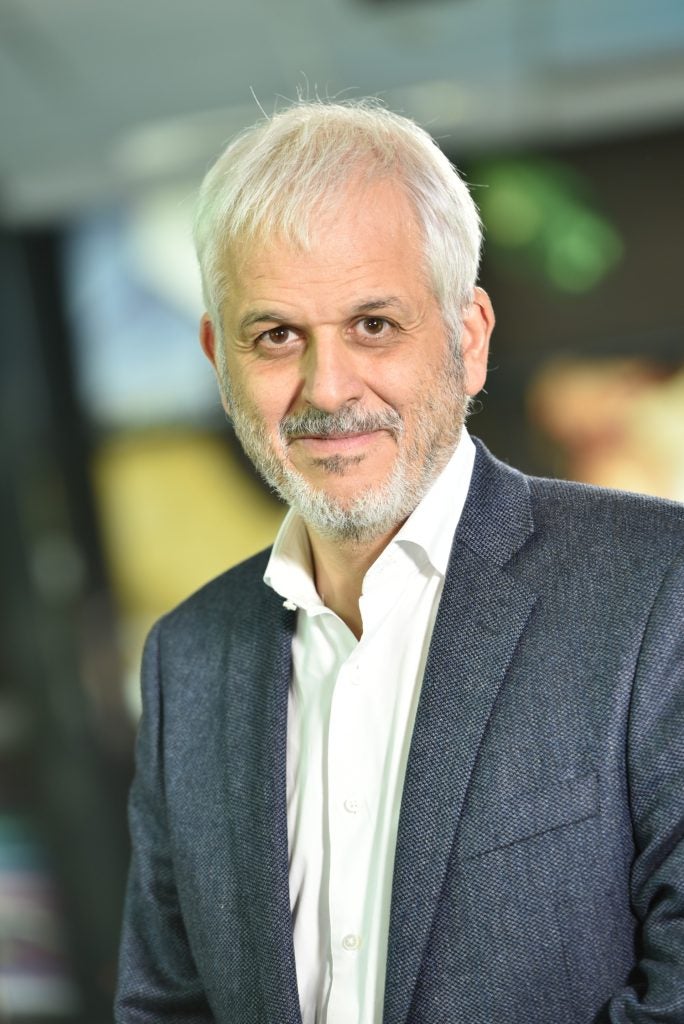
Jam Bensilum (JB): Could you explain how Généthon’s nonprofit funding model works and what its advantages are?
Frédéric Revah (FR): Being a nonprofit is in our DNA. We were created by a patient-led organisation AFM-Téléthon, which has invested almost €800m in gene therapy research, most of it coming to Généthon. Since our inception in 1990, close to 70% of our resources have come from AFM-Téléthon and its annual fundraiser event, so really, from the generosity of the public in France. The remaining funds have been generated from deals with pharma companies. For example, the deal with Novartis for royalties on Zolgensma is an important financial stream. Similarly, we have a deal with AskBio for Pompe disease, which has great potential in terms of supporting economic sources.
In 1997, when we transitioned from studying genetics to gene therapy research, people were very sceptical of this approach. However, having the sustained and consistent support from a patient organisation has allowed—and continues to allow—us to take risks both scientifically and strategically. Our board is primarily focused on whether our research is cutting edge and can make a difference to patients. In addition, many of our drugs target indications that are so rare that they are not commercially viable for companies or venture capital. So, without nonprofits driving therapy development, these patients may be left with no treatment options. Our massive investments in gene therapies would probably not have been possible under a for-profit model.
JB: In recent years, there’s been a downturn in funding for CGTs. How impactful are wider industry trends on Généthon given its funding approach?
FR: Being a nonprofit and having the patient organisation behind us has allowed us to continue pushing our programmes through periods when gene therapies become less popular with investors. On the other hand, we need a healthy biotech investment environment, especially for indications that are less rare, like Pompe disease, where the opportunity for partnerships is important. So, we feel the consequences of a decrease in funding in the gene therapy sector, and it can result in slower or delayed timelines.
JB: Moving to the company’s pipeline, I’d be interested in learning more about the gene therapy in development for DMD—could you share some insights into the programme?
FR: Our gene therapy GNT0004 is based on an AAV8 vector, which contains a microdystrophin gene, and is in Phase III trials in Europe and the UK. We are planning a conditional approval submission in Europe in 2027 and have plans to expand to the US.
We initiated the pivotal Phase I/II/III trials at a GNT0004 dose of 3×10¹³ vg/kg, which was shown to be safe and well tolerated. This dose is lower than in any other approved or investigational gene therapy for DMD.
Our data compares the trajectory of the North Star Ambulatory Assessment (NSAA) scores between age-matched children on the trial and untreated children from the same centres. An increase of 4.7 points was observed in the NSAA scale between three treated and 34 untreated children at one year post treatment. For reference, a difference of 2.5 points is considered clinically meaningful. Meanwhile, we also observe a dramatic and sustained reduction in creatine kinase (CK), a key biomarker for muscle damage.
In these trials, patients are treated at a specific point in the evolution of their disease. We track the NSAA scores of patients for at least six months prior to treatment so that the gene therapy can be initiated at the point at which NSAA scores reach their maximum or start to decline. By doing this we aim to avoid distortion of results by the natural progression of the disease and can improve the statistical power of the clinical trial.
JB: As several pipeline products near approval, what approach will Généthon take to commercialisation and to what extent is the company involved in pricing discussions?
FR: In the case of GNT0004, we may partner with a company to help accelerate development, or we could proceed with the Market Authorisation Application (MAA) internally. Until now, the approval and marketing responsibilities have been out-licenced. In such cases, we are not involved with the pricing process. However, we want to ensure that price is not an obstacle for patients and aim to put this in writing during discussions with potential partners.
For ultra rare diseases, we believe that market authorisation might not always be the best method for providing access to patients. In some diseases, there could be only around three patients requiring treatment a year in Europe, so it may not make sense to pursue the costly and time-consuming approval process.
Our viewpoint is that in cases of ultra rare diseases where there is no commercial model or opportunity for traditional forms of investment, access to gene therapies could be provided via a clinical trial and the cost of this treatment reimbursed by public (government) funds.
We are not there yet, but the regulatory mindset in Europe is beginning to align with this approach. For instance, in France, if a doctor thinks that a patient can benefit from a drug not yet on the market they can apply for Compassionate Access, and if approved by regulatory authorities’ the cost of treatment will be reimbursed.
Cell & Gene Therapy coverage on Pharmaceutical Technology is supported by Cytiva.
Editorial content is independently produced and follows the highest standards of journalistic integrity. Topic sponsors are not involved in the creation of editorial content.
Editor’s note: the pipeline number mentioned in paragraph 3 was updated to ’15’ on 27 February, in accordance with an update to the company’s publicly available information.