

In the last few years, pharma leaders have been scrambling to see how artificial intelligence (AI) can augment every aspect of their business to increase output, accelerate timelines, and slash costs.
Clinical research and development (R&D) is at the forefront of these efforts as one of the most cumbersome parts of getting new drugs to market. Patents on old blockbuster drugs are approaching expiry, adding to the pressure on pharma companies to invest in AI solutions that can restock pipelines quickly and cheaply.
Go deeper with GlobalData


Discover B2B Marketing That Performs
Combine business intelligence and editorial excellence to reach engaged professionals across 36 leading media platforms.
Developers continue to find new ways of using AI to shorten a drug’s path from trial to approval. The use of this technology spans the entire development pathway; autonomous labs are beginning to drive R&D early in development on one end, while regulators are employing AI agents to make approval decisions on the other, as seen in the FDA’s ‘Elsa’ tool.
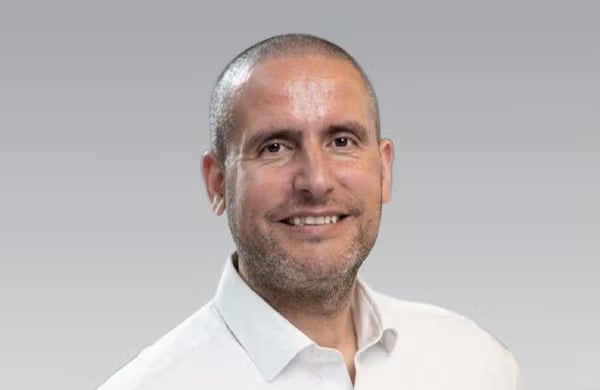
At a recent R&D and quality summit organised by the cloud computing provider Veeva, Pharmaceutical Technology spoke with Novo Nordisk’s vice president of data systems innovation, Ibrahim Kamstrup-Akkaoui, about the company’s AI-infused clinical strategy.
The company announced a deal with OpenAI in April to leverage AI to accelerate the development of its weight loss medications from drug discovery to commercialisation. Kamstrup-Akkaoui said Novo is now integrating AI tools into how it collects, processes, and submits clinical data to regulators, and that its focus on this technology is set to intensify further.
This interview has been edited for length and clarity.
Frankie Fattorini (FF): How is Novo Nordisk using AI to handle clinical data?
Ibrahim Kamstrup-Akkaoui (IKA): We’re doing it in many ways. In my space, we are looking into how we can automate the processes to set up the systems we use to collect clinical data; generate the specifications for these systems, and then use AI to help set them up. If we can tie these activities together and plug some AI into it, that will be helpful. We’re trying that with bits and pieces of our processes, which are showing good results, but in the future, we’ll try to connect these agents and hopefully have a more seamless system setup.
FF: Does that sort of integration extend to the way data is processed for approval submissions?
IKA: Absolutely. We work in a very standardised environment when it comes to data handling. This is extremely helpful because when you talk about plugging in AI, everybody knows by now that you need a really good data foundation.
We have industry standards for how to structure and format the data we submit to authorities. This is proving to be an advantage because now that we have AI available, our foundation is already well structured. That makes it a little easier for us to start adopting AI technologies and plugging in agents in parts of our manual processes today.
Now we’re seeing how we can, with the use of AI, get to the pieces that are less standardised. Often, we work with a standardised dataset [employing] reusable parts of our systems from trial to trial. But there are also the trial-specific [datasets] that differ from trial to trial. This is where AI is going to be handy in the future.
FF: How are regulators responding to this use of AI?
IKA: What’s important is that they’re starting to accept the use of AI in clinical trials. Of course, we’re still going to have a human-in-the-loop, because everything we generate has to be validated, and also because we’re still in the early days of using AI for our submission packages and replacing parts of our manual processes.
Until we show enough outcomes with fewer errors than the manual processes, I think we still need that human-in-the-loop [component] to some extent. You need to build trust and confidence by showing results. I think this is the phase that we’re in right now. But we’re in a very risk-averse business, so we want to have very high confidence if we have to rely on AI.
FF: Can AI be used to tailor submissions for different regulators?
IKA: This is what I am looking into at the moment: how can we get AI to help us gather the different requirements from different authorities? Understanding and translating the requirements from different authorities is complex.
The tests I’m doing with our teams are showing that it will be much easier having AI agents help figure out the differences in the requirements and—once we have a standard package to submit—where to make the changes to adapt to the different requirements.
FF: Has Novo Nordisk explored using AI to strategise regulatory submissions?
IKA: Yes, we are partly doing that. We’re using AI to look at the questions we are getting repeatedly in our submission processes and seeing if there is something we can optimise in our submission process moving forward.
FF: How are clinical trials changing because of AI?
IKA: As we become better at using AI, we should, at some point, become so good that we can work on simulating our clinical trials before we actually conduct them in real life. Hopefully, that will help us run the right trials the right way and shorten our clinical development timelines. At the end of the day, AI is going to help get treatments to the patients much faster than we could in the past.
We have the advantage now of having a system called FounData. A good number of our historical trials are loaded in it, and [we can] use AI to learn from the data points we have collected in the past. That will help us design the future trials, so AI is already showing some benefits.
FF: What are Novo’s plans for future AI adoption in this space?
IKA: For now, we are intensifying our focus on adopting AI. We just did a partnership with OpenAI to get more uptake in the company in the usage of AI. I think that also gives us an opportunity to work with more use cases within our processes and have the expertise of OpenAI to support us in developing the right solutions, so I’m looking forward to seeing some outcomes of that collaboration.


