
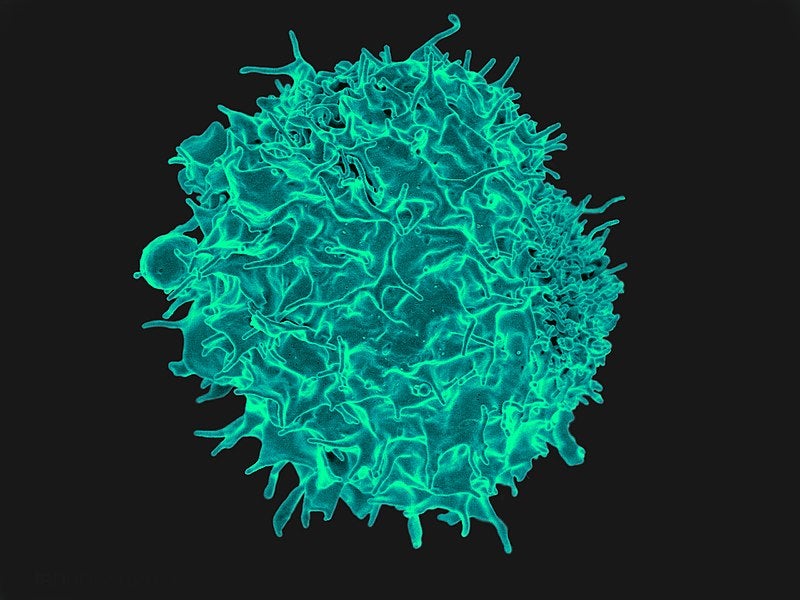
Researchers from the Perelman University of Medicine, University of Pennsylvania, have discovered that the TOX protein plays a crucial role in identifying exhausted immune cells.
Cell exhaustion is a result of cancer and chronic infections disrupting the balance of cell types that regulate them.
Go deeper with GlobalData


Discover B2B Marketing That Performs
Combine business intelligence and editorial excellence to reach engaged professionals across 36 leading media platforms.
The scientists found that the level of TOX protein determines if a T cell is an effector T cells (TEFF), a memory T cell (TMEM) or an exhausted T cell (TEX). Being able to differentiate between TEX, TMEM and TEFF in the tumour or infection site.
In addition, the researchers demonstrated precisely how the TOX protein determines the identity of a T cell. It makes spools on which genes are wound into the nucleus, therefore making them more or less available to be translated into proteins. This explains why industry has struggled to use existing therapies to alter TEX into TEFF.
Senior author of the research and director of the Penn Institute of Immunology E John Wherry said: “The discovery of TOX as the key regulator of exhausted T cells now allows us to envision immunotherapies that target, or engineer, TOX to reverse or prevent exhaustion and improve immunity to infections or cancer.”
T cells naturally start life as TEFF, which produce inflammatory cytokines against infection or cancer, but once the infection is cleared, only a small minority of TEFF remain, which are rewired to become self-renewing TMEM to quickly respond against the infection if it is detected again. Following long periods of T cell stimulation during chronic infections and cancer, eventually T cells become ineffective and exhausted.
However, TEX are not entirely useless, they can keep low-level germ or tumour presence in check, and sometimes preventing excessive damage to the patient.
However, the University of Pennsylvania team found that the longer TOX is expressed in a T cell, the more permanent its exhaustion, therefore leading to the persistence and sometimes progression of disease.
The research was published in the journal Nature and funded by the National Institutes of Health and the Parker Institute for Cancer Immunotherapy.


