
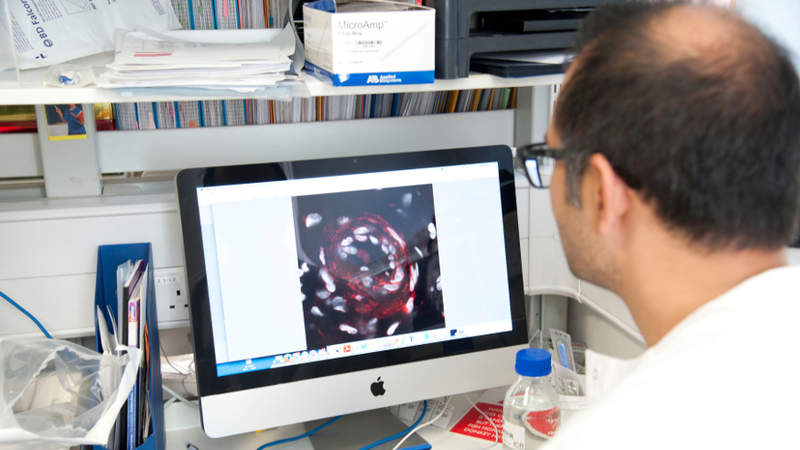
Researchers from the Institute of Cancer Research (ICR) in the UK have developed a computerised cell model of tumours to predict the treatment response to a new tumour-heating technology against cancer.
The technology uses a combination of high-intensity focused ultrasound (HIFU) and radiotherapy to send targeted sound waves for heating and killing the cancer.
Go deeper with GlobalData


Discover B2B Marketing That Performs
Combine business intelligence and editorial excellence to reach engaged professionals across 36 leading media platforms.
HIFU is a non-invasive heating technique being developed at the institute to provide ‘precise targeted’ treatment without impacting the surrounding healthy tissue.
The combination of this approach with radiotherapy is expected to offer a more effective treatment option as heating sensitises cancer cells to radiation.
ICR researchers intend to use the virtual tumours to evaluate the effectiveness of the new treatment technology before proceeding to clinical trials.
The team conducted a study, which was funded by Cancer Research UK and the Focused Ultrasound Foundation, to investigate the ability of their virtual cells to model the actual cell response to heat therapy.

US Tariffs are shifting - will you react or anticipate?
Don’t let policy changes catch you off guard. Stay proactive with real-time data and expert analysis.
By GlobalDataWhen compared with experimental data obtained during the use of a radiotherapy-heat combination for colorectal cancer cells treatment, the predictions from the model cells were found to be similar to the effects observed in the cell lines.
ICR researcher Gail ter Haar said: “Heating cancer cells using HIFU, which we’ve developed as a potential future treatment at the ICR, might boost the effects of radiotherapy in treatment for patients.
“This study shows that a new ‘virtual’ tumour that we developed can accurately mimic the response of cancer cells to heat treatment and radiotherapy, simulating how the two treatments work experimentally.”
The researchers hope that the computerised tumour simulations can be used to predict if a patient might benefit from radiotherapy and HIFU combination treatment.


