
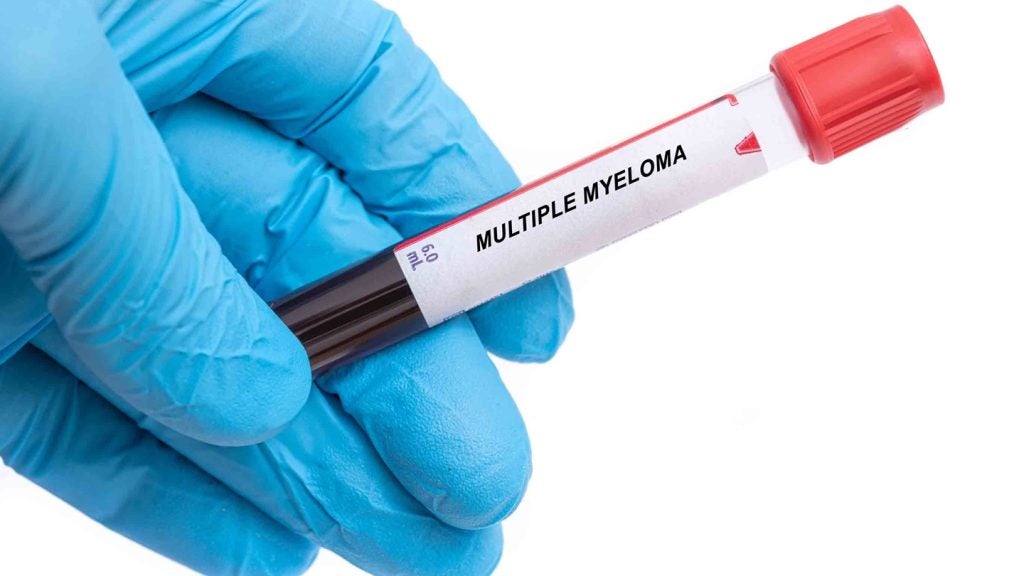
Sanofi has received approval from Japan's Ministry of Health, Labour and Welfare for its subcutaneous (SC) formulation of Sarclisa (isatuximab) in combination with standard therapies to treat multiple myeloma (MM).
The approval follows a positive finding in the pivotal IRAKLIA Phase III study, which demonstrated non-inferior efficacy and pharmacokinetics compared with the intravenous (IV) formulation. It also marks the second global authorisation after the EU.
The approved indications include combining Sarclisa SC with pomalidomide and dexamethasone (Pd) or with carfilzomib for relapsed or refractory multiple myeloma (r/r MM).
It is also approved in combination with bortezomib, lenalidomide, and dexamethasone (VRd) for newly diagnosed multiple myeloma (NDMM) in adults.
A regulatory submission for the CirCLIQ on-body injector (OBI), based on Enable Injections’ enFuse platform, remains under review.
If cleared, Sarclisa SC could be Japan’s first anti-cancer treatment to utilise an OBI, offering both manual injection and OBI administration for MM.
Sanofi oncology global head Olivier Nataf said: “Today’s approval of Sarclisa subcutaneous represents an important evolution in how we deliver care for multiple myeloma patients in Japan.
“This new formulation significantly eases treatment burden and enhances convenience for patients compared to intravenous administration — with the potential to become Japan's first anti-cancer therapy to be administered via an on-body injector.”
Pivotal data comes from the IRAKLIA Phase III study, which showed a 71.1% objective response rate (ORR) for Sarclisa SC-Pd administered via OBI, compared with 70.5% with IV-Pd.
Sarclisa SC demonstrated a safety profile consistent with the established IV formulation, with fewer infusion-related reactions (1.5% with SC-Pd vs 25% with IV-Pd).
The most frequent grade ≥3 non-haematologic adverse events included pneumonia, Covid-19, and upper respiratory tract infection. The common grade ≥3 haematologic laboratory abnormalities were neutropenia, thrombocytopenia, and anaemia.
In Japan, Sarclisa IV is approved for five indications, including as part of four r/r MM regimens and for NDMM. Sarclisa SC has EU approval across all current Sarclisa IV indications and is under review in the US.
Earlier this month, Sanofi entered a multi-year agreement with France-based agentic AI company Owkin to co-develop next-generation AI-driven biopharma agents.