
The European Commission (EC) has granted orphan designation to Lundbeck’s investigational monoclonal antibody asedebart (Lu AG13909) for the treatment of Cushing’s syndrome of endogenous origin.
This regulatory status is designed for therapies targeting rare, life-threatening, or chronically debilitating diseases.
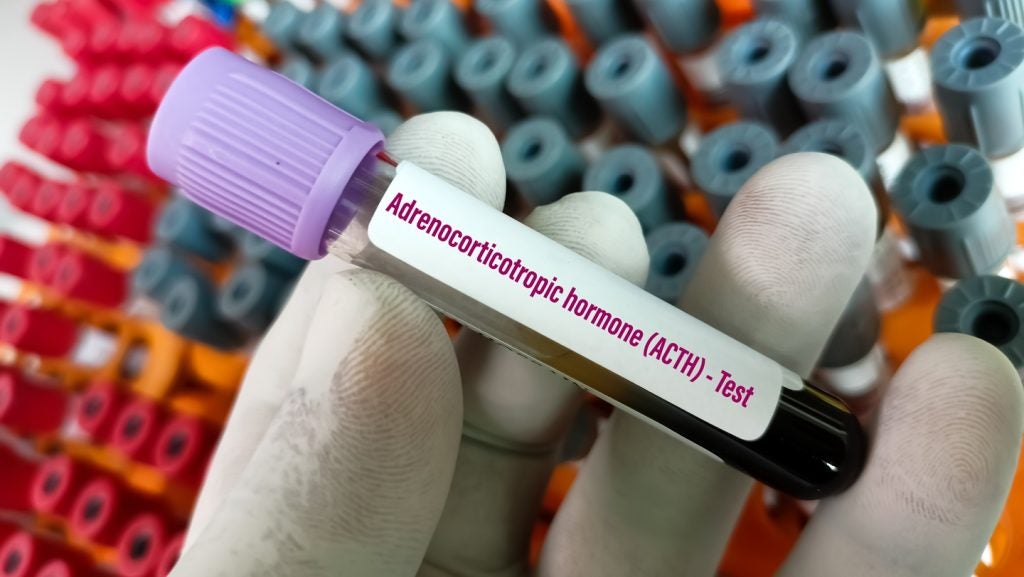
Cushing’s syndrome of endogenous origin is a rare endocrine disease caused in most instances by excessive production of adrenocorticotropic hormone (ACTH).
This is often due to a pituitary tumour known as Cushing’s disease, or less frequently from ectopic ACTH-secreting tumours.
Elevated ACTH leads to increased steroid hormone production, particularly cortisol, resulting in a significant disease burden characterised by metabolic, cardiovascular, and neuropsychiatric complications.
Existing medical therapies for Cushing’s syndrome can help manage cortisol levels, but disease control is often difficult and current treatments may have limited efficacy, safety, and tolerability.
Asedebart, developed by Lundbeck, is a humanised anti-ACTH monoclonal antibody that blocks ACTH binding to the melanocortin 2 receptor in the adrenal glands.
This inhibits the hormonal signalling pathway and reduces secretion of glucocorticoids, mineralocorticoids and androgens.
The mechanism is being explored in ongoing proof-of-concept trials in patients with Cushing’s disease and classic congenital adrenal hyperplasia (CAH) to evaluate safety and efficacy.
Lundbeck research and development executive vice-president Johan Luthman said: “Orphan designation in the European Union is an important recognition of both the unmet need in Cushing’s and the scientific rationale behind asedebart.
“The asedebart programme is a good representation of the type of strong targeted mechanism programmes we like to advance in Lundbeck.
“The orphan designation in Cushing’s syndrome for asedebart is also another example of a breakthrough innovation pipeline in neuroendocrine and rare disorders, where several programmes have been granted a number of special regulatory designations in recent years.”
Previous orphan designations have been awarded to asedebart for classic congenital adrenal hyperplasia in the EU, the US, and Japan, as well as for Cushing's disease in Japan.
Asedebart remains an investigational product and is not approved for marketing in any country.