This year, Sandoz celebrated the 20th anniversary of its – and the world's – first marketed biosimilar. But instead of focusing on the past, the company has its eye on the future where it plans to extend its dominant position in the off-patent landscape.
Harnessing what it calls a ‘golden decade’ for biosimilars, Sandoz has outlined an ambitious growth strategy that could see the manufacturer harbour more than 100 of the compounds in its portfolio by 2040.
Announcing the news at its Capital Markets Day on 8 September, Sandoz said the targets – part of a roadmap dubbed Bio100 – would help it become the undisputed leader in the biosimilar industry within the decade.
In a media briefing ahead of the event, CEO Richard Saynor said: “We’re launching Bio100 now because the window of opportunity is wide open. We believe it is our responsibility to capitalise on that opportunity.”
Currently, Sandoz relies primarily on generics for its revenue, with the 13 biosimilars in its portfolio dwarfed by the number of generics. That could soon change. By 2040, the company wants to have more than 100 biosimilars in its portfolio – a number that would firmly place it as market leader with room to spare. Alongside this, Sandoz plans to more than double net sales over the next 10 years.
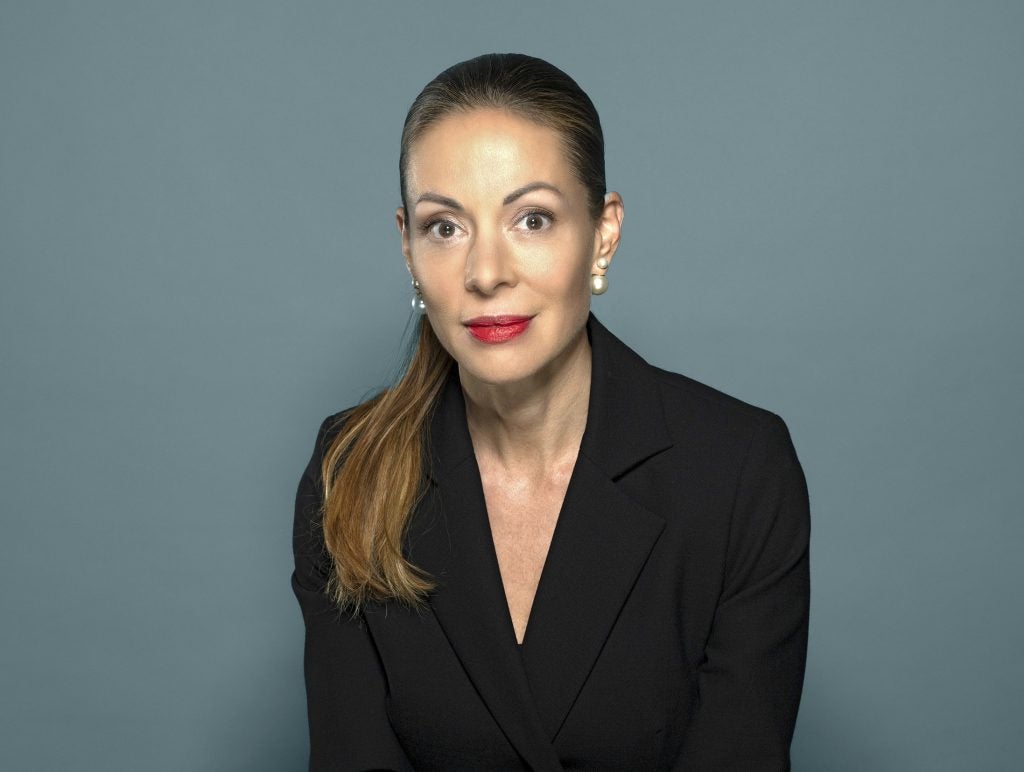
Speaking to Pharmaceutical Technology, chief commercial officer Rebecca Guntern said: “There’s an unparalleled opportunity in terms of loss of exclusivity (LOE) value and number of assets. Compared to the last 10 years, it's now triple the value, and if you look at 15 years ahead, it's an even bigger LOE opportunity, and that's why we believe we now have a huge opportunity for Sandoz to make a play in this market.”
The size of opportunity arises from pharma’s ongoing patent cliff, one of the largest ever to hit the industry. While drugmakers are scrambling to renew pipelines with fresh assets, Sandoz is strategically gearing up in the wings with a steady stream of generics and biosimilars referencing originator drugs going off patent – many of which have blockbuster status.
For example, Sandoz already markets Hyrimoz, a biosimilar referencing AbbVie’s Humira (adalimumab) that at its peak brought in over $21bn in sales. The LOE window is only going to grow bigger courtesy of the patent cliff, and Sandoz wants prime position – from 2035 onwards, the company wants to cover 80% of LOE value. That would mark a sizeable chunk, given there is over $300bn in originator sales not currently targeted by the company, according to its analysis.
A major growth driver for Sandoz will be glucagon-like peptide-1 receptor agonists (GLP-1RAs), a modality that has burgeoned in market value. Eli Lilly, which leads the branded market, netted $23bn in Q2 revenue this year, up 48% from the same period in 2025. Semaglutide, known under Novo Nordisk’s brand name Wegovy, is one of the assets that Sandoz has already begun launching in certain territories. There are, however, plenty of other modalities that Sandoz is harnessing.
“We're not stopping just with the standard biosimilars. Monoclonal antibodies (mABs) will obviously be a big part in our Bio100 strategy simply because the LOE landscape is driven by them. Antibody drug conjugates (ADCs) are an attractive opportunity because of LOE value and their impressive growth trajectory. Despite their complexity, we believe we have the capabilities to develop ADCs, bispecifics, and other proteins. We see the opportunity in these adjacent technologies, and we're going to also bring those to the market,” Guntern commented.
Sandoz is ensuring it is ready to meet those demands. While most will be developed in-house, some will be borne from partnerships. For example, last month the company signed a $322m deal with China-based Henlius that will see the two collaborate on up to 10 biosimilars.
Also announced at its Capital Markets Day was a $300m investment into a new drug substance facility in Ljubljana, Slovenia. The new facility, expected to become operational in 2029, will add disposable fed-batch technology to the company’s capabilities, and be tasked with strengthening in-house biosimilar manufacturing and supply across Europe. The investment adds to Sandoz’s already global presence, with development and manufacturing facilities in Germany, France, and the UK, along with an existing network in Slovenia.
At the media event, Saynor concluded by saying: “This is not just a network of individual sites and technologies; it is a fully coordinated end-to-end ecosystem that, for us, is the ideal platform to deliver Bio100. In case I wasn't already very clear, Bio100 is not just an ambition; it is a clear strategic grower.”