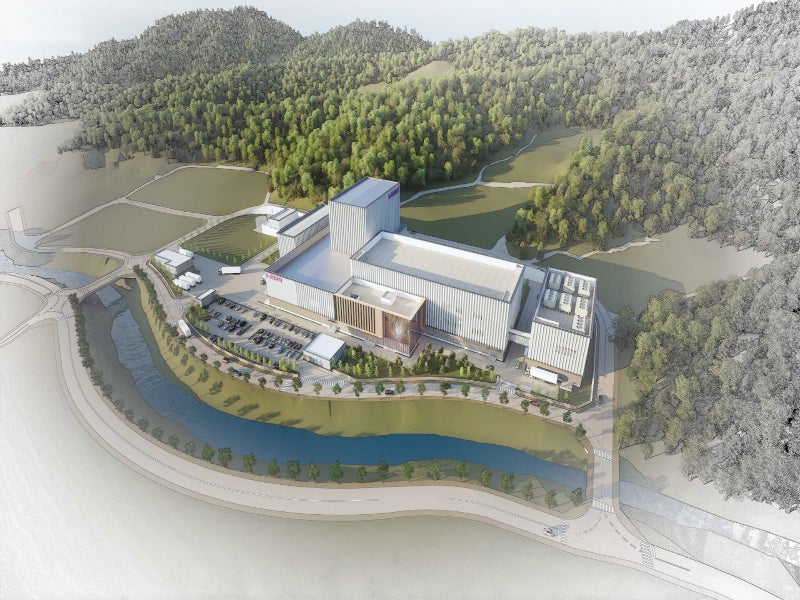
Merck will build a new bioprocessing production facility in South Korea. Credit: Merck.
Merck’s Bioprocessing Production Centre is located in Daejeon, approximately 140km south of Seoul, South Korea.
The facility provides products to customers across the Asia-Pacific region for the development and production of biologics, thereby enhancing the company’s presence in the rapidly expanding Asia-Pacific market.
The company invested more than €300m ($325m) into the project, marking the largest investment by Merck’s Life Science business sector in the Asia-Pacific to date.
Merck entered a memorandum of understanding with South Korea’s Ministry of Trade, Industry and Energy and Daejeon City in May 2023, to establish a new Asia-Pacific Bioprocessing Centre.
The final approval for the facility was granted at the end of February 2024, and the facility was inaugurated in October 2026. The new site is anticipated to generate approximately 300 additional jobs by the end of 2028.
Merck’s investment in South Korea is part of a broader, multi-year investment programme aimed at increasing the capacity and capabilities of its life science business sector. The programme responds to the increasing global demand for critical drugs and aims to make substantial contributions to public health.
Furthermore, Merck intends to collaborate with the Daejeon government to bolster biotech firms situated in the Daedeok Research Complex in Daejeon while also enhancing bio-research partnerships with top Korean universities.
Merch Bioprocessing Production Centre details
Merck’s new bioprocessing production centre spans 44,500m² (478,994ft²) and features state-of-the-art production capacities, a distribution centre, and an automated warehouse.
The facility assists biotech and pharmaceutical companies in process development, clinical research, and the commercial production of biologics and vital biotech products. These include dry powder cell culture media, process liquids, pre-good manufacturing practice small-scale manufacturing through imMEDIAte ADVANTAGE®, and sterile sampling systems based on the NovaSeptum® sterile sampling system.
Derived from large, complex biological compounds, biologics represent one of the fastest-growing drug classes and include vaccines, cell and gene therapies, and protein-based treatments such as monoclonal antibodies.
The production of all process fluids and cell culture media relies strictly on non-animal ingredients, adhering to uniform international quality benchmarks.
The facility’s unified digital ecosystem automates data collection and enables comprehensive batch tracing, which enhances process visibility while reinforcing quality control and regulatory alignment.
Driven by a sustainable infrastructure, the facility operates entirely without on-site fossil fuels, instead using solar energy, heat pumps, air-handling energy recovery, and rainwater recycling to maximise resource efficiency.
Contractors involved
South Korea-based construction company Kolon Global was contracted by Merck for the development of the project.
Marketing commentary on Merck
A science and technology company based in Germany, Merck operates across the sectors of life sciences, healthcare and electronics, with more than 62,000 employees.
The company is involved in various activities, from accelerating drug development and manufacturing to finding novel treatments for challenging diseases and enhancing device intelligence.
Established in 1989, Merck Korea has been a driving force in the dynamic growth of the science and technology industries, with more than 1,700 employees across life sciences, healthcare, and electronics.
The company’s presence in Korea includes 13 production and research and development sites, among which is the M Lab Collaboration Centre in Songdo, Incheon, that supports biopharmaceutical companies in the region.
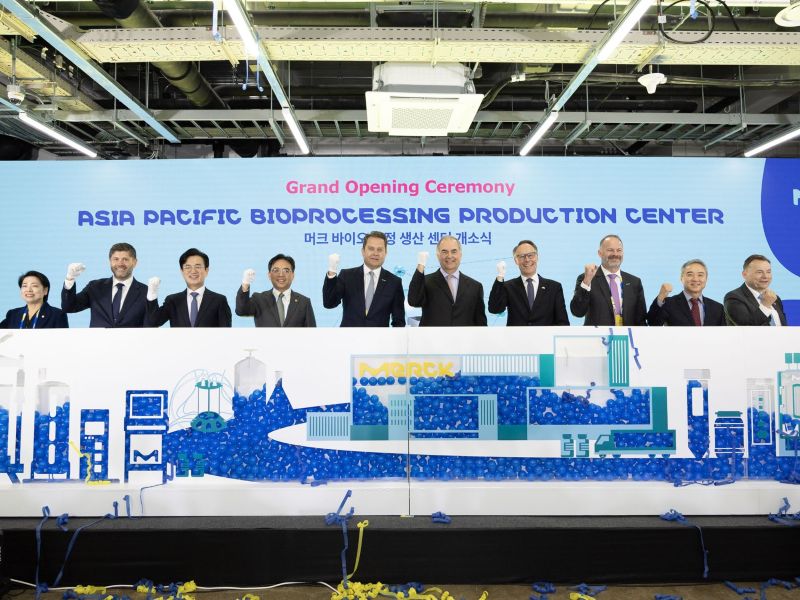
The bioprocessing facility was inaugurated in October 2026. Credit: Merck KGaA.
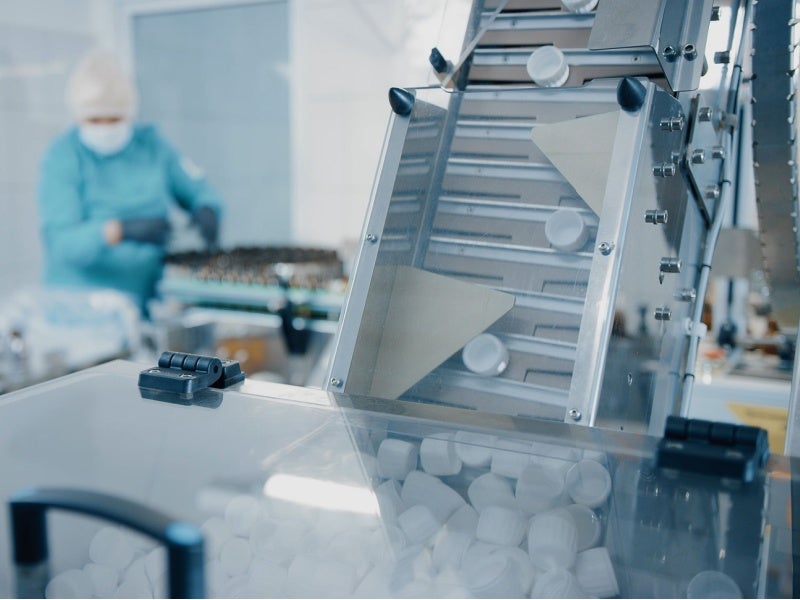
The new facility will supply crucial biotech products such as dry powder cell culture media, process liquids, and others. Credit: mkfilm via Shutterstock.
Merck’s Bioprocessing Production Centre is located in Daejeon, approximately 140km south of Seoul, South Korea.
The facility provides products to customers across the Asia-Pacific region for the development and production of biologics, thereby enhancing the company’s presence in the rapidly expanding Asia-Pacific market.
Recommended Buyers Guides
Buyers Guide
Digital health and digital therapeutics (DTx) services and providers for the pharmaceutical industry
Buyers Guide
Leading artificial intelligence (AI) companies in pharma
The company invested more than €300m ($325m) into the project, marking the largest investment by Merck’s Life Science business sector in the Asia-Pacific to date.
Merck entered a memorandum of understanding with South Korea’s Ministry of Trade, Industry and Energy and Daejeon City in May 2023, to establish a new Asia-Pacific Bioprocessing Centre.
The final approval for the facility was granted at the end of February 2024, and the facility was inaugurated in October 2026. The new site is anticipated to generate approximately 300 additional jobs by the end of 2028.
Merck’s investment in South Korea is part of a broader, multi-year investment programme aimed at increasing the capacity and capabilities of its life science business sector. The programme responds to the increasing global demand for critical drugs and aims to make substantial contributions to public health.
Furthermore, Merck intends to collaborate with the Daejeon government to bolster biotech firms situated in the Daedeok Research Complex in Daejeon while also enhancing bio-research partnerships with top Korean universities.
Merck Bioprocessing Production Centre details
Merck’s new bioprocessing production centre spans 44,500m² (478,994ft²) and features state-of-the-art production capacities, a distribution centre, and an automated warehouse.
The facility assists biotech and pharmaceutical companies in process development, clinical research, and the commercial production of biologics and vital biotech products. These include dry powder cell culture media, process liquids, pre-good manufacturing practice small-scale manufacturing through imMEDIAte ADVANTAGE®, and sterile sampling systems based on the NovaSeptum® sterile sampling system.
Derived from large, complex biological compounds, biologics represent one of the fastest-growing drug classes and include vaccines, cell and gene therapies, and protein-based treatments such as monoclonal antibodies.
The production of all process fluids and cell culture media relies strictly on non-animal ingredients, adhering to uniform international quality benchmarks.
The facility’s unified digital ecosystem automates data collection and enables comprehensive batch tracing, which enhances process visibility while reinforcing quality control and regulatory alignment.
Driven by a sustainable infrastructure, the facility operates entirely without on-site fossil fuels, instead using solar energy, heat pumps, air-handling energy recovery, and rainwater recycling to maximise resource efficiency.
Contractors involved
South Korea-based construction company Kolon Global was contracted by Merck for the development of the project.
Marketing commentary on Merck
A science and technology company based in Germany, Merck operates across the sectors of life sciences, healthcare and electronics, with more than 62,000 employees.
The company is involved in various activities, from accelerating drug development and manufacturing to finding novel treatments for challenging diseases and enhancing device intelligence.
Established in 1989, Merck Korea has been a driving force in the dynamic growth of the science and technology industries, with more than 1,700 employees across life sciences, healthcare, and electronics.
The company’s presence in Korea includes 13 production and research and development sites, among which is the M Lab Collaboration Centre in Songdo, Incheon, that supports biopharmaceutical companies in the region. The company opened another M Lab Collaboration Centre in Shanghai in July 2020, which is one of the company’s nine centres worldwide.