

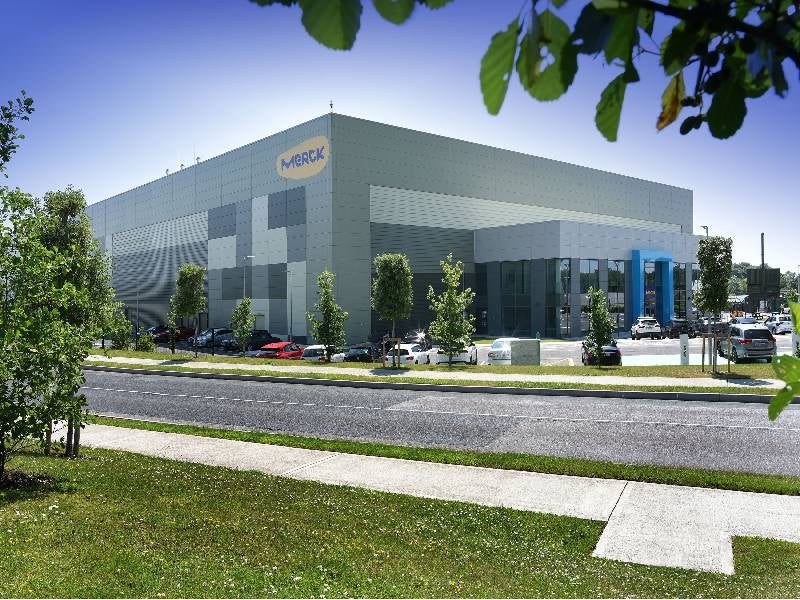
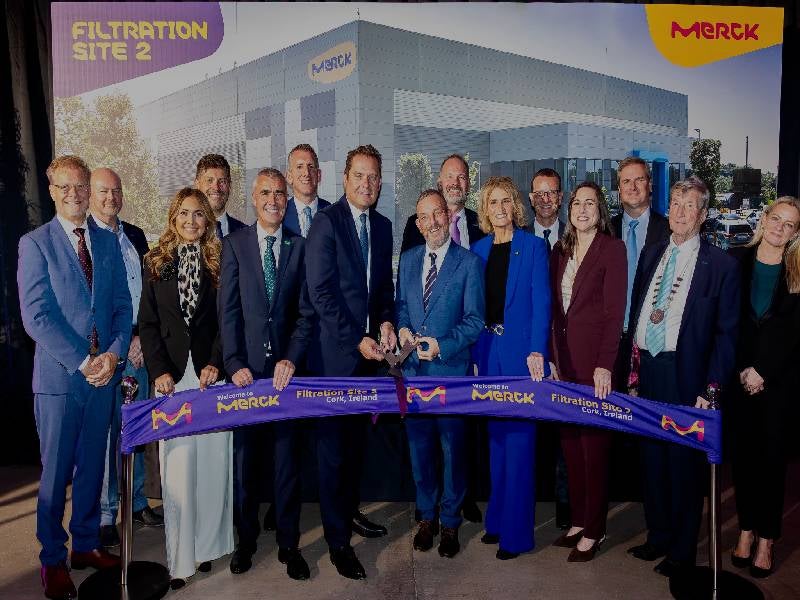
Merck’s new facility in Cork, Ireland, produces filtration devices for aseptic processing, tangential-flow filtration and virus filtration.
The facility is Merck’s first climate-neutral manufacturing facility, operating entirely on renewable electricity.
Recommended White Papers

Recommended Buyers Guides

The €150m ($174.8m) facility forms part of Merck’s €440m investment in Ireland, aimed at enhancing regional supply resilience.
This investment is included in Merck’s broader Life Science global expansion programme, announced in 2020, to address increasing demand for therapies in Europe, China, and the US.
Merck announced the project in May 2022, and the new facility commenced operations in September 2025. The facility is projected to generate more than 200 jobs by 2028.
Location
Merck’s filter manufacturing facility is situated at Blarney Business Park in Cork, Ireland.
The business park covers more than 70 acres (28.3 hectares), with direct access to the N20 and is located approximately 6km north of Cork City.
Merck’s filter manufacturing facility details
Merck’s filter manufacturing facility has a floor area of 16,000m2 over four floors. It includes a 3,000m² cleanroom, laboratories, office areas, canteen, external plant and storage areas.
The cleanroom supports global requirements for filtration products used in the production of vaccines, monoclonal antibodies and emerging modalities such as cell and gene therapies.
The site uses 100% renewable electricity and features a heat recovery system, which is estimated to avoid up to 61 tonnes of carbon dioxide equivalents annually.
It is also designed to reuse up to 95% of high-purity reverse osmosis water from its manufacturing processes.
Merck’s filtration product details
Merck manufactures a range of membranes, filter holders, tangential flow and centrifugal filtration devices and sterilising-grade filters such as Durapore and Millipore Express membranes.
Durapore membranes offer high flow rates, low extractables and broad chemical compatibility while the Millipore Express filters use hydrophilic polyether sulfone membranes, providing sterile filtration with high flux and capacity.
Millipore Express filters are suitable for applications such as filtration of cell culture media and feeds, as well as sterile filtration in monoclonal antibody, vaccine, plasma, viral vector and parenteral production processes.
Merck also produces tangential flow filtration devices, including single-use and multi-use Pellicon filters, for applications in monoclonal antibodies, antibody-drug conjugates, plasma IgG, vaccines and viral vectors.
The Pellicon single pass TFF enables concentration of process streams without recirculation, thereby reducing process volumes and tank requirements.
The Viresolve Pro solution is Merck’s virus filter, designed for viral clearance in downstream processing of monoclonal antibodies and recombinant proteins.
Other products include vacuum filters, gas, and vent filters and concentration filters.
Contractors involved
Tandem Project Management was appointed by Merck to provide engineering design, procurement, construction management and commissioning/qualification services for the project.
In November 2022, CField Construction was engaged as project supervisor construction stage, construction material tester and main contractor.
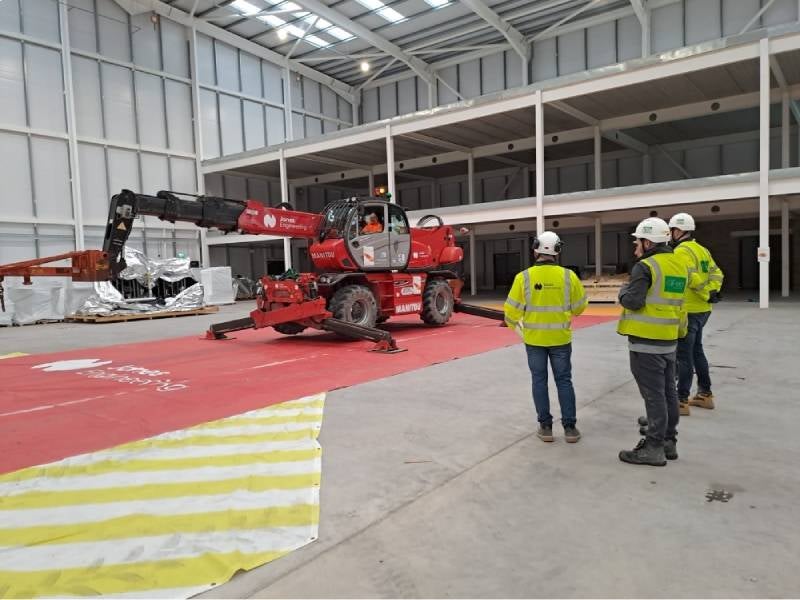
The company’s responsibilities included installation of clean rooms, mechanical, electrical, sprinkler and process equipment, as well as construction and fitout of laboratories.
Other contractors involved are Radon Ireland, Jones Engineering, HSS Hire Ireland and Horganlynch Consulting Engineers.
Marketing commentary on Merck
Established in 1668, Merck is a Germany-based company operating in the life science, healthcare, and electronics sectors.
The company is involved in providing products and services that accelerate drug development and manufacturing, as well as discovering unique ways to treat challenging diseases.
The company has been present in Ireland since 1977. Its Life Science Centre in Carrigtwohill, Cork, referred to as the ‘Membrane Centre of Excellence’, manufactures various types of membranes annually.
