
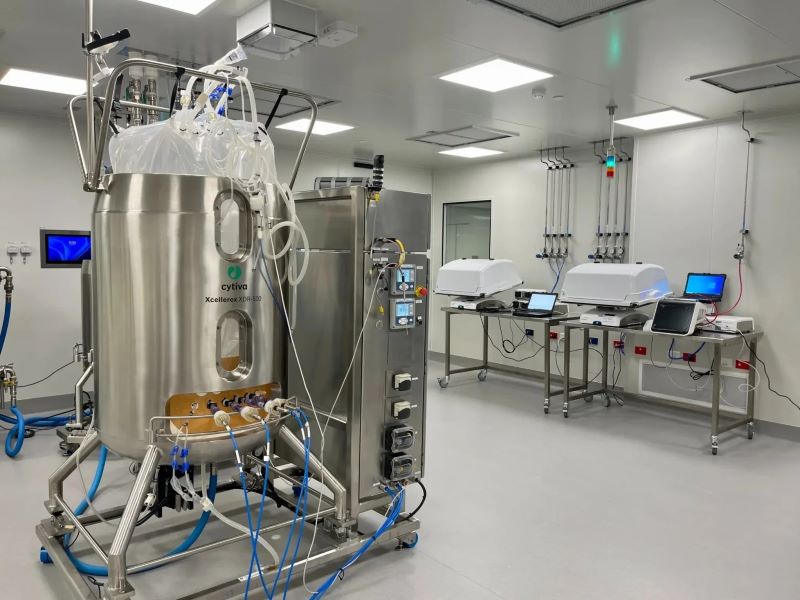


The New South Wales (NSW) Government in Australia has developed a state-of-the-art good manufacturing practice (GMP)-grade viral vector manufacturing facility within the Westmead Health and Innovation District in western Sydney.
A new company named Viral Vector Manufacturing Facility (VVMF), based in Westmead, was established to operate the facility in February 2024.
Recommended Buyers Guides

The facility was constructed in two stages and officially launched in October 2025.
The new facility manufactures GMP-grade lentiviral (LV) and adeno-associated viral (AAV) vector products for research and clinical trials, supporting the current absence of GMP-licensed viral vector manufacturers in Australia.
It is designed to meet the increasing demand for clinical-grade viral vectors essential for gene therapy and cell therapy research, as well as clinical trials both domestically and internationally.
The facility is a collaborative effort involving the NSW Treasury, Investment NSW, and various NSW Health entities including Health Infrastructure, the Office of Health and Medical Research and Sydney Children’s Hospitals Network, with support from the Children’s Medical Research Institute and Western Sydney Local Health District.
Location details
The NSW viral vector manufacturing facility is located in Westmead, part of the Westmead Health and Innovation District, a health, education, research and training precinct in Australia.
The district is an integrated hub that includes hospitals, medical research institutes and university campuses, providing a single point of entry to a network of globally recognised companies in cell and gene therapy services.
The building in this precinct also offers convenient access to international collaborators via the Western Sydney Airport, commencing operations in 2026.
New viral vector manufacturing facility details
The stage one viral vector infrastructure facilitates the application of cell and gene technologies across the entire journey from discovery to clinical trials for both paediatric and adult patients.
This stage comprised a 25-litre viral vector pilot manufacturing facility, with GMP certification for licensed production and marketing of clinical-grade viral vectors.
The pilot facility was designed to produce viral vectors on a small scale, which is sufficient for proof‑of‑concept testing and laboratory use for the early design and development of new therapeutics.
Stage two involved the expansion of the pilot facility to a commercial-scale viral vector manufacturing facility with a 550-litre capacity. The project included designing and outfitting a facility situated within the Kids Research Building and Innovation Centre, as well as procuring specialised equipment such as laboratories, plant rooms and services.
The expansion also included additional laboratories for quality control and process development. The stage two facility enables production and purification procedures that produce viral vectors on a larger scale needed to further develop the therapeutics.
Viral vector details
Viral vectors are essential tools used to develop gene therapies. Gene therapies treat genetic diseases in various ways by replacing a defective gene that is causing the disease, adding genes to help the body fight or treat the disease, or switching off genes that are causing the disease.
Gene therapy depends on a carrier (vector) to deliver the favourable genes into the body’s cells. Viruses are ideal vectors to carry information to the cells because they have the natural ability to target specific cells.
When the viruses are altered to remove their disease-causing ability, they can be safely used as vectors to insert the beneficial genes without causing any disease. The addition of these functional genes into the cells prepares the cells with the necessary instructions to operate normally, thereby rectifying cellular dysfunction.
Viral vectors can be instructed to deliver genes to a wide range of cell types for the treatment of various diseases. Viral vectors are the gene delivery vehicles used in approximately 70% of gene therapies.
Financing
In total, the NSW Government has pledged A$134.5m ($88.26m) to set up the facility and support the production of viral vector products for research activities and clinical trial use.
In 2019, the NSW Government committed A$25m in funding to develop the facility.
Health Infrastructure, a state government office, led the planning and construction of the A$49.6m stage two commercial-scale viral vector manufacturing facility, in addition to allocating A$51.8m to expedite the development of viral vector products for research and clinical trials.
The funding was a part of the NSW Government’s A$270.3m package allocated for biomedical research within its health and innovation precincts.
Technology details
In April 2025, VVMF selected SYSPRO, an enterprise resource planning (ERP) software provider, to implement the facility’s Cloud ERP system.
SYSPRO’s ERP system features robust lot traceability functionality that allows VVMF to oversee full end-to-end tracking across raw materials, components and finished viral vectors. This supports product integrity, enables swift action in the event of a recall and helps safeguard patient safety.
Manufacturing partnerships
VVMF entered a strategic collaboration with Cell Therapies to improve the onshore development and manufacture of advanced therapy medicinal products (ATMPs) in July 2025.
Chimeric Therapeutics signed a letter of intent with VVMF to provide GMP-grade manufacturing of lentiviral vectors in October 2025.
In the same month, OXB and VVMF partnered to prioritise licensing of lentiviral and AAV vector platforms.
Contractors involved
The viral vector manufacturing facility was built by the construction engineering company Kane Constructions, while HDR served as the architect.
Biointelect, a consulting and advisory practice, provided strategic planning and conceptualisation services for the project.
Stantec served as the consultant for the electrical systems, while Fredon Electrical was appointed as the electrical contractor.
Esco Industries supplied service panels, switchgear and associated accessories, and Novon Lighting supplied lighting products for various areas of the viral vector manufacturing facility.
