


Pharmaceutical markets are increasingly crowded with similar equipment, scientists, and facilities, which means differentiation is about more than the active ingredient. While the mechanism of action may support regulatory approval, formulation increasingly determines whether a therapy fits clinical workflows, patient routines, pharmacy operations and long-term treatment patterns.
For prescribers, this means assessing whether a medicine can be used reliably in real-world practice, not simply whether it performs in a controlled clinical trial setting. For manufacturers, formulation and process are commercial design choices that can influence launch performance, lifecycle management and brand resilience. This is particularly evident in oncology, immunology, metabolic disease, central nervous system (CNS) disorders, and paediatrics, where competition is intense and incremental gains in efficacy are often narrow. In these categories, formulation can move a product from being clinically acceptable to clinically preferred.
How formulation is advancing oncology efficiency and precision
In oncology, formulation innovation addresses two priorities: improving the patient experience and reducing pressure on healthcare system capacity. According to GlobalData, the number of active antibody-drug conjugates (ADCs) rose from 557 in 2020 to 1,643 in 2025, nearly tripling in five years[i]. In such a competitive market, delivery profile and tolerability are becoming important sources of differentiation.
Differentiation within ADCs is becoming more sophisticated, with linker chemistry being especially critical because the linker determines when and where the payload is released. A linker that releases payload too early can increase systemic toxicity, while one that remains too stable can undermine efficacy. This balance increasingly shapes competitive performance among next-generation assets.
Liposomal encapsulation provides another route to differentiation, as encapsulating cytotoxics in lipid bilayers can alter biodistribution, prolong circulation, and reduce exposure to healthy tissue. Nanoparticle delivery platforms can offer similar advantages, particularly where toxicity constrains dosing intensity, making formulation central to expanding the therapeutic window by improving both usability and potency.
The value of convenient administration and patient acceptance
Enabling technologies such as recombinant human hyaluronidase in oncology can also support the shift from long intravenous (IV) infusions to minutes-long subcutaneous injections, freeing clinic capacity while improving patient convenience.
The shift from IV infusion to subcutaneous (SC) administration has had a significant practical impact. An IV biologic may require infusion chairs, specialist nursing time, pharmacy preparation and prolonged patient appointments. A subcutaneous alternative can reduce administration to minutes and may enable home or near-home care.
The FDA approval of subcutaneous nivolumab in late 2024 is one example of how quickly this model is moving into mainstream oncology. This has commercial significance because convenience increasingly influences prescribing behaviour when multiple branded therapies deliver broadly comparable outcomes. Furthermore, a therapy that reduces chair time, nursing burden and pharmacy workload can offer operational value beyond its clinical profile.
Delivery device design further strengthens this differentiation, as autoinjectors with reduced activation force, hidden needles, ergonomic handling, and simplified instructions can reduce treatment anxiety and support persistence. Lower-viscosity formulations can also enable the use of thinner needles, resulting in improved patient comfort and reduced injection aversion, while smart inhalers and connected delivery devices generate adherence data, usage analytics, and clinician feedback loops.
Translating formulation into adherence
Adherence remains one of the largest commercial and clinical obstacles in chronic disease, particularly when dosing is frequent, administration is inconvenient or side effects build over time. Oral formulations can broaden prescribing, reduce administrative complexity and lower treatment hesitancy. But for some patient groups, success depends on more nuanced formulation choices.
In biologics and GLP-1 therapies, the shift from injection to an oral solid dosage form can reduce treatment burden and expand use among patients earlier in the treatment pathway. Extended-release formulations, long-acting injectables and microsphere-based systems can reduce daily treatment burden to monthly or quarterly administration, strengthening adherence in chronic conditions where persistence is a major commercial challenge.
Paediatric medicines are a clear example, as developing for children cannot be reduced to scaling down an adult dose. It requires consideration of age-related differences in drug absorption, metabolism and elimination, as well as swallowing ability, taste preferences, motor skills and caregiver involvement. Acceptability is often central, as children may reject solid dosage forms or respond strongly to a medicine’s flavour, colour, texture or mouthfeel.
Taste masking can therefore be commercially material, particularly for orally disintegrating tablets, suspensions and liquids that expose patients to an unpleasant active pharmaceutical ingredient (API). Options include flavour and sweetener systems, coating and encapsulation technologies, cyclodextrin complexation, and ion-exchange resins.
The same principle applies to older patients. Oral liquids are important for paediatric and geriatric populations because they are easier to swallow, allow flexible dosing and may act quickly. However, that convenience adds technical complexity, especially for poorly water-soluble APIs, where developers may need solubility enhancers, surfactants, nano-emulsions or self-emulsifying systems to achieve a stable, bioavailable product.
However, that convenience depends on detailed formulation science. Stability must be managed against chemical and physical degradation, microbial contamination, sedimentation and phase separation, while excipients, preservatives, antioxidants and chelating agents must be tested for compatibility with the API and the target patient population. In paediatrics, excipient selection is especially sensitive, as some sweeteners, ethanol and coating materials may be unsuitable for certain children.
Viscosity and rheology also affect usability and dose consistency: a liquid that is too thick may be hard to swallow and require multiple rinses to get all the product delivered, while one that is too thin may separate or lead to dosing inaccuracies. This can be particularly problematic for paediatric and geriatric patients. Unit-dose packaging, re-dispersible suspensions, validated dosing components, and compatible containers can help reduce these risks, making the formulation inseparable from the container, measuring device, and real-world conditions of use. Furthermore, for paediatric and geriatric patients, formulations are also suitable for gastric and naso-gastric tubes.
Tolerability and long-term treatment persistence
The focus on patient acceptability leads directly to a broader commercial question: whether a formulation can make treatment easier to start, tolerate, and sustain over time.
Patients rarely discontinue an effective therapy because they question its efficacy. More often, treatment persistence is undermined by tolerability, inconvenience or day-to-day burden. In one survey of patients who discontinued GLP-1 receptor agonists, 64.4% said the treatment made them feel sick, and 45.4% said it made them vomit[ii].
Delivery systems that alter release kinetics, absorption pathways or local gastrointestinal exposure may improve tolerability. Enteric coatings, lipid-based formulations and modified-release technologies can also help reduce irritation, nausea or gastric burden.
In immunology, the industry-wide move towards citrate-free formulations has materially improved the injection experience for self-administered biologics. Reducing injection-site pain may appear incremental from a formulation perspective. But commercially, it can create brand loyalty. For patients who have been self-injecting for years or decades, comfort becomes part of the product’s value proposition.
Stability and lifecycle management as strategic defences
Not all formulation advantages are patient-facing. For example, cold-chain dependence creates operational complexity across distribution, pharmacy handling, storage and patient mobility. While products that maintain room-temperature stability can simplify logistics, reduce cost and improve geographic reach, particularly in emerging markets or decentralised care settings.
From a manufacturing perspective, stability also shapes packaging requirements, shelf-life economics, inventory flexibility and distribution resilience. For self-administered biologics, this flexibility can improve quality of life, reducing barriers for patients who travel frequently or lack reliable refrigeration infrastructure.
Stability enhancements also form part of a broader lifecycle management strategy. As products approach patent expiry, reformulation can extend differentiation and preserve share through improved tolerability, new routes of administration, more convenient delivery devices, taste-masked paediatric versions, oral liquid presentations, or conversion from immediate-release to extended-release formulations. For incumbent brands, reformulation can provide a bridge beyond patent expiry by moving patients to a more convenient, tolerable or stable version before generic or biosimilar competition intensifies.
Why outsourcing partners matter more than ever
As formulation complexity increases, gaps in in-house capability become more apparent, particularly as highly engineered delivery systems require specialised expertise across sterile processing, containment, complex injectables, advanced excipients, nanoparticle handling, analytical validation, device integration, and commercial scale-up.
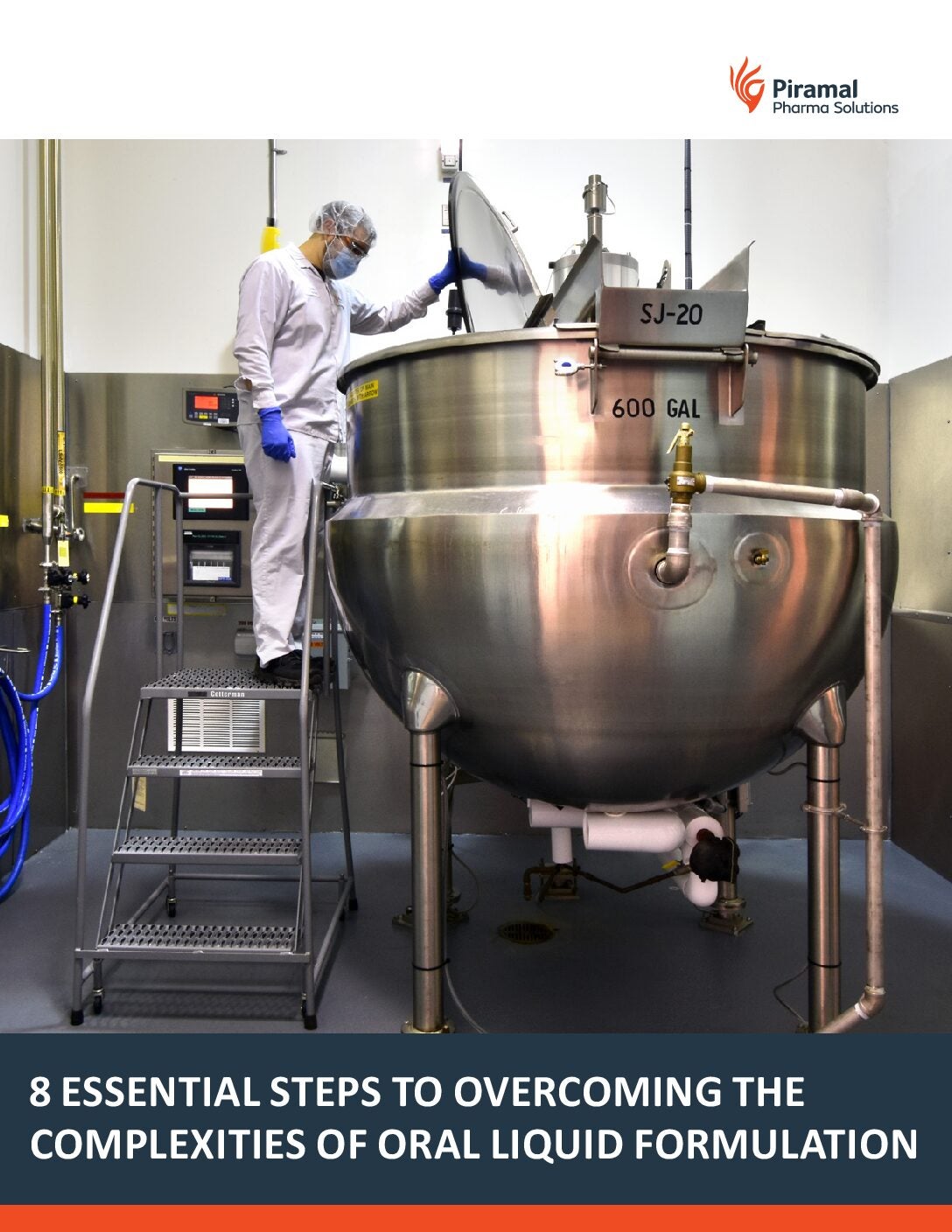
The oral liquid pathway demonstrates the breadth of capability required. Developers require pre-formulation studies, solubility and stability screening, taste masking, viscosity control, excipient compatibility testing, dose uniformity evaluation, packaging assessment, process validation and reproducible scale-up. Because these requirements span development and manufacturing, early formulation choices can directly influence shelf-life, packaging strategy, technology transfer, and commercial robustness.
For paediatric products, the capability requirement becomes more specialised. Age-appropriate dosage-form expertise across oral liquids are required, along with suspensions, chewable tablets, coated pellets, injectables and topical formats, as well as a clear understanding of excipient safety, palatability, caregiver administration and flexible dosing. Taste masking may require flavour systems, cyclodextrin complexation, ion-exchange resins or coating technologies. While controlled-release approaches can help address adherence challenges in areas such as ADHD.
Integrated services for formulation and manufacturing
Piramal Pharma Solutions is ideally positioned to meet this need for integrated formulation and manufacturing support. The company has six specialist facilities around the world, with two in the US, one in the UK, and three in India. From these facilities, Piramal offers a diverse range of services, including process development, clinical supply, commercial manufacturing and packaging, and is equipped to develop, scale up, and commercialise paediatric formulations across multiple dosage forms, including oral liquids, suspensions, seal-coated pellets, chewable tablets, and creams. The site has also demonstrated creative formulation development for paediatric mini-tablets and taste-masking of a high-dose orally disintegrating tablet. This illustrates the practical problem-solving required to balance acceptability, dose flexibility, and manufacturability.
This breadth is reinforced by Piramal’s broader CDMO model, which spans drug discovery solutions, process and pharmaceutical development services, clinical trial supplies, commercial API supply and finished dosage forms. Specialised capabilities also include highly potent APIs, antibody-drug conjugations, sterile fill/finish, peptides, potent solid oral drug products and biologics development and manufacturing through Yapan Bio, Piramal Pharma Limited’s associate company.
This changes the role of the contract development and manufacturing organisation (CDMO). Sponsors increasingly need partners that can support translational scale-up, formulation optimisation, commercial manufacturability, regulatory readiness, and lifecycle evolution.
This is especially relevant in fast-moving categories where speed to market and differentiated delivery can determine commercial outcomes. In this context, the strategic question is no longer simply whether a partner has capacity, but whether it has the scientific, technical and operational depth to help turn a complex product into one that is manufacturable, usable, and commercially resilient.
To learn more about Piramal’s services, download the document below.
[i] GlobalData, Antibody-Drug Conjugate Drug Landscape, 2026 report
[ii] https://pmc.ncbi.nlm.nih.gov/articles/PMC5630073/
