

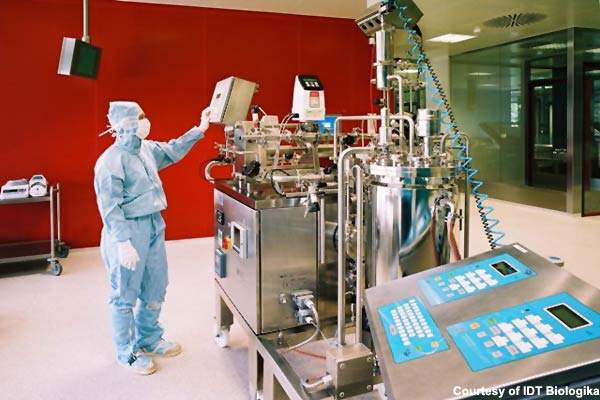
IDT Biologika is one of the leading biotechnology companies in Germany with its origins in the Bacteriological Institute of the Anhaltian Administrative Areas, founded in 1921 and producing vaccines since 1925. This was developed into the Anhalt Serum Institute in 1945 and IDT (Impfstoffwerk Dessau-Tornau) developed from that.
Now part of the Klockner Group, IDT Biologika (named as of October 2007) has been developing and manufacturing vaccines under contract since 1993.
Recommended White Papers
Recommended Buyers Guides

In May 2007 the company opened a new modern biotechnology facility for the production of recombinant and non-recombinant live human viral vaccines at the Dessau-Rosslau site in Germany. This has been called the Facility for Production of Live Human Viral Vaccines, IDT 201 and in 2008 won the Facility of the Year Award for Operational Excellence.
The company now has two production buildings at the site.
The viral vaccine facility has increased the company’s capability for viral-based process development for phase 1 and 2 clinical trials, production of small clinical batches for phase 3 and also commercial-scale manufacture. The facility develops vaccines against infectious diseases such as tuberculosis, malaria, AIDS and rotavirus.
The company announced a further €85m investment in the facility by the end of 2012 to expand its operational capacities and skills. The investment will be used for new high-tech production facilities and equipment. A new deep freeze storage suite, a filling facility for vaccines and a number of specialised warehouses will be constructed. The research lab will also be extended. Approximately 160 new jobs will be created due to the expansion.
The federal and state joint task for the Improvement of the Regional Economic Structure will offer €9m towards financing the expansion.
IDT 201 building
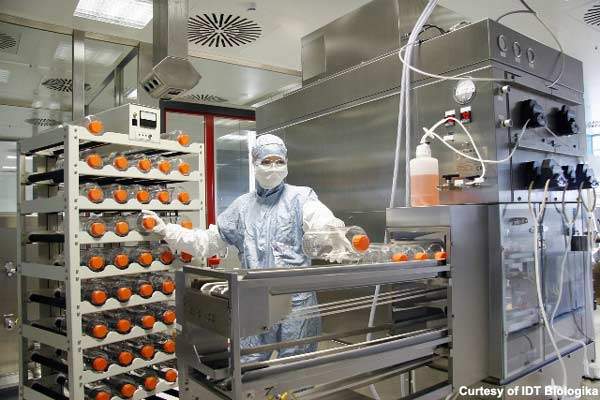
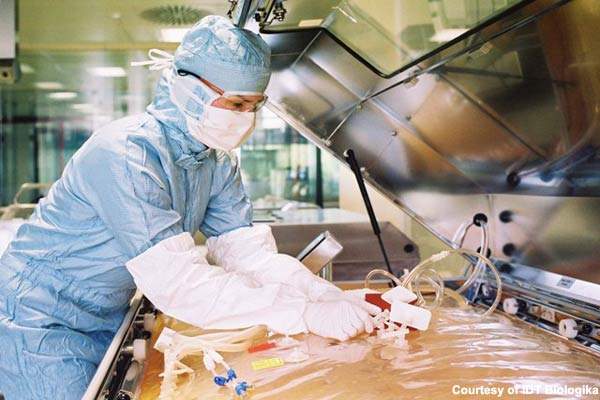
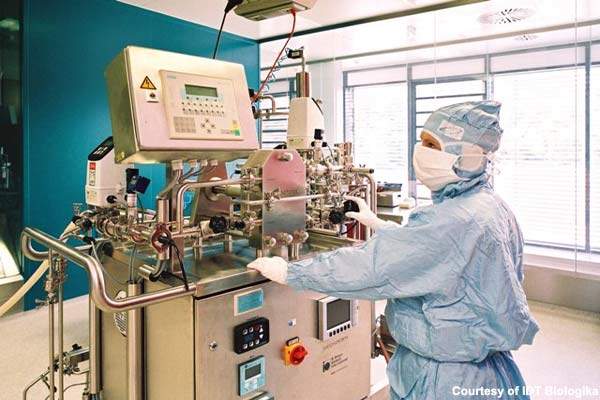
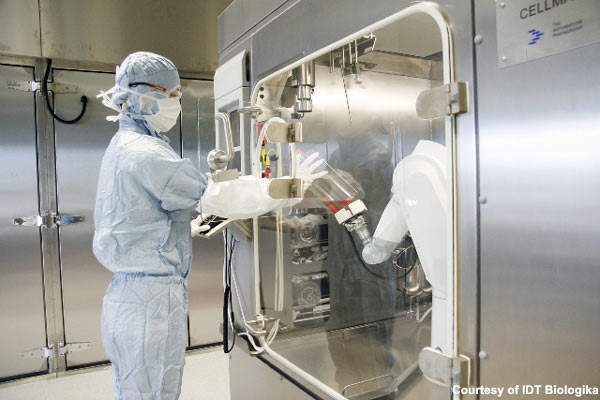
The €23m ($37.5m) IDT 201 building has two separate aseptic production lines for egg-based production and cell culture production based on roller bottles. The facility makes full use of restricted-access barrier systems and robotic systems to increase safety and efficiency of the production process.
The facility has the capacity for the large-scale manufacture of batches of different vaccines and can change production campaign on each line within 12 hours, whereas other facilities are only usually licensed for one or two. A step-by-step change from USP to DSP is possible. The new 4,698m² (50,568ft²) building is expected to realise a four-fold increase in production at the site.
The expansion will also see a high-speed viral vaccine filling line and additional lyophilisation capacity added to the facility.
Contractors
The facility was constructed within 19 months and has been operating since the end of 2007. The architect for the project was Heene and Proebst. The general contractor was Technik-Energie-Wasser Servicegesellschaft and the process engineer was BIDECO.
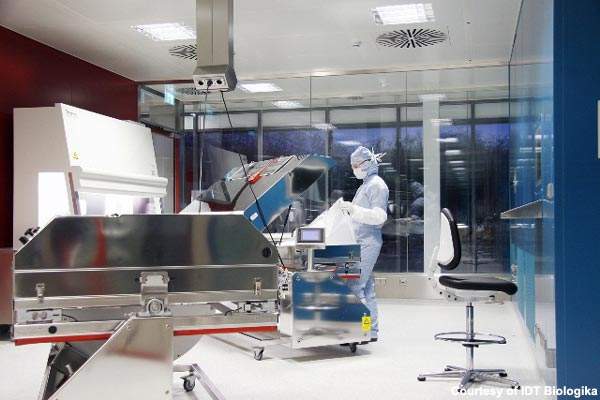
The facility was constructed with a transparent look so that all the passageways and locks are glass, allowing views across the building and lots of natural light. The different working areas are designated by different colours.
The building has strict horizontal divides between service areas and was set up with the manufacturing in the centre, with maintenance and air-conditioning located above and the media preparation/supply area below. Each room in the facility has been equipped with standard and mobile service panels. The cleanrooms have hanging service panels which can be adjusted to any position in the room.
Production
The majority of operations are contained in cleanrooms. For example, the roller culture used for virus production has been fully automated inside a class A (100) cleanroom, allowing a reduction in staff numbers as robots are used for processing. The dual production lines are for egg and cell culture.
The egg line has a fumigation lock (formalin), automatic disinfection hose system, hose sealing system, laser system for opening eggs and restricted access barrier for extracting the embryos. This achieves a closed system. The cell culture line has dual cooling areas with capability for -80°C, automated clean and steam-in-place systems, as well as wastewater deactivation and continuous 135°C treatment/disposal.
There are also large class 10,000 (B) and 100,000 (C) cleanrooms with facilities to culture viruses at a wide range of temperatures. The cleanrooms have been designed with electronic access systems and the personnel locks are three-chambered airlocks with exit and entry occurring between different locks.
Rooms with infectious materials are kept under sub-pressure conditions and ventilation conditions are constantly monitored by room and external monitors, with ventilation occurring through two HEPA filters.
On the other production line where roller bottles are used for production the extensive use of robots has meant the reduction of the number of personnel for this has been halved.
Fumigation
The facility makes use of a state-of-the-art formalin fumigation process for sterilisation, which means that campaign changeovers can be rapid. The rooms where the system operates are all hermetically sealed and when the process has been completed formalin is removed by a dual system of exhaust gas washing (formalin washing), as well as complete oxidation to formic acid to remove the final traces. The areas under treatment are sealed off from the rest of the building by inflatable door seals during the fumigation process, to protect personnel.
Environmental
The building has also been configured to save energy and resources. There is a night mode for the air-conditioning system, which puts the system into an energy-saving mode.
There are automatic blinds on the windows to protect against glare, heat and cold. Water is conserved by systems as much as possible and recycled where possible.
The site also has a central utilities area through which all media are routed and this gives energy efficiency through heat exchange. Finally, there is a space between inner cleanroom walls and the façade of the building and the outlet air from this is used for thermo-technical separation.
