

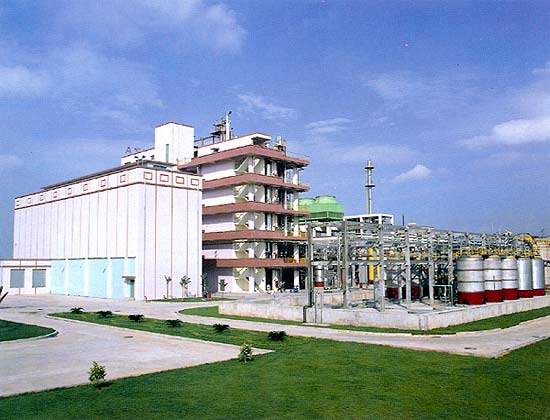
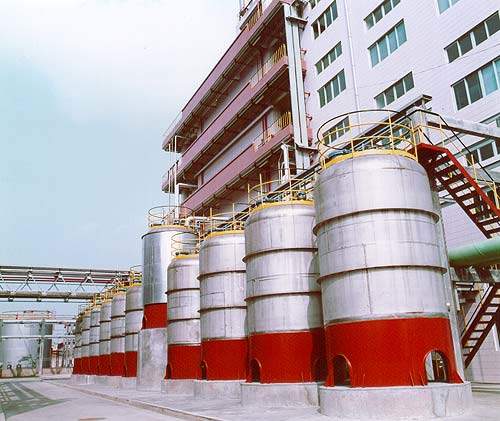
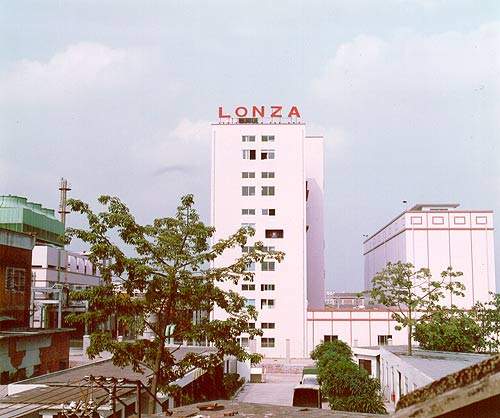
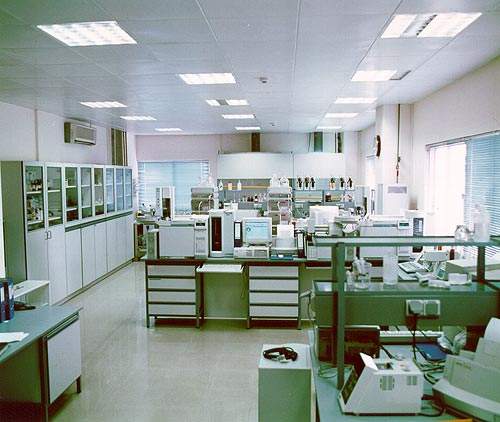
Lonza Fine Chemicals and Specialties put a production facility for niacinamide into operation in 1997 following a joint venture (JV) agreement with the Guangzhou Pesticide Factory.
Lonza had the larger share in the JV, with a 60% stake.
Recommended White Papers

Recommended Buyers Guides

The Chinese partner was assigned the task of recruiting employees and distributing the plant’s products across China.
The Guangzhou Pesticide Factory also provided a suitable manufacturing site in Iksan in the North Cholla province of South Korea.
Niacinamide is a water-soluble form of niacin, better known as vitamin B3. With its production capacity of 15,000t per year in Switzerland, Lonza is the largest producer of this B-complex vitamin, supplying more than half the world’s requirements. The product is a nutrient additive used in food, feed and pharmaceuticals.
The Chinese market is a major growth area for vitamins in the long and short-term. Rising living standards driven by the country’s strong economic growth should ensure a continuing demand for vitamins.
Niacinamide plant project
The niacinamide project was initiated in 1997 and was commissioned in the last half of 1999. The cost of the JV was $30m. The plant covers an area of 35,000m² and has a capacity of 5,500t per year.
The JV uses a production process developed by Lonza under license involving a four-stage synthesis using nylon 6.6 byproduct 3-methyl-1,5-diaminopentane as a starting material. This is transformed into picoline, which is ammoxidated and biocatalytically hydrolysed to niacinamide.
The advantages of this process include a low rate of emissions and low energy use.
Around 25% of niacinamide produced is used in the domestic market and the rest is exported. Lonza’s intention is that the Chinese plant will gradually replace its 1,400t-per-year niacinamide facility at Visp in Switzerland, which has been operational for nearly 40 years.
The Chinese plant will be used to meet Lonza customers’ needs in the Asian market. The plant is part of a wider expansion plan, which is seeing investment in manufacturing facilities in Switzerland, the US and China.
Construction of the Lonza Guangzhou Nansha for the production of niacinamide took place in April 2003. It covers 320,000m² and began production in 2005. It has an annual niacinamide capacity of 9,000t.
In March 2010, Lonza announced plans to expand the facility to increase production capacity for Carnipure and Carniking, L-Carnitine products belonging to Lonza’s Nutrition business within Life Science Ingredients. Due to strong scientific evidence, a favourable regulatory status and consumer appeal, the products are experiencing a rise in demand.
The expansion will take place in phases, the first of which will begin by the end of 2010, and production should begin by 2012.
The facility will be ISO9001, ISO14001, ISO22000 and FAMI-QS certified and will implement hazard analysis and critical control points (HACCP) principles.
The custom manufacturing active pharmaceutical ingredients (API) facility was launched in September 2007. Phase I became operational in December 2008, while Phase II was launched in August 2009.
Niacinamide manufacturing meets standards
Niacinamide produced at the plant meets national and international quality standards, including combined heat and power quality assurance (CHPQA), United States Pharmacopoeia (USP), British Pharmacopoeia (BP), Japanese Pharmacopoeia (JP) and European Pharmacopoeia.
China’s State Food and Drug Administration (SFDA) certified the company with a good manufacturing practices (GMP) certificate in 1999 and the plant cleared the US Food and Drug Administration (FDA) inspection in 2000.
In 2001 and in 2003, the plant cleared the ISO9001, ISO14001 and OHSAS18001 audits. The company passed the HACCP audit in 22004 and passed the UK’s Medicines and Healthcare Products Regulatory Agency GMP audit a year later.
The plant also passed a second FDA inspection in 2008.
In 2009, the plant passed the third GMP audit conducted by China’s SFDA and also passed the ISO9001:2008, ISO14001:2004 and OHSAS18001:2007 standards.
