

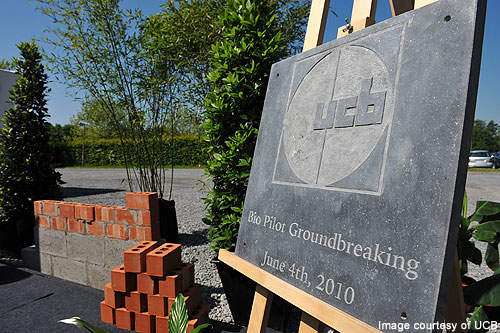
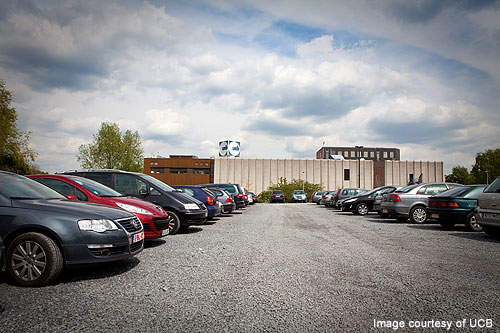
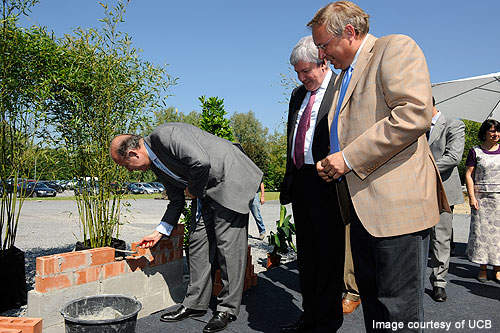
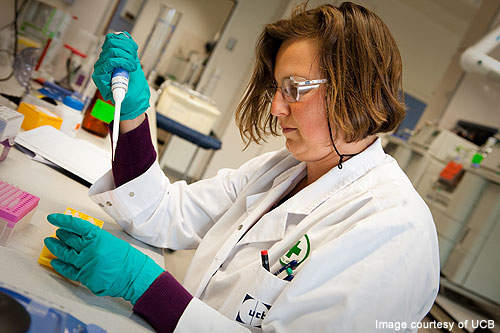
Brussels-based biopharmaceutical company Union Chimique Belge (UCB) broke ground for a new biotechnology pilot facility in Belgium in June 2010. The facility, located at the Braine-l’Alleud site of UCB, was inaugurated on 14 September 2012. It is the company’s largest site, spanning 51ha and includes 18 buildings. The site operates a research and production facility employing 1,500 people.
The new pilot facility is the company’s first biologics manufacturing plant in Braine-l’Alleud. UCB expects the facility to help it focus in areas of central nervous system (CNS) and immunology.
Recommended Buyers Guides

The biopharmaceutical facility was constructed with an investment of €65m ($83.68m). It is expected to be fully operational in 2013. Approximately 100 new jobs will be created in the initial period. The plant is now in the validation phase.
Established in the 1920s, UCB began its business with the manufacture of industrial chemicals. Its transformation into a biopharmaceuticals company began taking shape when the company obtained a development portfolio of small and large-molecule drugs with the acquisition of Celltech in 2004. All non-core businesses of UCB were divested in the following year.
Facility
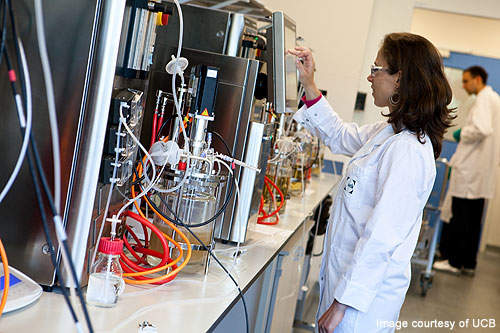
The new facility has a total surface area of 5,100m², of which 800m² is dedicated to laboratories. The facility has been designed to have the same development capacity as that of a conventional plant. There are four bioreactors with a combined capacity of 3,200l.
It also has access to aqueous environments. The use of chemical products including solvents is avoided.
All the process development operations are handled by the facility prior to submitting projects to a contract manufacturer.
The facility will offer UCB greater flexibility and the ability to speed up the development of new biotechnological drugs. It will also optimise the bio-manufacturing processes of the company for biological compounds that are currently in development.
Production
The facility will produce therapeutic proteins for use in clinical trials. Earlier UCB outsourced biologics manufacturing activities to third party companies.
It will also develop clinical trial supplies including both bulk drug substance and clinical doses for nervous system and immunological diseases. About 40kg to 60kg of active material will be produced annually using mammalian cell cultures.
Process technology
The facility follows mammalian cell expression and purification of related biotechnological products to produce protein-based therapeutics. Highly potent antibodies are separated from animal cells using Selected Lymphocyte Antibody Method (SLAM). Due to their modular structure, the antibodies are amenable to protein engineering.
The isolated antibody gene is engineered and manipulated to incorporate its most favourable characteristics before it is inserted into one of UCB’s proprietary expression vectors.
To form an appropriate cell line, the vectors bearing the antibody gene is placed into host cells. This cell line is selected to maximise the expression and quality levels of the final antibody. Once the selected cell line is isolated, the antibody production is scaled up.
Manufacturing and testing processes involve cell culture, fermentation, purification, formulation and analytical technologies.
Extraction and purification of the final antibody is performed using supernatants from the cell lines.
Shape programme
Investment at the facility forms part of UCB’s restructuring programme dubbed as SHAPE that aims at slashing 17% of UCB’s total employee base or 2,400 jobs. Approximately 550 jobs were cut at two Belgian-based facilities of UCB while 300 jobs were re-deployed to the core sites of UCB.
Launched in 2008, the programme also created 400 new jobs as the company transformed into a biopharmaceutical company. The programme is expected to result in up to €300m of savings.
