
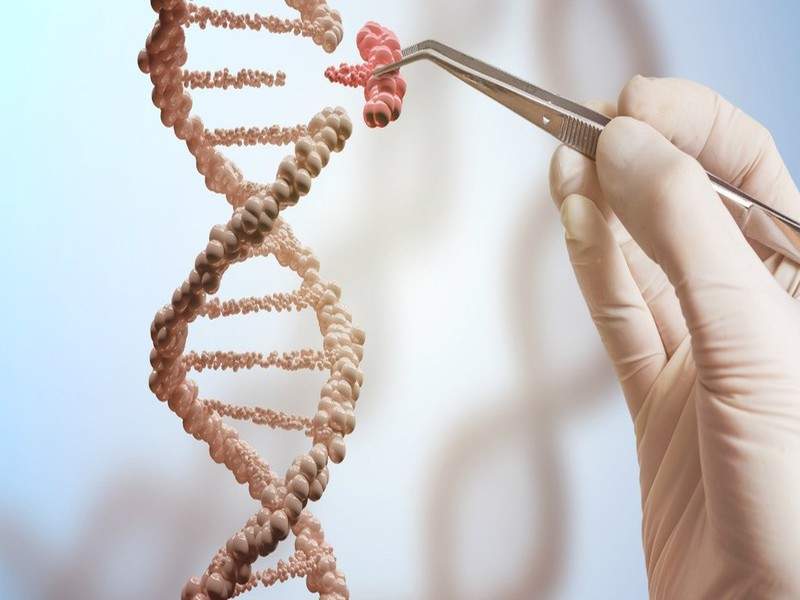
Researchers at the University of Alberta (UAlberta) have devised a new method to significantly increase the accuracy of gene-editing technology, taking it ‘one step closer’ to application in patients.
Gene editing involves correcting information on defective gene sequences in the body.
Go deeper with GlobalData


Discover B2B Marketing That Performs
Combine business intelligence and editorial excellence to reach engaged professionals across 36 leading media platforms.
It has been previously discovered that the CRISPR / Cas9 system, which is naturally used by bacteria to protect from predators, can be altered to edit human genes by cutting a select DNA sequence. The system is driven by a natural RNA guide molecule.
The new technique seeks to replace the natural guide molecule with a synthetic molecule called bridged nucleic acid (BNA).
UAlberta Pharmacology department assistant professor Basil Hubbard said: “One of the main issues is that the system is not perfectly specific – sometimes it cuts a similar but incorrect gene.
“However, given that there are trillions of cells in the human body, even one percentage off is quite significant, especially because gene editing is permanent.
“One wrong cut and a patient could end up with a serious condition like cancer.”
The team reported that the new BNA guide molecule is more stable and stringent in finding the correct DNA to cut.
Hubbard noted: “Our research shows that the use of bridged nucleic acids to guide Cas9 can improve its specificity by over 10,000 times in certain instances, a dramatic improvement.”
Though gene-editing technology still has several hurdles to overcome, including the challenge of how to deliver it effectively into the human body, it may someday be used to treat a wide variety of genetic diseases, from muscular dystrophy to haemophilia and various cancers.


