
Cellular Origins, a company enabling the manufacture of cell therapies at scale through a flexible, mobile robotic automation platform, has won the Innovation award in the Manufacturing Automation category of the 2025 Pharmaceutical Technology Excellence Awards. The award recognizes its Constellation ecosystem, a robotics‑driven automation platform designed specifically for cell and gene therapies (CGT).
Constellation brings together mobile robotics, automated sterile welding and proven bioprocess instruments into a digitally coordinated, robotically executed factory environment that adapts to existing processes and facilities. By enabling manufacturers to scale from clinical to commercial production without redeveloping therapies or changing validated tools, the platform directly addresses the high cost and fragility of human dependent, cleanroom‑intensive workflows and the risks associated with altering established manufacturing methods.
Go deeper with GlobalData


Discover B2B Marketing That Performs
Combine business intelligence and editorial excellence to reach engaged professionals across 36 leading media platforms.
Transitioning cell therapy manufacturing from manual batches to industrial‑scale operations
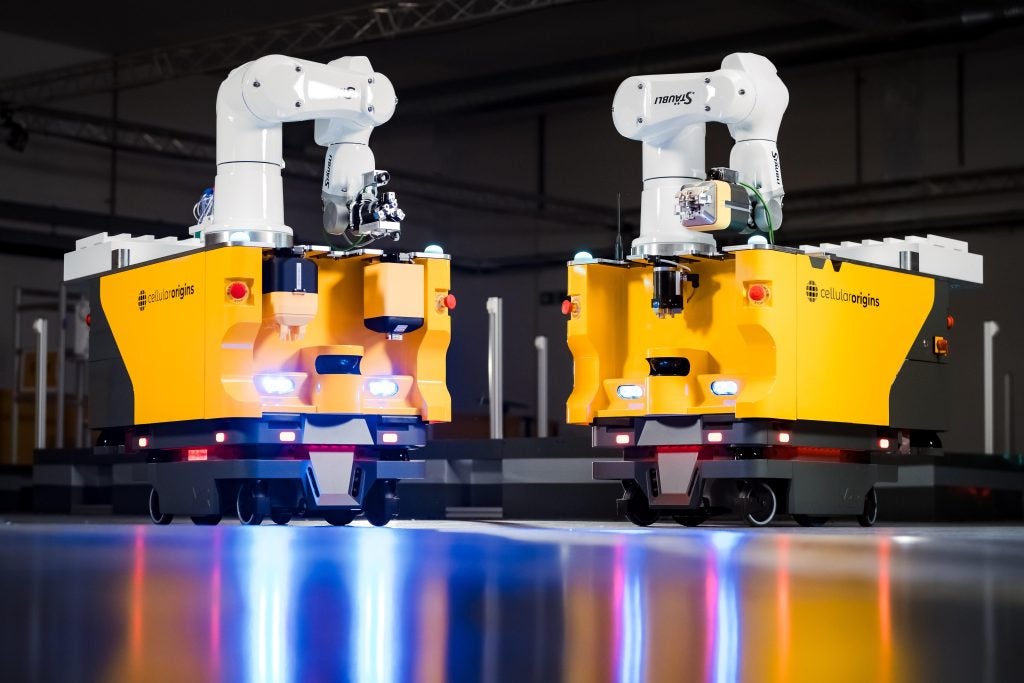
Constellation is a factory scale, flexible automation platform that connects existing bioprocess instruments, providing fully-automated end-to-end manufacturing. Instead of relying on fixed, linear automation pods, the platform uses autonomous mobile robots designed for GMP environments to move consumables and products between distinct 3rd party unit operations. These robots execute sterile welding, closed fluid transfers, and consumable loading with high precision and reproducibility, operating within a unified digital control layer that controls and records every movement, connection, and process step.
This architecture links what have typically been semi automated, standalone unit operations connected via people, into a fully robotic, higher throughput manufacturing ecosystem. An intelligent scheduling engine coordinates large numbers of tasks across product lines and different unit operations – managing timing, resource availability, and increasing production efficiency beyond human operation.

Constellation is currently being deployed and tested in GMP-mirroring environments, such as the Cell and Gene Therapy Catapult’s Digital and Automation Testbeds in Stevenage, where it operates as an integrated, real-world factory model. The company and its collaborators present this as a route to move from a few thousand doses per year toward the tens or hundreds of thousands that would be required for broader patient access, while maintaining control over chain of identity, sterility and process consistency. The intent is to demonstrate that such industrialization is feasible without compromising biological performance, significantly changing processes or introducing any new cell-contacting materials, key concerns for therapy developers and regulators.
Preserving validated biology while scaling with automation
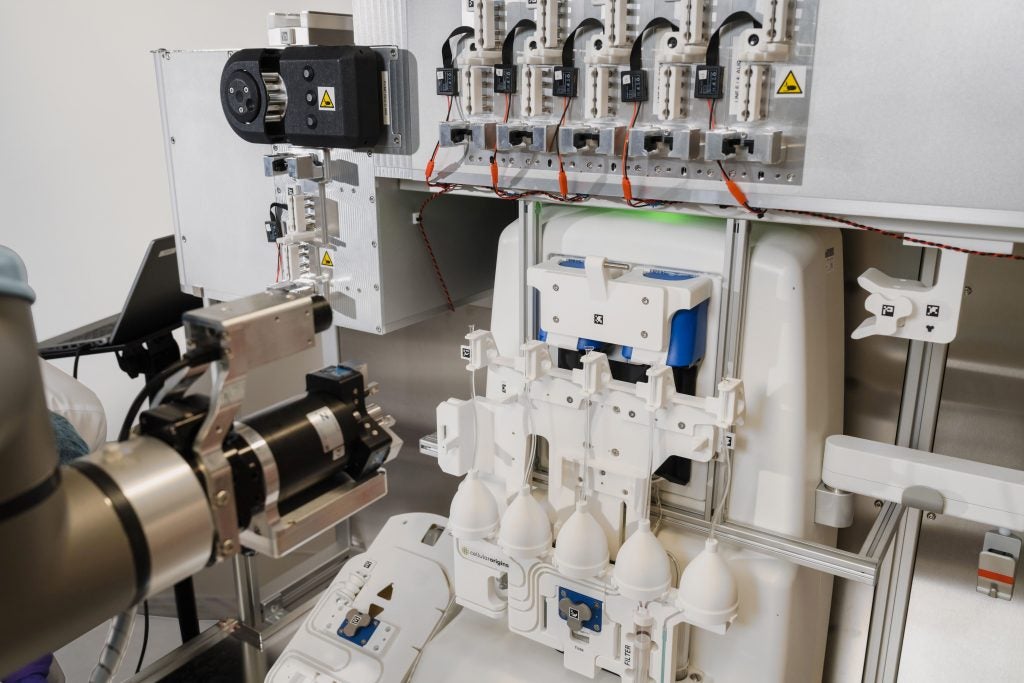
A key characteristic of Constellation is its focus on building automation around existing, validated tools and workflows, rather than asking therapy developers to unduly redesign their processes and hugely increase the danger of regulatory and business risk. The platform integrates directly with established bioprocess technologies from partners including Cytiva, Fresenius Kabi, Thermo Fisher Scientific and Wilson Wolf/ScaleReady. The objective is to robotically operate and connect tools such as Cytiva’s Sefia platform, Fresenius Kabi’s Cue and Lovo systems, Thermo Fisher Heracell VIOS incubators and DynaCellect CTS, GRex bioreactors and more, while keeping the underlying consumables, cell-contacting materials, and process steps unchanged.
Late stage changes to manufacturing technologies can require extensive comparability work or even further clinical investigation and cost therapy developers time, money and the associated regulatory and business risk, not to mention extending the timelines in getting these therapies to patients. This “wraparound” automation approach is intended to reduce that regulatory risk and shorten the path from clinical to commercial scale. By automating around the existing process rather than channeling everything through any new, closed platform that might alter the biology, Constellation aims to allow manufacturers to scale using the same tools and workflows they have already validated through years of clinical manufacturing.
The platform’s digital backbone is designed to support this strategy. All operational control, traceability, and data capture are consolidated into a single software layer, unifying equipment from multiple suppliers and providing end-to-end, second-by-second electronic records. This helps maintain accurate and safe chain of identity (CoI) and chain of custody (CoC) tracking and provides visibility of every weld, transfer, and every operation in the entire process of each and every product. It also establishes a foundation for more advanced analytics and process optimization without changing the underlying process.
These concepts are being explored in testbed environments as well as through collaborations with biopharmaceutical companies and soon in the first clinical and then commercial facilities.
Cutting labor and cleanroom costs through flexible, redundant robotics
Constellation also targets the structural cost drivers that have limited the scalability of CGT manufacturing. Labor and high classification cleanroom infrastructure account for a substantial share of the cost of goods for cell therapies, and both are challenging to scale efficiently. The platform is designed to address this by enabling 24/7 robotic operation within lower grade, fully human-accessible spaces, while maintaining closed-system sterility at the process level.
By removing the need for operators to perform repeated manual transfers, sterile welds, and device setup and operation, Constellation aims to reduce dependency on highly specialized staff and to lower the risk of contamination and human error. This allows skilled personnel to concentrate on oversight, decision-making, and problem resolution rather than routine handling tasks and changes the paradigm of many operators producing few products to few operators producing many products. At the same time, because the robots are mobile and not tethered to fixed gantries or pods, facility layouts can be optimized for throughput. Developers can densify or replicate unit operations, run multiple workflows in parallel within the same footprint, and increase capacity by incrementally adding robots and workstations rather than rebuilding facilities.
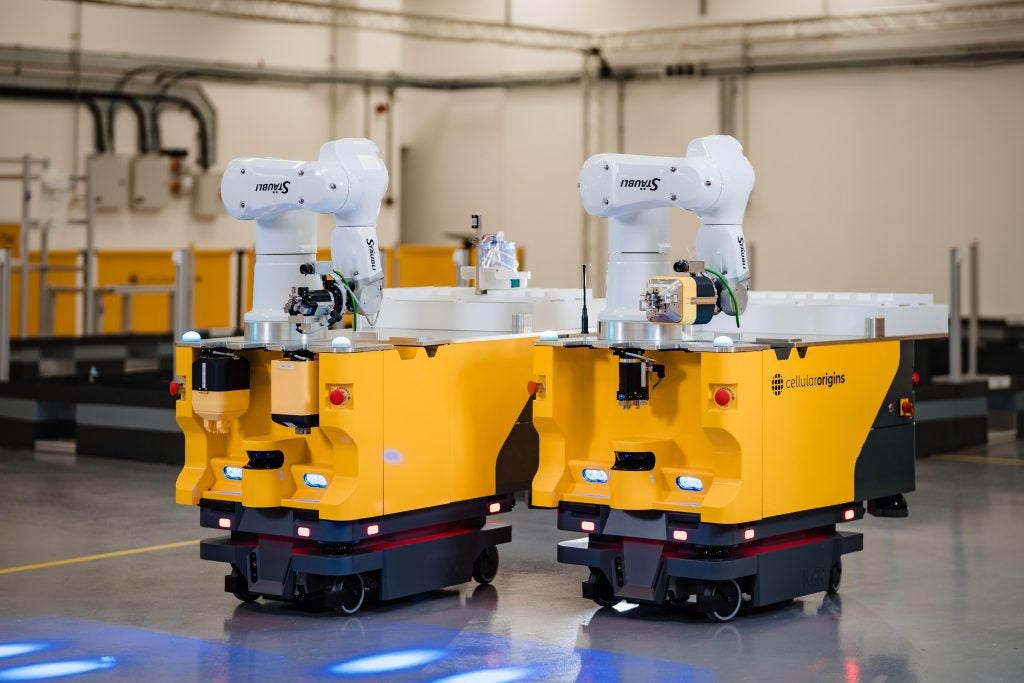
Robustness and redundancy are built into this modular layout. If a particular instrument or robot requires maintenance or repair, tasks can be rerouted digitally to other units so that production can continue. This is intended to contrast with enclosed pod-based approaches, where human access for servicing may require stopping all processes inside the pod, potentially affecting several patient batches at once and severely risking production security.
From an economic perspective, Cellular Origins positions Constellation as capable of significantly reducing cost of goods (potentially by more than half) but more importantly as one of the only pathways in expanding cell and gene therapy production capacity to truly commercial levels. It does this by compressing the cleanroom footprint, enabling operation in lower classification environments, and dramatically lowering manual labor requirements. Collaborations with Cytiva, Fresenius Kabi, Thermo Fisher Scientific, and others are explicitly focused on achieving this high dose output per square meter of manufacturing space but maintain personnel levels to a realistic and feasible degree, within a digitally integrated framework.
These technical and operational elements are being advanced further through the Innovate UK-funded consortium between Cellular Origins, the Cell and Gene Therapy Catapult, and Resolution Therapeutics. The project aims to deliver a fully-automated, robotically-operated CGT manufacturing platform at the CGT Catapult’s Digital and Automation Testbeds, integrating currently used process technologies from multiple suppliers with minimal process change. The consortium is intended to demonstrate that automation driven gains in cost efficiency, capacity, and manufacturing reliability can be realized in environments that mirror real GMP operations, while maintaining adaptability for current and emerging cell therapy modalities.

“By building automation around the tools and processes that therapy developers already trust, we are showing that cell and gene therapy manufacturing can scale to industrial levels without compromising the underlying biology or adding unnecessary regulatory risk, and winning the Innovation award is an important validation of that vision and of the progress we are making toward it.”
– Edwin Stone, CEO, Cellular Origins
Company Profile
Cellular Origins is enabling the manufacture of cell therapies at scale through a flexible, factory-led automation platform that adapts to existing processes and facilities. Its Constellation ecosystem unites mobile robotics, and automated sterile welding with proven bioprocess instruments, eliminating the need for therapy redevelopment and providing a dependable route from clinical to commercial manufacture. Designed to flex around any facility and to evolve with advancing therapies, the Constellation platform provides a flexible, future-proof foundation for large scale production and wider ATMP growth. Trusted by market leaders including Cytiva, Fresenius Kabi, Thermo Fisher Scientific and Wilson Wolf, Cellular Origins is building the automation infrastructure required to scale manufacture of 100,000s of doses of transformative therapies reliably and efficiently.
Links
Website: https://www.cellularorigins.com

