


Cell and gene therapies (CGTs) have captured significant interest in the pharma industry, with the modality being explored in multiple disease areas from oncology to autoimmune diseases due to their strong disease-modifying potential.
However, a range of factors including CMC challenges, investor pivots, reimbursement hurdles and the tricky path to successful commercialisation post-approval have caused some companies to reconsider their approach to the modality.
Go deeper with GlobalData


Discover B2B Marketing That Performs
Combine business intelligence and editorial excellence to reach engaged professionals across 36 leading media platforms.
Despite the challenges faced by the sector, CGTs are still gaining approval in rare and even ultra-rare diseases.
On 9 December, Waskyra (etuvetidigene autotemcel) made history, becoming the first gene therapy to gain approval from the US Food and Drug Administration (FDA) in Wiskott-Aldrich Syndrome – an X-linked, ultra-rare genetic disorder characterised by thrombocytopenia, immune deficiency and eczema.
At the same time, Waskyra also became the first gene therapy created by a non-profit to win approval, with Italian organisation Fondazione Telethon (FT) leading its development and submitting a biologics application to the FDA.
As part of efforts to establish the gene therapy’s footprint in the US, FT has teamed up with Massachusetts-based nonprofit, Orphan Therapeutics Accelerator’s (OTXL) commercial subsidiary, Orphan Therapeutics (OT), to bring Waskyra to patients across the country.
As FT and OTXL prepare to launch Waskyra across the US and potentially Europe, Pharmaceutical Technology caught up with Craig Martin, founder and CEO of Orphan Therapeutics Accelerator, to find out more about the non-profit commercialisation model.
Editor’s note: This interview has been edited for length and clarity.
Annabel Kartal-Allen (AKA): What are the current challenges faced by gene therapy developers operating in the rare or ultra-rare disease segment?
Craig Martin (CM): There are several challenges – particularly for ex vivo, lenti gene modified cell therapies. The manufacturing process is lengthy, complex and expensive. Once a therapy is made, patient treatment can also pose challenges, as there are often a lack of centres that can accommodate and administer such therapies. Long-term follow-up and ensuring commercial viability for a very small patient population are also hurdles that must be overcome.
Another stumbling block is the FDA’s Priority Review Voucher (PRV) programme, which hasn’t been extended following its expiry in 2024. In many of these condition areas, months matter a great deal, so continuing to delay the availability of a programme can create issues for the business model’s viability and patients alike. The more support organisations in the space can get on the policy side and the better regulatory flexibility, the easier it will be to get these therapies to patients quickly.
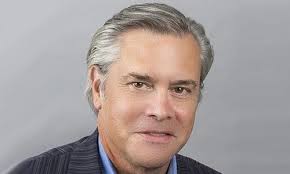
AKA: How are regulators currently responding to companies looking to commercialise gene therapies for rare or ultra-rare diseases?
CM: Recent events demonstrate that there is a desire to be more flexible among regulators. They are also increasingly acknowledging that a pathway for rare and ultra-rare diseases cannot be the same as the route used to commercialise drugs in larger diseases.
Hopefully this will continue, and we’ll start to see more approaches around plausible mechanisms and platforms – meaning multiple therapies could be approved on the same pathway in a much shorter period of time.
AKA: How might you approach commercialising such a therapy for an ultra-rare disease?
CM: In the context of OT’s partnership with FT, two nonprofits will work together to make Waskyra accessible to patients. While FT holds the biologics license application, OTXL will support the distribution and access of the therapy across the US. Meanwhile, FT will handle commercialisation across Europe, with the company having already received a favourable opinion from the European Committee for Medicinal Product for Human use (CHMP).
Our work will primarily centre around identifying and selecting a limited number of qualified treatment centres that have experience with these types of therapies and the condition area, as well as a speciality distribution partner which can deal with the global logistics involved, since Waskyra is manufactured in Italy.
We will also work with payers and patients, so they can get a better understanding on the treatment.
AKA: How do you plan to make your model commercially viable?
CM: Our goal is to provide access to a product in a sustainable way, which cannot be achieved through the raising of charitable funds. Therefore, we are trying to get payers to cover the costs.
As these are expensive therapies, we need to do this in a way that generates sufficient revenue to allow us to provide the treatment in the long-term, so we plan to follow a commercial model – more on a cost-plus basis.
We haven’t started the process yet, as we are currently working on putting our distribution, access and patient service models together, which will help us to ensure that payers have the information they need to facilitate coverage and reimbursement.
AKA: Do you foresee any challenges related to the manufacture of gene therapies employing this model?
CM: The most complicated part of the equation is the logistics, as you have to successfully transport the cryopreserved medicine to a treatment centre in time, so a patient can undergo the conditioning regimen and receive the therapy.
This can be partially overcome by working with treatment centres that are familiar with these types of therapies, as they understand the key needs of patients and have suitable infrastructure to support compliant and safe administration. They will also be aware of the logistics involved in getting these therapies to patients, which will help to establish a repeatable and efficient process.
AKA: Do you think we will see a growing number of nonprofit organisations looking to commercialise advanced therapies in the rare and ultra-rare disease category?
CM: Yes, I think necessity is the mother of invention, so there will likely be different models designed to address this, as the traditional for-profit model clearly isn’t working in this particular subcategory.
This has resulted in hundreds of cell and gene therapies getting stuck in pipelines or being handed back to academic medical institutions, as they don’t have the resources to move them forward. We need to find an alternative pathway that allows access to therapies for patients. It’s not just going to be nonprofit to nonprofit, it’s likely going to be academic medical centres working with organisations like ours to establish a different pathway, as VC-funded biotechs are no longer waiting to commercialise ultra-rare disease treatments.
Through this, we might see a lot of multi-stakeholder collaboration, and very different kinds of conversations with payers or regulators across the best ways to make these therapies commercially available in a sustainable way.
Cell & Gene Therapy coverage on Pharmaceutical Technology is supported by Cytiva.
Editorial content is independently produced and follows the highest standards of journalistic integrity. Topic sponsors are not involved in the creation of editorial content.
Editor’s note: Orphan Therapeutics Accelerator’s abbreviated name has been updated from OTA to OTXL.


