

The US drive to onshore biopharmaceutical manufacturing has yielded billions of dollars of industry investment, raising the stakes for states wanting to attract companies to their corner of the country.
The shape of that competition is given physical form at the 2026 BIO International Convention (BIO 2026) in San Diego, California, which runs from June 22 to 25. Taking residence on the exhibition floor are an array of stands and pavilions for states such as California, Iowa, Maryland, Massachusetts, Minnesota, New York State, North Carolina, Ohio, Oregon, Pennsylvania, South Carolina and Texas, as well as the territory of Puerto Rico.
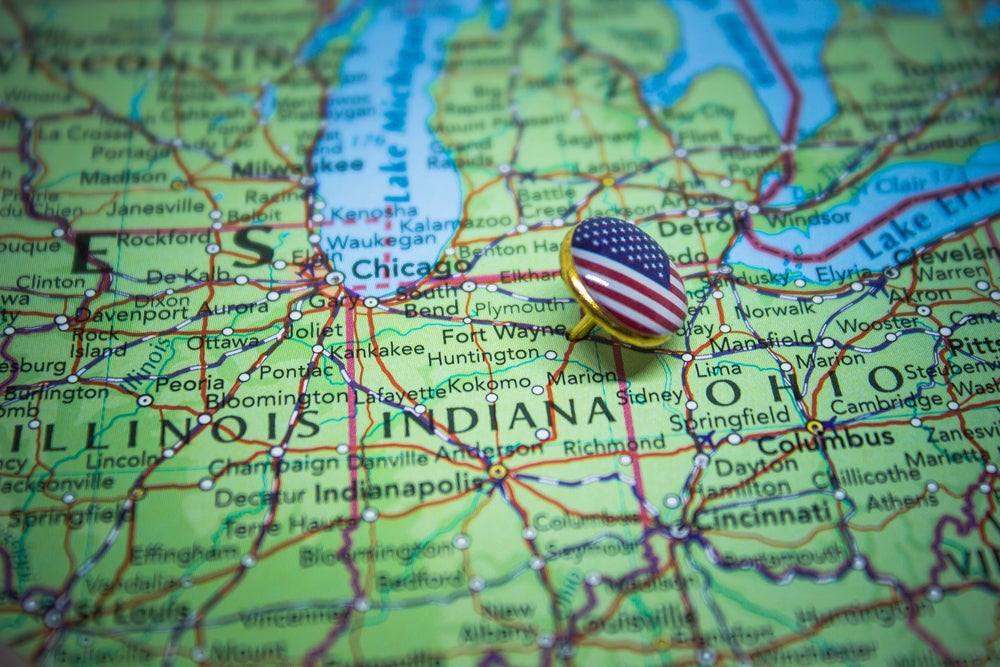
Joining them in the competition for inward investment is BioHeartland Indiana, a new brand and collective that made its debut at BIO 2026. It’s a collection of groups that span corporate partnerships, agri-bioscience and the 25-year-old BioCrossroads life sciences public-private partnership.
President and CEO of BioCrossroads Vince Wong sat down with Pharmaceutical Technology at BIO 2026 to discuss how BioHeartland Indiana and his state, home to pharma giant Lilly, animal health leader Elanco and leading plant science company Corteva, is looking to differentiate itself.
“One dimension is just the fact that we do have leaders in human, animal, and plant health, and so this concept of one health, and this intersectionality of these different domains that we have expertise in, and then the other area of differentiation is [having the whole] value chain.
“We not only invent things, but we also manufacture, and we have strong logistics as well, so with a fully integrated functionality and value chain in our region, we enable companies to move quickly from lab to patient.”
That work takes place across many therapy areas, with Wong highlighting Indiana’s position in Alzheimer’s disease research and radioligand therapies for cancer. But the biggest impact in recent years has come from Lilly’s blockbuster glucagon-like peptide-1 receptor agonist (GLP-1RA) tirzepatide, branded in the US as Mounjaro and Zepbound for type 2 diabetes and obesity, respectively.
The company’s investments in its home state since 2020 currently add up to $21bn, including the $4.5bn announced last month to boost its Lebanon facility, expanding its active pharmaceutical ingredient (API) production facility and adding a dedicated genetic medicines manufacturing centre.
In addition to the company’s own investments, Lilly’s buoyant fortunes – which saw its 2025 sales soar by 45% to hit $65.2bn, thanks to booming GLP-1RA revenues – are also having a trickledown effect on the state’s wider life science ecosystem.
“We have a number of tier one suppliers that have grown significantly to support the needs of Lilly, and so they’re enjoying significant growth as well throughout the state, and then [there’s] Lilly Endowment, which is the nation’s largest private foundation, bigger than the Gates Foundation, in large part because of the fact that they hold the vast majority of their assets in Lilly stock.
“What’s different from Lilly Endowment [compared to] other global foundations is, whereas the Gates Foundation or the Rockefeller Foundation or other large foundations will spread their largesse throughout the world, Lilly Endowment focuses a high percentage of their investments in philanthropy in the state of Indiana.”
The state has also benefited from 2022’s Chips & Science Act, which included federal funding for a series of regional tech hubs, among them Indiana’s Heartlands BioWorks.
“We received over $51m from the federal government, and about $30m or so of that is being deployed to stand up a biomanufacturing training facility, and that will be open in the fall ‘27 and it will create a hands-on training facility for large molecule upstream [and] downstream biomanufacturing to help train the workforce of the future.” Those upcoming workers will add to the more than 70,000 currently employed by the life science sector across the state. Indiana may also benefit from efforts by the US industry to support the next generation of workers, as was also discussed at BIO 2026.
