


Following several years of limited activity, FDA approvals for regenerative medicines have accelerated, culminating in a record eight approvals in 2024. Recent findings also highlighted a surge in regenerative medicine advanced therapy (RMAT) designations, which, together with a robust late-stage pipeline, suggests FDA approval activity for regenerative medicine products is likely to remain elevated in the coming years.
Regenerative medicine offers an innovative approach to treating different indications by restoring damaged or diseased cells and tissues. These therapies address underlying disease mechanisms and have the potential to provide durable clinical benefits, including functional restoration following a single treatment. From 2016 to 2022, FDA approvals for regenerative products remained limited. Over this period, seven drugs received approval, with an average of 1.2 approvals per year.
Go deeper with GlobalData

However, approval activity increased significantly from 2023 onwards. Five regenerative drugs received approval in 2023, followed by a record of eight in 2024 (Figure 1).
Figure 1: Annual FDA approvals for regenerative medicines (2016-2025)
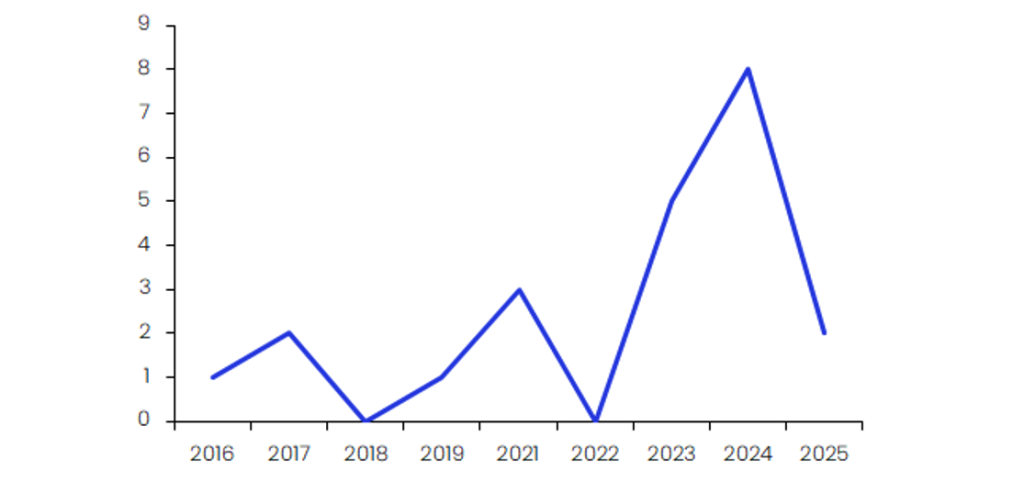
Note: This chart also includes approved drugs that may now be actively marketed, withdrawn, or archived.
Overall, the 15 approvals recorded between 2023 and 2025 represent more than double the seven approvals observed during the 2016-22 period, indicating a clear increase in regulatory activity in recent years.
Nevertheless, the FDA recorded only two approvals in 2025, a 75% decrease from the peak in 2024. This finding suggests volatility in the FDA approval trends, likely representing a temporary fluctuation. However, as of July 2026, three regenerative medicine products have already received FDA approval this year with an additional six currently under FDA review for their first US approval, meaning this year could be equal to or greater than 2024. Another 43 in Phase III represents a substantial late-stage pipeline that suggests that future regenerative medicine approvals are likely in 2026 and beyond.
Additionally, the commercial potential of recent regenerative drugs entering the market is highlighted by ImmunityBio’s nogapendekin alfa (Anktiva), which received FDA approval for superficial bladder cancer in 2024. By 2032, this drug is forecast to become the leading regenerative product, generating $4.1 billion globally.
The FDA has awarded increasing numbers of RMATs in recent years, culminating with a record of 48 in 2025 (GDHC7296EI – Surge in RMAT Designations Awarded by the FDA [June 2026]). This review designation facilitates the development and review of regenerative medicine products. The increasing annual FDA approvals for regenerative medicines closely mirrors this trend in RMAT designation activity.
Taken together, rising RMAT activity and increasing approval rates indicate that a growing number of regenerative medicine products are successfully progressing through clinical development and reaching regulatory review. The current substantial late-stage pipeline confirms these findings, and suggests that FDA approvals for regenerative medicines are likely to continue increasing in the coming years.

