


Many breakthrough therapies originate in research labs: academic institutions, biotech startups, and translational centers. The research-grade environments in which these early batches are often prepared are not designed for GMP compliance. When it’s time to look for a fill-finish CDMO, the transition to GMP filling is not just a scale issue — it’s a regulatory, technical, and operational shift. Lab-scale processes may not be designed to scale up proportionally, and there may not be appropriate analytical readiness for establishing key product quality attributes. There are many new requirements, from establishing target filling volume and acceptable fill range to support dose administration requirements, to finalizing excipient selections, meeting regulatory requirements, and establishing processing hold times to support manufacturing operations. As a result, the path from lab bench to GMP filling is not a simple process transfer—it requires thoughtful adaptation to meet the technical, regulatory, and operational demands of GMP manufacturing.
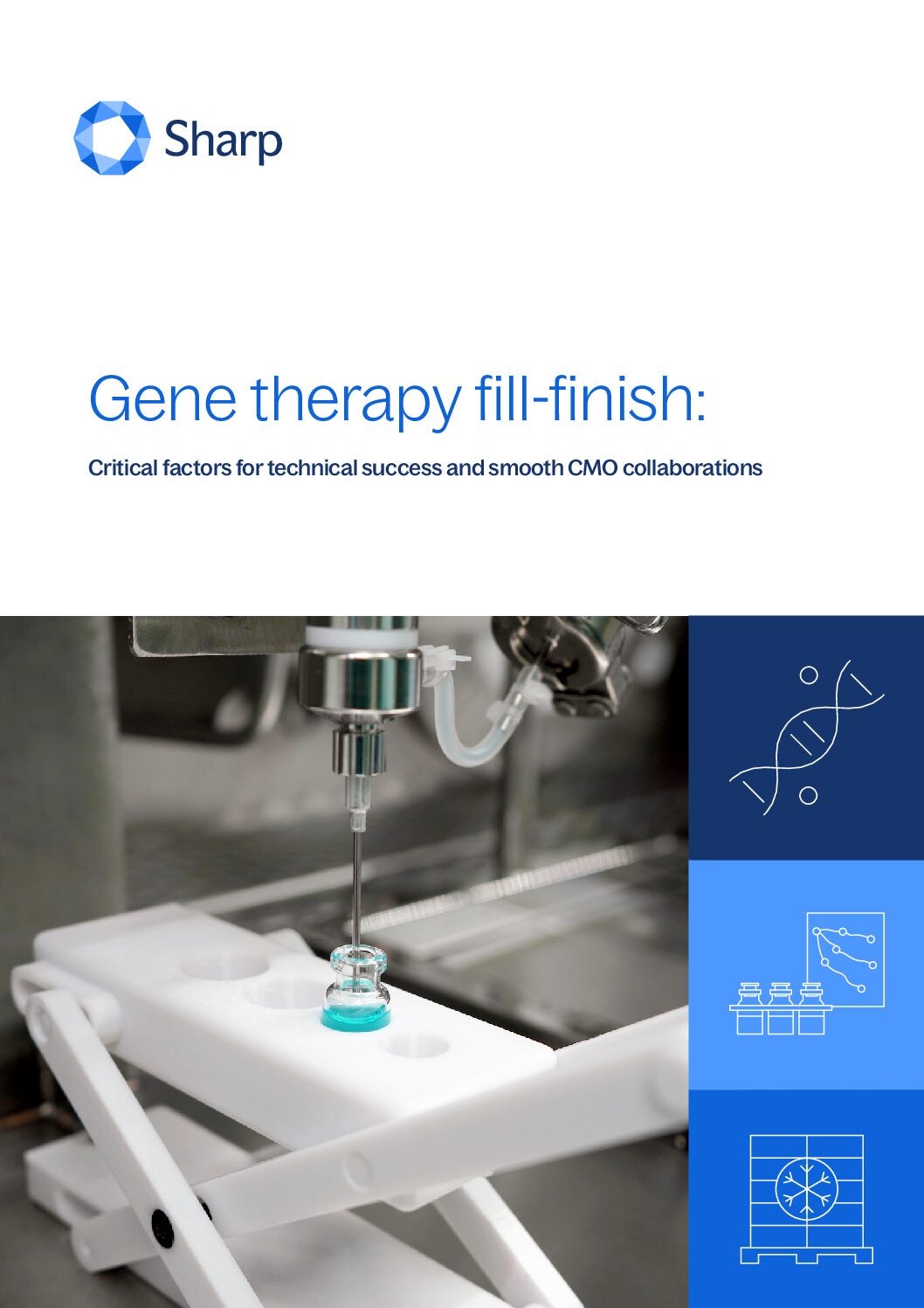
For therapies involving rare, high-value, or limited-quantity APIs, mistakes during fill-finish can be costly. The lab-to-GMP transition is where strong programs accelerate — or stall. Manual aseptic filling can be a strategic solution for early-phase small-scale and high-value programs.
GMP is not just “more documentation”
Key differences between research-grade and GMP manufacturing
Transitioning from research-grade manufacturing to Good Manufacturing Practice (GMP) manufacturing involves far more than increasing documentation or producing material in a larger facility. GMP introduces a comprehensive quality system designed to ensure every batch is consistently manufactured, tested, and controlled according to established standards for safety, quality, and efficacy. Understanding these differences early can help research scientists prepare for a smoother technology transfer and avoid unexpected delays as programs move toward the clinic. Key differences between research-grade manufacturing and GMP manufacturing are:
- Raw material control: GMP manufacturing requires approved suppliers, defined specifications, traceability, and documented material release before use.
- Component preparation: Vials, stoppers, tubing, filters, and product-contact parts must be cleaned, sterilized, and handled through qualified processes.
- Contamination control strategy: Sterility assurance depends on coordinated controls for personnel, facilities, equipment, materials, and aseptic intervention.
- Controlled manufacturing environments. Sterile filling is performed in classified cleanrooms or isolator systems where environmental conditions and particulate levels are continuously monitored and controlled.
- Validated aseptic processes. Critical manufacturing steps are validated through studies such as media fills to demonstrate that aseptic processes consistently maintain sterility.
- Personnel qualification and gowning. Operators receive extensive aseptic training and qualification and must follow strict gowning procedures before entering controlled manufacturing areas.
- Equipment qualification. Manufacturing equipment undergoes Installation Qualification (IQ), Operational Qualification (OQ), and Performance Qualification (PQ) to verify it performs consistently as intended.
- Batch records and data integrity. Every manufacturing step is documented in detailed batch records, with data managed according to GMP requirements to ensure it is complete, accurate, and traceable.
- Product accountability and reconciliation: GMP operations require accurate tracking of bulk products, filled units, rejects, samples, and process losses.
- QA oversight: Manufacturing decisions are subject to independent quality review and approval.
Why this matters to research scientists
The transition to GMP manufacturing requires a shift in mindset. Process variability and informal adjustments that are acceptable during research and development are not tolerated in GMP manufacturing, where every step must be standardized, documented, and reproducible. Even seemingly minor inconsistencies can compromise sterility assurance or result in deviations that require investigation.
Early GMP thinking improves technology transfer, reduces deviations, and limits costly process redesign. Formulation and process decisions can affect extractables, leachables, adsorption, aggregation, and container-closure compatibility. Late identification of manufacturing constraints can delay clinical supply and require additional development studies.
An experienced sterile fill-finish partner helps translate research processes into compliant manufacturing workflows. Such a partner can also help with navigating regulatory expectations, which may begin earlier than scientists anticipate.
Understanding fill-finish risk for small and high-value batches
When it comes to transitioning from research processes to GMP manufacturing, specialized expertise matters. Many early-stage products share common challenges:
- Limited API supply or extremely high cost per milliliter, resulting in high sensitivity to yield loss: Small losses during sampling, filtration, transfer, filling, or line clearance can materially reduce the number of deliverable units.
- Sensitive biologics or gene therapies: Biologics and gene therapies may have strict limits for temperature exposure, agitation, light exposure, and processing time.
- Low target batch sizes: not all CDMOs focus on small-batch filling, making finding a spot on the schedule challenging.
- Analytical sample burden: Release, stability, sterility, retain, and in-process samples can consume a disproportionate share of a small batch.
- Fill-volume accuracy: Very small target volumes can increase the technical challenge of maintaining dose accuracy and minimizing rejects.
The risk of over-scaling too soon
The fill-finish CDMO landscape encompasses many different types of manufacturers, from those filling in RABs to those offering extremely high-throughput automated isolator filling. When selecting a CDMO, it’s important to consider the scale of the operation. In over-scaling too soon and choosing a CDMO with high-capacity, high-throughput line, there are certain risks. For a larger line, long product-contact pathways can increase hold-up volume and adsorption risk. There can also be significant material loss during line setup and priming. For large commercial batches, these kinds of losses are acceptable, but not for small clinical batches. These types of CDMOs may also have high minimum batch sizes which prevent research scientists from getting time on the line in the first place.
Why manual, small-scale aseptic filling is often ideal
In contrast, small-scale manual aseptic fill lines can be ideal for this type of project. They offer greater flexibility and faster process adaptation. With shorter product pathways with reduced product hold-up volume, they also lose less material during the fill-finish process. Lines like these are designed for small clinical or orphan-drug programs, meaning they are suitable for uncertain demand: manual operations allow production of a limited number of clinical units without committing to commercial-scale infrastructure. For small-scale programs, manual filling is not a compromise — it is often the technically superior solution when facing the challenges discussed earlier in this article.
Process development considerations before GMP transfer
Before transferring a laboratory process to a GMP fill-finish environment, research scientists should consider how formulation and process decisions will translate to the realities of sterile manufacturing. Addressing these factors early can prevent surprises during technology transfer and reduce the need for costly development work later.
1. Formulation readiness
A GMP-ready formulation should have a clearly defined composition, including concentrations, pH, osmolality, excipient grades, and acceptable adjustment ranges. Scientists should also understand how the product responds to mixing, temperature excursions, freeze-thaw cycles, light and oxygen exposure, and the time spent during compounding, filtration, filling, and pre- or post-fill holds. Stability under intended GMP storage conditions, as well as compatibility with packaging materials and potential extractables and leachables, should be evaluated early.
2. Container-closure selection
The choice between a vial, syringe, or cartridge should consider not only the intended dose and delivery method, but also component availability, compatibility, and manufacturability. Components must be suitable for parenteral use and compatible with the CDMO’s sterilization and filling processes, while factors such as headspace requirements, stopper placement, machinability, and container-closure integrity should be established. Early decisions should also consider whether the selected presentation can support future clinical and commercial needs.
3. Fill volume and overfill strategy
Fill volume requirements extend beyond the labeled dose and should account for withdrawal losses, administration-device hold-up, and other sources of product loss. For high-value or low-volume products, the goal is to achieve accurate dosing while conserving as much drug product as possible. Product-density effects, maximum allowable fill duration, and the capabilities of the filling process should all be considered when establishing the fill strategy.
4. Filtration and sterility strategy
Sterile filtration requires careful consideration of filter compatibility with biologics when relevant, design of aseptic connections and transfers to reduce contamination risk as much as feasible, and evaluation of whether a serial dual-filter strategy (filter redundancy) is appropriate for the product and process. Bioburden control is necessary prior to fill. It is also necessary to determine the wetting and flushing requirements by establishing suitable wetting fluids, flush volumes, and product-displacement approaches. Scientists should conduct bacterial retention studies for sterile filtration validation, as well as define integrity-testing strategy, including pre- and post-use integrity testing (PUPSIT) where applicable. The process should also define sterile hold times, defining allowable durations between filtration and filling, including temperature and storage conditions.
An experienced sterile fill-finish CDMO can help identify these considerations early and translate laboratory processes into practical, GMP-ready manufacturing strategies—helping reduce product loss, avoid unnecessary development work, and keep clinical programs moving forward.
Common mistakes when transitioning to GMP
The transition from laboratory development to GMP manufacturing can introduce challenges that are easy to overlook when the focus is primarily on formulation and process performance. Engaging a sterile fill-finish partner early can help identify these issues before they affect clinical timelines or consume valuable drug product. Some challenges include:
- Waiting too long to involve a CDMO: Manufacturing constraints are easier and less expensive to address during development than after a process has been locked.
- Ignoring process hold times: Product stability may not be established for thawing, compounding, filtration, filling, or unplanned manufacturing delays.
- Relying on narrow operating conditions established at the laboratory scale: GMP processes need defined operating ranges that allow routine execution while maintaining product quality.
- Underestimating the amount of drug product required to support manufacturing, validation activities, sampling, and testing: Product loss should be considered early. Vessel heel, tubing and filter hold-up, priming, sampling, rejects, and analytical testing can consume a significant portion of a small batch.
- Not considering packaging compatibility: Components must be suitable for parenteral use and compatible with the CDMO’s sterilization and filling processes.
- Assuming laboratory processes scale proportionally: Mixing, filtration, shear, and filling parameters may require process-specific evaluation rather than simple volume-based calculations. Early analytical planning is equally important to ensure the batch can support required release, sterility, stability, and retain samples.
The earlier these considerations are addressed, the more options a development team has to solve them. Building GMP requirements into process development from the start can help protect valuable drug product, reduce avoidable rework, and create a smoother path from the laboratory to clinical manufacturing.
