

From Hesitation to Innovation: Oxipack’s Pharmaceutical Leak Detection Platform
Pharmaceutical packaging has always been defined by innovation, barrier protection, sterility assurance, and tamper-evident seals. Yet when it comes to the most fundamental requirement of all, proving that packaging is compliant with integrity and quality expectations, many production lines still rely on dye baths, bubble tests, and semi-manual setups.
Regulators have long signalled the need for deterministic, data-driven methods. Annex 1, USP guidance, and 21 CFR Part 11 all point toward approaches that can genuinely prove integrity. It was at the practical gap between regulatory expectation and production reality that Oxipack’s pharmaceutical leak detection platform was born.
From hesitation to opportunity
Oxipack’s earliest leak detection systems were designed for food, coffee, and consumer goods. These leak testers use deterministic vacuum-based measurement without damaging a single pack. They are precise, sensitive, and suited to high-throughput environments.
When a leading pharmaceutical company asked us to apply the same vacuum-decay method to pharmaceutical packaging, we hesitated. Pharma was a new world, with its own stringent regulations and expectations. Could our technology stand up to GMP, Annex 1, and 21 CFR Part 11 requirements?
That hesitation quickly turned into an opportunity. As we immersed ourselves in pharmaceutical regulations, we realised our measurement philosophy already offered a strong foundation for compliant solutions. We didn’t stop at compliance and set out to build machines that manufacturers would want to use, not just ones they had to use.
A platform that grew up
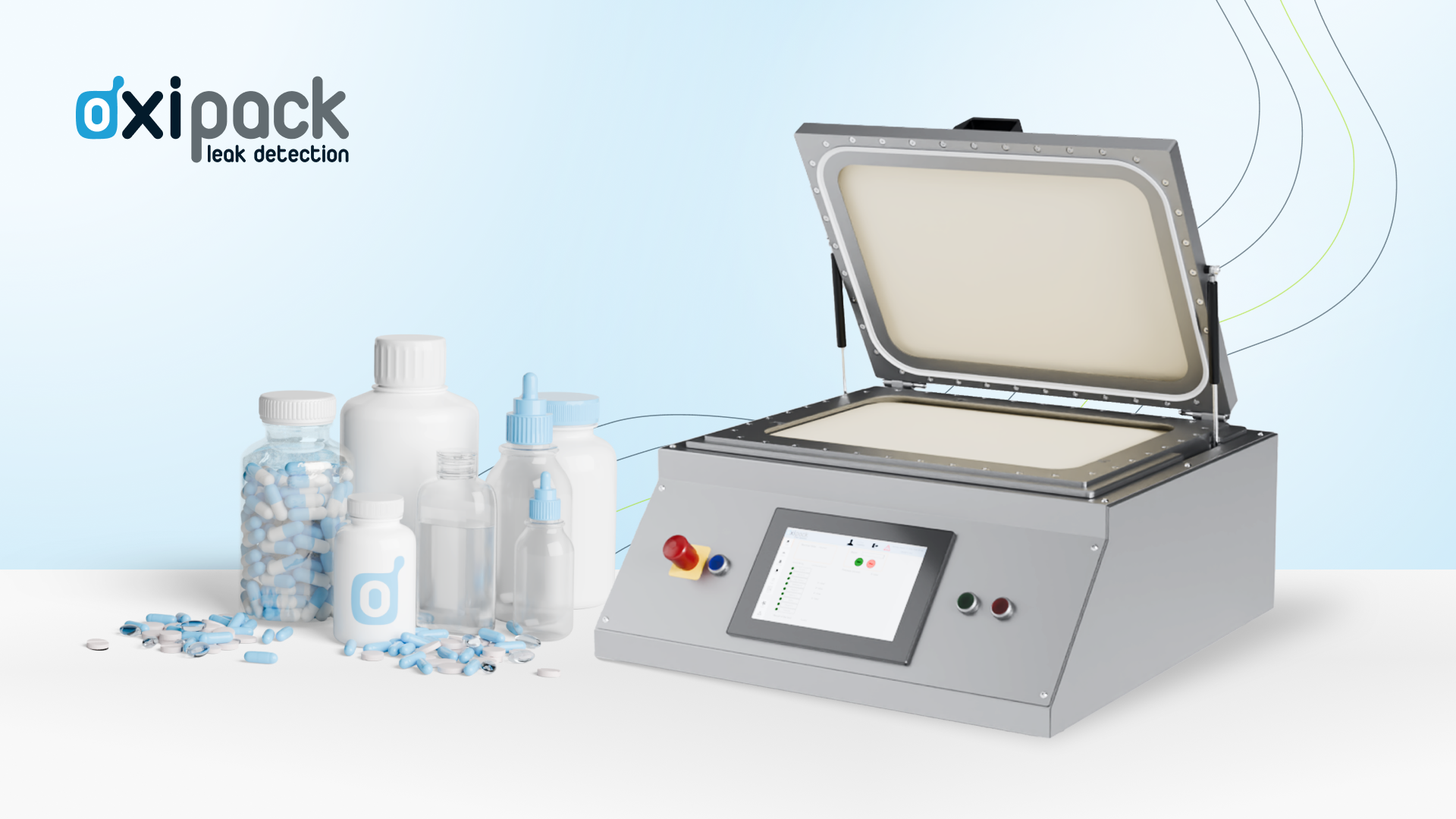
The result is Oxipack’s pharmaceutical leak detection platform that uses non-destructive deterministic vacuum decay, a method recognised in standards such as ASTM F2338.
A sealed package is placed in a chamber, a vacuum is drawn, and the system monitors pressure changes. Any deviation outside defined limits indicates a leak. This approach is deterministic because it offers clear pass/fail criteria independent of human observation, and it is non-destructive, allowing packs to remain intact and dry. Instead of destroying samples to prove compliance, manufacturers can test more often, on real production packages, with data that can be trended and audited.
Designed for a regulated reality
What sets the pharmaceutical platform apart is not just the physics, but the way it handles users, data, and procedures. Operators, supervisors, and quality assurance staff have separate logins and permissions, ensuring that critical settings cannot be changed without appropriate rights. Every test, parameter change, and login is recorded in a secure, time-stamped audit trail that cannot be deleted or overwritten. Results are stored electronically, linked to batch or lot numbers, and available for review during investigations.
Test recipes and procedures can be predefined and locked, ensuring consistency across runs. The system integrates seamlessly with Manufacturing Execution Systems (MES) and digital quality systems, aligning with modern pharma’s drive towards automation, efficiency, and reduced waste.
Ready for the next step
After the first set of successful Factory Acceptance Tests (FAT), Oxipack’s pharmaceutical leak detection platform is ready to support more pharma companies. It offers dynamic, customisable solutions based on a broad list of functional design specifications, while remaining affordable. Manufacturers can configure coverage to suit their needs, from intensified sampling to near-100% inspection, and they can do so without creating avoidable waste in high-value formats.
Today, we are proud to have our software and pharmaceutical platform ready for larger-scale rollout.
The conversation with manufacturers has evolved. It is no longer only about whether a leak detection method appears in a validation file, but about how that method supports everyday production. The questions are becoming more thoughtful: is the approach truly deterministic, or does it still depend on human observation? Can the system provide clear traceability? And just as importantly, can it help reduce unnecessary waste while maintaining compliance?
Looking Ahead
Oxipack’s journey into pharma began with hesitation, but it grew into a platform designed for a regulated reality. The physics hasn’t changed, and vacuum decay remains the backbone. What is changing are the expectations, regulatory requirements, and pharmaceutical industry demands, and our machines are evolving to meet them.
As packaging systems advance and fill-finish operations become more automated, deterministic, non-destructive leak detection will be central to proving integrity without slowing production or sacrificing product quality.
We are shaping a future where leak detection not only meets compliance but empowers pharmaceutical packaging to be safer, smarter, and more sustainable for everyone.
For more, please visit Oxipack’s main page.