
BostonGene earned four distinctions in the 2025 Pharmaceutical Technology Excellence Awards, recognizing its leadership in applying artificial intelligence (AI) and multiomic science to address the most persistent barriers in oncology drug development. The awards span Research & Development, Product Launches, and Innovation categories, reflecting BostonGene’s role as a strategic partner to pharmaceutical companies seeking to improve trial success rates, accelerate timelines, and reduce development risk.
BostonGene’s integrated solution suite includes AI-derived predictive signatures, foundation model–powered multiomic analysis, agentic AI for therapy optimization, and digital twin–informed target discovery. Together, these capabilities support patient selection, biomarker strategy, drug repurposing, rational combination design, and indication prioritization across the full drug development continuum. .
Go deeper with GlobalData


Discover B2B Marketing That Performs
Combine business intelligence and editorial excellence to reach engaged professionals across 36 leading media platforms.
BostonGene received the Research and Development award for advancing AI-derived predictive signatures that enhance responder identification, safety profiling, and trial enrichment. The Product Launches award recognized its foundation model–powered multiomic analysis which delivers actionable, non-invasive immune and tumor profiling from a blood sample. The Innovation award for agentic AI for therapy optimization acknowledged its role in data-driven indication expansion and therapy matching while a second Innovation award honored digital twin–informed target discovery, for prioritizing tumor-specific targets and rational combination strategies.
AI-derived Predictive Signatures Improve Trial Design, Patient Selection, and Safety
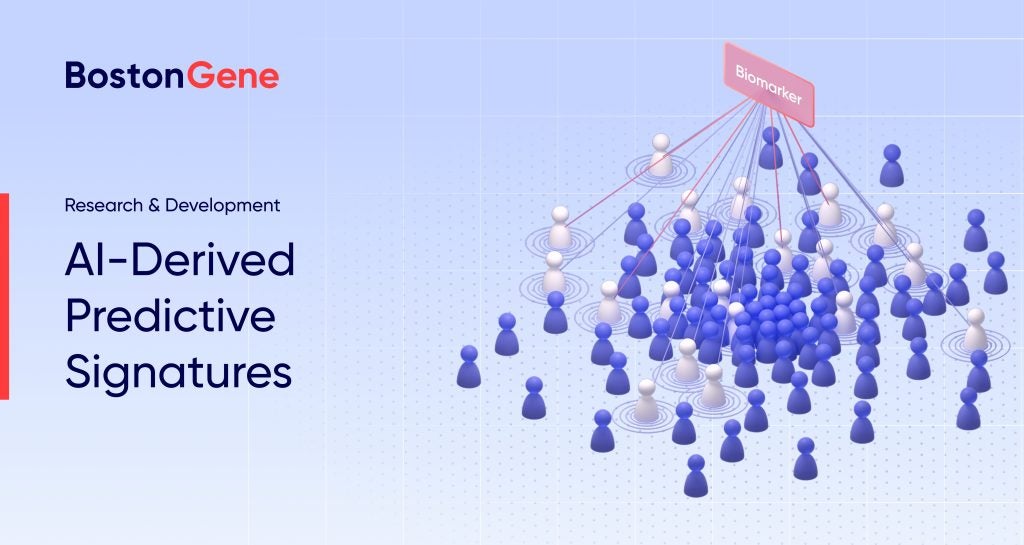
BostonGene’s AI‑derived predictive signatures integrate genomic and transcriptomic profiling with immune system context to improve responder identification and trial enrichment. Across multiple cancer types, these signatures have demonstrated superior performance relative to conventional biomarkers such as PD‑L1 expression and tumor mutational burden.

The platform directly addresses the primary drivers of oncology trial failure: insufficient efficacy and dose-limiting toxicity. By integrating whole-exome sequencing, RNA sequencing, liquid biopsy inputs, including circulating tumor DNA and cell-free RNA, multiparameter flow cytometry, and tissue-based imaging, BostonGene captures both tumor-intrinsic biology and systemic immune dynamics.
AI models trained on large-scale biological datasets identify subtle multiomic patterns that are not detectable with single-gene or panel-based approaches. This enables more precise patient selection, earlier go/no-go decisions and improved confidence in trial outcomes.
In solid tumors treated with immune checkpoint inhibitors (ICIs), BostonGene defined five reproducible immune states using more than 18,000 blood transcriptomes. These baseline immune states correlated with treatment response across cancer types a and outperformed PD-L1 expression, PD-1 positive CD8 T-cell levels and tumor mutational burden (TMB) in head and neck cancer studies.
In mantle cell lymphoma, integrated, RNA sequencing and whole-exome sequencing identified four tumor microenvironment subtypes, including an immune-depleted subtype associated with poor outcomes and resistance to Bruton’s tyrosine kinase inhibitors (TKI). These insights support therapy selection and patient stratification.
In clear cell renal cell carcinoma, where reliable biomarkers for ICI versus TKI benefit have been lacking, BostonGene developed AI models trained on more than 3,600 patient samples. Separate response scores for each therapy class improved regimen selection and demonstrated stability across multiple validation cohorts.
Beyond efficacy, the platform supports safety management. Pre-treatment immune-cell and gene-expression signatures have been shown to predict immune-related adverse events (irAEs) in melanoma patients receiving immunotherapy, enabling proactive risk mitigation.
Foundation Model–Powered Multiomic Analysis from a Blood Sample

BostonGene’s foundation model–powered multiomic analysis delivers immune, tumor, and minimal residual disease (MRD) insights from a single blood sample, enabling longitudinal monitoring without repeated tissue biopsies.
The platform integrates flow cytometry, RNA sequencing, cell-free RNA (cfRNA), and circulating tumor DNA into a unified workflow. This approach preserves biological depth while addressing tumor heterogeneity and dynamic disease evolution.
cfRNA analysis extends tumor characterization beyond predefined mutation panels. Reported models distinguish cancer patients from healthy donors, classify fibrotic versus non-fibrotic TME features, assess PD-1 status, and detect liver metastases using blood-derived signals.
In hematologic malignancies, such as chronic lymphocytic leukemia (CLL), cfRNA profiling captured disease dynamics within one week of therapy initiation, revealing immune and cellular shifts aligned with prognostic indicators of response. Circulating tumor DNA profiling enables sensitive MRD detection. In follicular lymphoma, a targeted gene assay identified clinically relevant mutations more than a year earlier than standard testing, highlighting the potential for earlier detection of recurrence.
For pharmaceutical sponsors, these capabilities translate into improved screening and stratification, real-time pharmacodynamic readouts, and access to novel blood-based biomarkers for efficacy and safety. For clinicians, they enable data-driven treatment adjustment without invasive sampling.
Agenic AI for Therapy Optimization and Indications Expansion
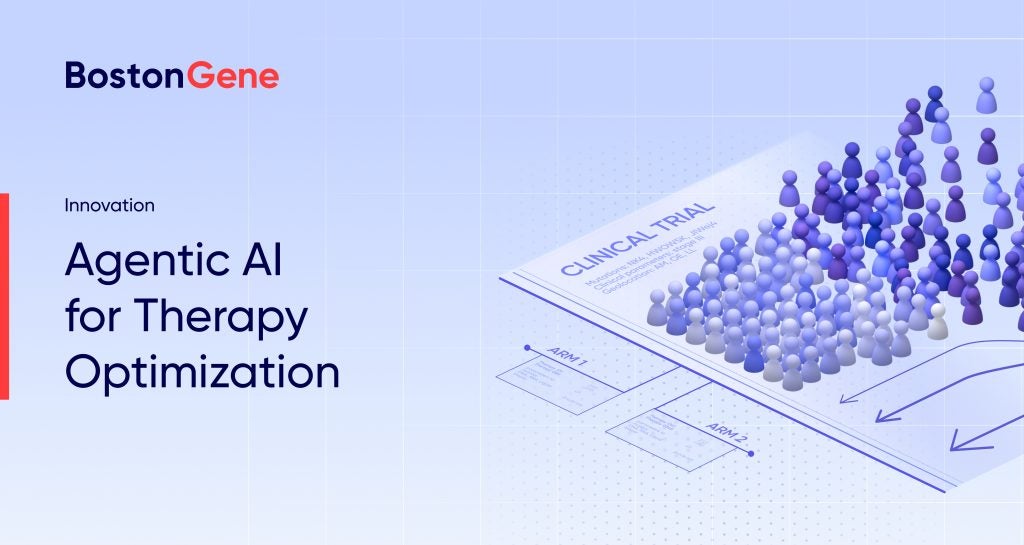
BostonGene’s agentic AI for therapy optimization is a decision-making system that autonomously integrates biological data, safety considerations and competitive intelligence to guide drug repurposing and indication expansion.
The platform evaluates tumor‑specific target expression, normal tissue safety profiles, and competitive dynamics to identify indications where biology and safety align. This is particularly relevant for targeted modalities such as antibody–drug conjugates (ADCs) and bispecific antibodies (BsAb), where off-tumor expression can drive toxicity.
High-resolution expression mapping across cancer cell lines, purified tumor cells, patient tissues, and normal organs identifies tumor types with meaningful on-target expression while flagging potential off-tumor risk.
These analyses are complemented by large-scale evidence synthesis, including benchmarking against standards of care using tens of thousands of publications, a database of oncology agents and insights from thousands of clinical trials to assess competitive positioning.
By aligning target biology, safety considerations, and the competitive landscape, the platform provides sponsors with a more precise and lower-risk basis for advancing repurposing strategies.
Digital Twin–Informed Target Discovery for Tumor‑specific Targets and Combinations

BostonGene’s digital twin–informed target discovery platform uses computational models of patient disease and microenvironment to prioritize tumor-specific targets and rational combination strategies. Unlike bulk-expression approaches, the platform separates signals from tumor cells, immune infiltrates, stromal components, and normal tissues. This distinction reduces false positives driven by microenvironmental contamination and improves translational confidence.
Candidate targets are filtered to exclude genes with meaningful normal tissue expression, reducing inherent toxicity risk. Additional criteria s assess diagnosis-specific overexpression, tumor-cell association and low correlation with immune infiltration markers.
In sarcoma and breast cancer use cases, this approach narrowed large candidate pools to focused, clinically actionable shortlists, supporting advancement into preclinical and early clinical development.
The platform also evaluates combination potential by assessing alignment with immunotherapy biomarkers, supporting rational pairing of targeted therapies with immune-based treatments.
By integrating tumor specificity, safety tolerance, and combination rationale into a unified framework, BostonGene reduces early-stage attrition and enables more confident target advancement.
Company Profile
BostonGene is redefining cancer patient care and drug development through the integration of omnimodal data and artificial intelligence. Built and validated through an extensive real-world clinical testing network, BostonGene’s Foundation Model of cancer and the immune system integrates genomic, transcriptomic, and immune data with clinical outcomes to generate biologically grounded, actionable insights. These insights enable biopharma partners to design and de-risk trials, identify novel targets, and optimize therapeutic response prediction across all stages of development while simultaneously improving patient care through clinically integrated innovation. For more information, visit www.BostonGene.com.
Links
Website: https://bostongene.com/

