
It is no secret that research and development (R&D) efforts to improve care in women’s health have long been critically underfunded – with companies focused exclusively on women’s health attracting less than 1% of private healthcare investment between 2020 and 2025, as per the World Economic Forum (WEF).
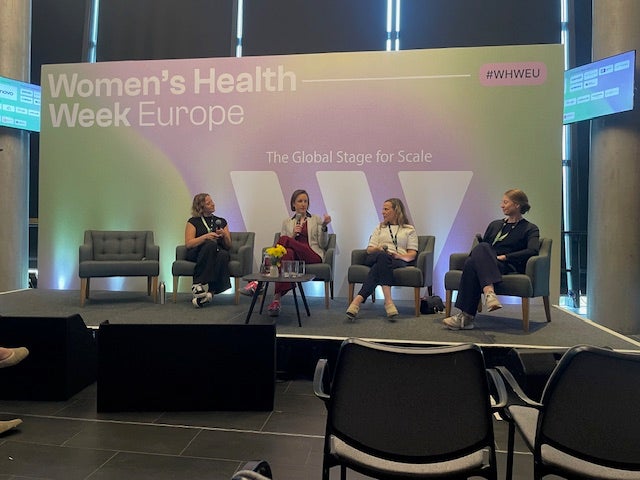
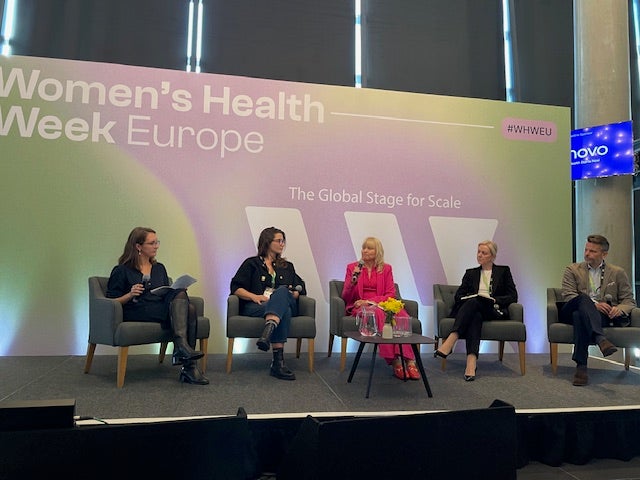
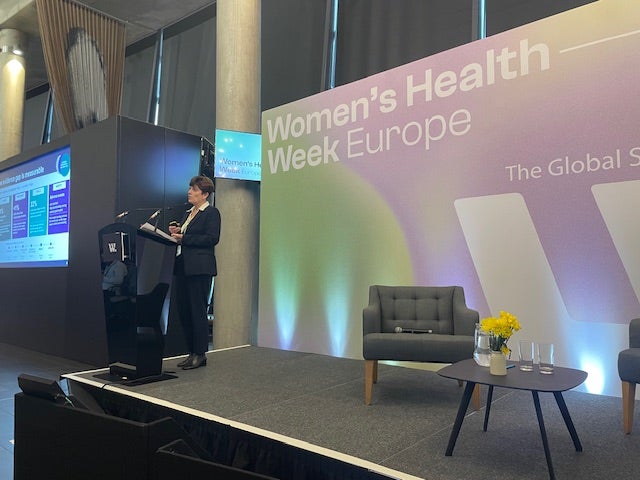
However, startups, investors, policymakers and advocates speaking at the Women’s Health Week Europe conference, held in London between 7 and 8 October 2026, painted a more positive picture – speaking of the notable progress that the segment has made to secure a better future for women across the globe as it aims for true health equity.
Go deeper with GlobalData

Discover B2B Marketing That Performs
Combine business intelligence and editorial excellence to reach engaged professionals across 36 leading media platforms.
Despite steps in the right direction, experts were intent on addressing several barriers currently standing in the way of this goal, with the data gap complicating the development of new drugs and health technologies. Meanwhile, on the health technology side, patients are often forced to pay out-of-pocket for solutions – potentially restricting access to women who may need these tools the most.
Despite these kinds of challenges, speakers were intentional in highlighting the wide-ranging potential of investing in this area, as the WEF predicts that, for every dollar put into women’s health, the globe gains three dollars in economic benefit. Not only this, but experts also touted the promise of reducing health-related work absences, while improving the lives of families – not just the women within them – on a broader scale.
With these benefits in mind, several sessions during the conference took a deep dive into how the women’s health segment can now move forward – looking at financing, clinical trial optimisation and how best to drive systemic change in healthcare.
Considering the funding landscape and factors influencing it
While startups often have a seed of an idea that could grow into a successful business, these companies often struggle to secure capital to allow their proposal to flourish. This can be particularly true for women’s health businesses, noted Verdane’s investment director, Henriette Hessen, as there is a general lack of women in decision-making roles within finance more generally.
Companies often still rely on sourcing early-stage funding for an innovation – leading many founders to turn to venture capitalists (VCs), who can provide cash at an early stage as a company is finding its feet.
However, in a panel session on day one, speakers noted that VC is far from the only funding route that companies can take. According to Michael Lewis, scientific director of innovation for the UK’s National Institute for Health and Care Research (NIHR), grant and debt funding, both as blended and as individual raises, can also be a great option for businesses, as they offer more flexibility as a company grows.
When looking at the women’s health funding landscape more broadly, there has also traditionally been a gap between what US and European companies could raise, with capital generally concentrating in the former rather than the latter. This is changing, however, as Jemma Day, investment manager at the British Business Bank, remarked that the UK and Europe saw record funding flowing into women’s health in 2025.
Despite this, Hessen did point to the differences between the investor landscapes in women’s health within Europe and the US, mentioning that the later-stage investors in this space are more commonly specialists in a specific area within the US, while later-stage investors in Europe tend to be more generalist in their focus.
When approaching the funding landscape, Ravit Warsha Dor, partner and director at Telus Global Ventures, stressed that companies must also prepare for disruption linked to the surge of artificial intelligence (AI)-native companies, who she says are “often winning over the more mature companies that are still struggling with old technologies”.
Optimising research with women in mind
While maintaining health at a population level revolves around many factors, pharmaceutical treatments play a key role in managing existing conditions and potentially helping a patient to live better and longer.
However, many drugs widely prescribed today have traditionally been tested in men, meaning that the understanding of how safe a drug is in women is not always widely ascertained before it reaches the market. This has led to women generally experiencing more drug-related serious treatment-emergent adverse events (TEAEs) than men.
Experts warn that this problem could well persist if action is not taken, as 72% of trials do not currently aggregate outcomes based on sex. To truly account for a drug’s safety and efficacy in a population representative of the real world, Lale Say, unit head at the World Health Organization (WHO), noted that sponsors must routinely include sex disaggregation in their analysis. Baking this into global policy, Say said, can help researchers to figure out whether there may be differences in safety risks among the sexes – whether that be skewed towards men or women.
While there has been notable progress in closing the sex-based gap in clinical trial participation, the uptake of women from marginalised groups within research is often still lacking. “Women are not one homogeneous group; there’s intersectionality in there,” commented Maryann Ferreux, CMO at Health Innovation Kent Surrey Sussex, who added that factors beyond sex, such as social demographics, are also key considerations as sponsors look to close the data gap.
Alison Cave, chief safety officer of the UK’s Medicines and Healthcare products Regulatory Agency (MHRA), also called for the inclusion of data around a drug’s safety and efficacy in pregnant and lactating individuals, as information remains scarce on how certain essential drugs may impact both mother and child.
To improve outcomes on a wide scale, experts highlighted the importance of collecting more data, both in the pre-and post-marketing setting, to better understand a treatment’s true impact.
Upending systemic challenges to drive women’s health forward
As the women’s health segment eyes further progress, there are several systemic challenges that must be addressed to take new steps forward. This includes upending the misogyny on both the healthcare and wider societal level, bolstering the funding flow to women’s health projects and implementing policies with women’s health in mind.
To overcome these hurdles, experts noted that it cannot be an individual effort, as investors, clinicians, regulators, policymakers and founders are all accountable for driving this change. They stress that this must also be a more global operation, as health disparities continue to disproportionately impact women from disadvantaged backgrounds.
While stakeholders can come together to drive notable change in the women’s health space, the CEO of the period tracker app, Clue, noted that these efforts will fall flat if there is not widespread access to a beneficial therapeutic or health technology for all facets of the patient population. For developers to achieve this, she believes there must be a fundamental focus on distribution and how that will be successfully achieved early in the development process.
Overall, experts at the 2026 Women’s Health Week Europe conference expressed their optimism for the future, though they believe there are several research, data and systemic hurdles the segment must overcome to achieve true health equity for women.