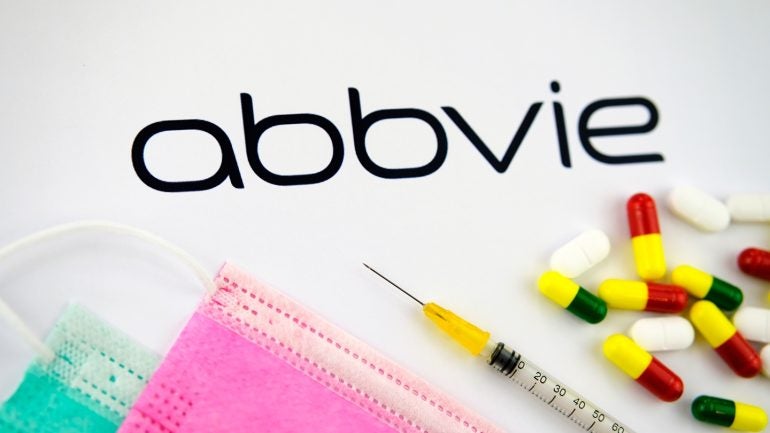
The US Food and Drug Administration (FDA) has approved AbbVie’s Rinvoq (upadacitinib) for adults and paediatric patients aged 12 years and older with nonsegmental vitiligo.
Administered as a once-daily 15mg tablet, the medication is approved as the first systemic therapy to treat this condition in the US.
Go deeper with GlobalData


Discover B2B Marketing That Performs
Combine business intelligence and editorial excellence to reach engaged professionals across 36 leading media platforms.
Nonsegmental vitiligo represents the most common form of vitiligo, an autoimmune disease targeting pigment-producing melanocyte cells. The condition typically produces symmetrical patches of depigmented skin and can progress unexpectedly.
AbbVie research and development executive vice-president and chief scientific officer Roopal Thakkar said: “The approval of Rinvoq represents an important milestone for people living with nonsegmental vitiligo, providing the first FDA-approved systemic treatment option for this immune-mediated disease.
“Built on years of research into the biology of vitiligo, Rinvoq targets an underlying immune pathway involved in the disease, translating our scientific understanding into a new advanced therapy for patients.”
The regulatory decision was based on findings from the Phase III Viti-Up clinical programme (NCT06118411), comprising two replicate trials: Viti-Up-1 and Viti-Up-2. The studies tested the oral Janus kinase inhibitor across a 48-week placebo-controlled phase followed by a 112-week open-label extension. At week 48, significantly higher proportions of patients on Rinvoq achieved the co-primary endpoints compared to placebo. Facial repigmentation of at least 75% (F-VASI 75) was reached by 25% of treated patients in Viti-Up-1 and 23% in Viti-Up-2, compared to 6% and 7% on placebo. Total body repigmentation of at least 50% (T-VASI 50) occurred in 19% and 21% of Rinvoq recipients, versus 6% in each placebo group. In addition, 16% and 12% of Rinvoq patients achieved F-VASI 90, compared to 2% and 3% on placebo. Descriptive findings from patients continuing therapy at week 76 showed F-VASI 75 rates of 55% in Viti-Up-1 and 47% in Viti-Up-2, alongside T-VASI 50 rates of 43% and 40%.
The safety profile remained consistent with previously approved indications.
Rinvoq is currently cleared in the US across 10 indications.
AbbVie is also evaluating the therapy in Phase III clinical trials for alopecia areata, hidradenitis suppurativa, systemic lupus erythematosus, and Takayasu arteritis.
Prior to this, AbbVie secured a partnership valued at up to $2.5bn with Disco Pharmaceuticals to develop bispecific cancer therapies for solid tumours.


