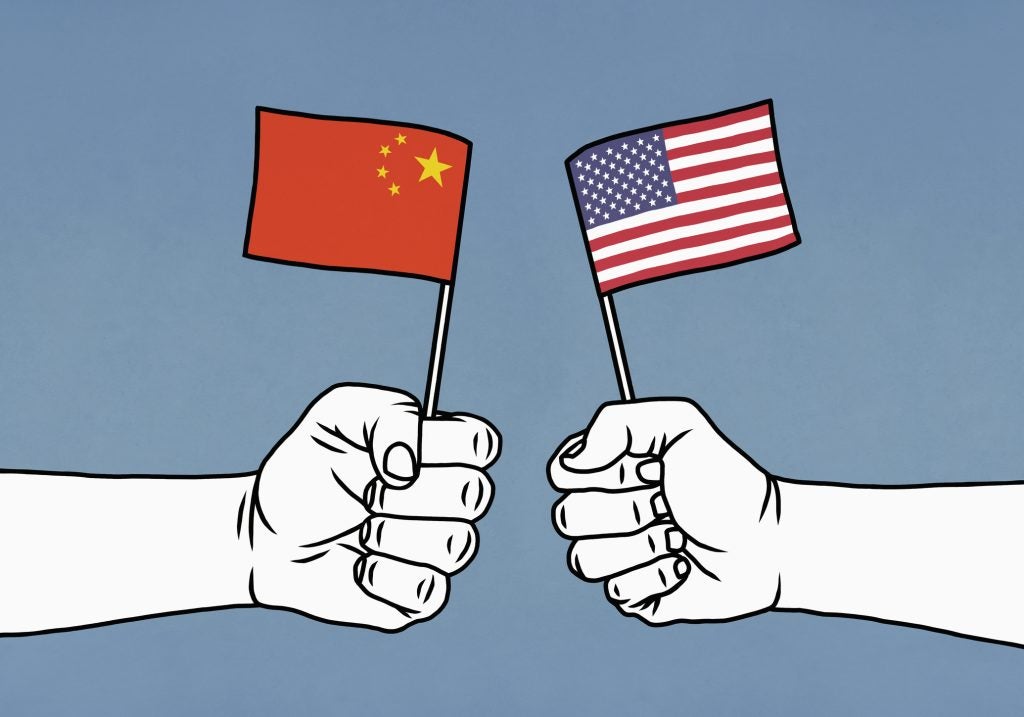
After years in regulatory limbo, the BIOSECURE Act looks set to be enacted into law, placing relationships between US and China pharma companies back in the legislative spotlight.
Both the House of Representatives and the Senate have passed the FY26 National Defense Authorization Act (NDAA), wherein the BIOSECURE Act has been confirmed as part of the package. With the Congress approval now in hand, the bill is passed to US President Donald Trump for final approval. Presidents nearly always sign the NDAA once handed to them, meaning BIOSECURE is poised to become law.
BIOSECURE was first proposed in December 2023. It was omitted from the 2025 package after criticism from certain lawmakers. With amendments, the framework made a return to the Congress floor. In October 2025, a revised iteration was endorsed by both chambers of Congress. The act was then included in the final draft compromise version of the NDAA this month.
At its core, the legislative framework for biotech security has the same aim as previous iterations. The BIOSECURE Act, a section formally called “Prohibition on Contracting with certain Biotechnology providers”, is designed to limit Chinese biotechs and manufacturers from accessing US funding and collaborating with domestic pharma companies using federal funds.
However, in its current form, the act does not name specific Chinese companies. Instead, equipment or service restrictions will apply to identified “biotechnology companies of concern”, including those on the US Department of Defense’s (DoD) 1260H list and companies designated through a national security process by the Office of Management and Budget (OBM). This proposed framework opts for a broader stroke association, rather than targeting specific companies.
Cyrus Fan, research analyst in the GlobalData health economics and market access research and analysis team, said: “The softened version excludes naming the specific Chinese pharma manufacturing companies and instead imposes restrictions on companies on federal watchlists.”
Reference to China-based contract manufacturer WuXi AppTec, previously a key target of the act, has been omitted. The contract research, development, and manufacturing organisation (CDMO) had been one of five Chinese life science companies named in a previous version of BIOSECURE. According to a letter from 7 October, the Pentagon identified Wuxi AppTec for potential inclusion on the 1260H list, according to a recent report from Bloomberg. This means that while not specifically named in BIOSECURE, the CDMO could be impacted.
Despite adopting a less firm framework, the pharma industry will still be wary of the act’s potential implications. China-based companies are responsible for 20% of drugs in development globally, reflecting the powerhouse role the country has in the pharmaceutical industry. Licensing deals between US and Chinese biopharma companies hit record highs last year, a 280% increase from 2020, according to analysis by GlobalData, parent company of Pharmaceutical Technology.