
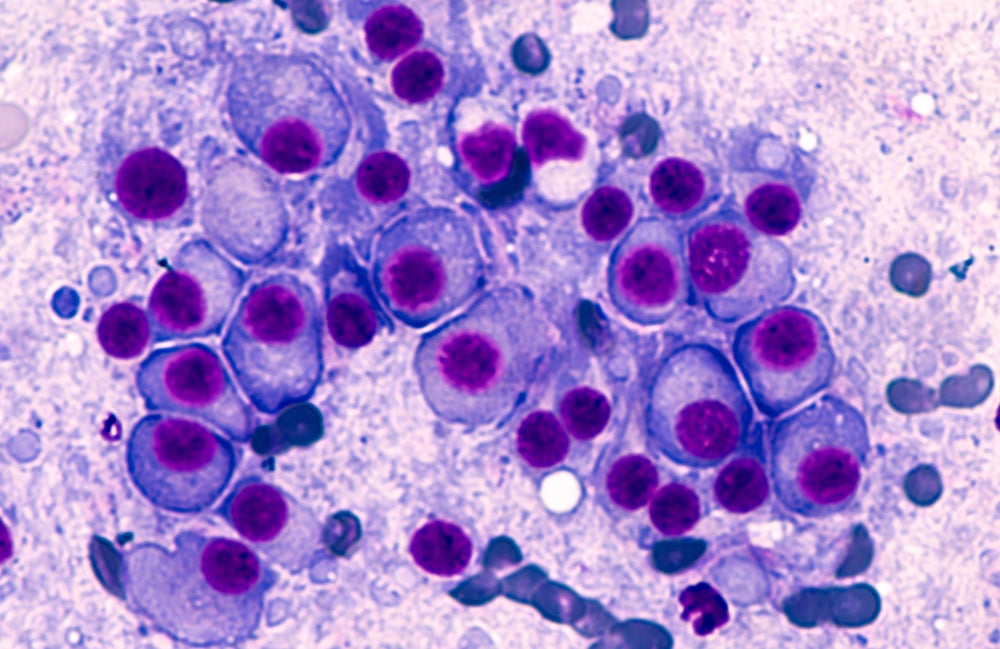
GSK has secured the rights to Chimagen Biosciences’ trispecific T-cell engager (TCE) for multiple myeloma, signalling the big pharma company’s remewed interest in oncology following a step away from the disease area a little over a decade ago.
Through this agreement, GSK will secure the full global rights to the Chinese biotech’s TCE programme that currently remains unnamed in exchange for an upfront fee and potential development and commercial milestone payments. While neither party has shared details on how much Chimagen received upfront, the deal could see GSK pay up to $750m.
With this new asset in the bag, GSK will assume responsibility for its development in multiple myeloma, with plans to bring the drug to Phase I clinical trials in 2027.
This marks the second deal GSK has inked with Chimagen, with a licensing agreement forged in 2024 for CMG1A46, a TCE designed to treat B cell-driven autoimmune diseases. TCEs are a type of immunotherapy that treat cancer by directing the body’s immune system to destroy tumour cells.
TCE market heats up on growing industry interest
TCEs have become revered as a game changer in the oncology space, with several notable pharma names such as Bristol Myers Squibb (BMS), Gilead and UCB all inking deals centred around TCEs over the past year. This follows the strong efficacy of approved drugs like Tecvayli (teclistamab), which creator Johnson & Johnson is looking to move into earlier lines within the multiple myeloma treatment paradigm following positive Phase III data in combination with its other marketed TCE, Talvey (talquetamab).
Market forecasters also see a strong commercial opportunity for the TCE market in multiple myeloma – the third most common blood cancer globally – as they predict the US market alone will exceed $10bn by 2032.
GSK shed its oncology business as part of a $20bn three-part asset swap with Novartis in 2015. However, the therapeutic area has been targeted as a core pillar of GSK’s refreshed strategy under new CEO Luke Miels. The company notes it wants to expand its focus on blood and women’s cancers into the realm of lung, gastrointestinal and other solid tumours through advanced modalities such as antibody-drug conjugates (ADCs), TCEs and tyrosine kinase inhibitors (TKIs).
Currently, according to GlobalData’s Pharmaceutical Intelligence Center, there are over 100 ongoing Phase III studies exploring the potential of treatment options for multiple myeloma, of which over six in ten are classed as immuno-oncology assets – the wider umbrella under which TCEs sit.
According to a recent immuno-oncology report from GlobalData, parent company of Pharmaceutical Technology, the total market is expected to grow to $186bn in 2031. Analysts predict this will primarily be driven by the checkpoint inhibitors and the TCEs.