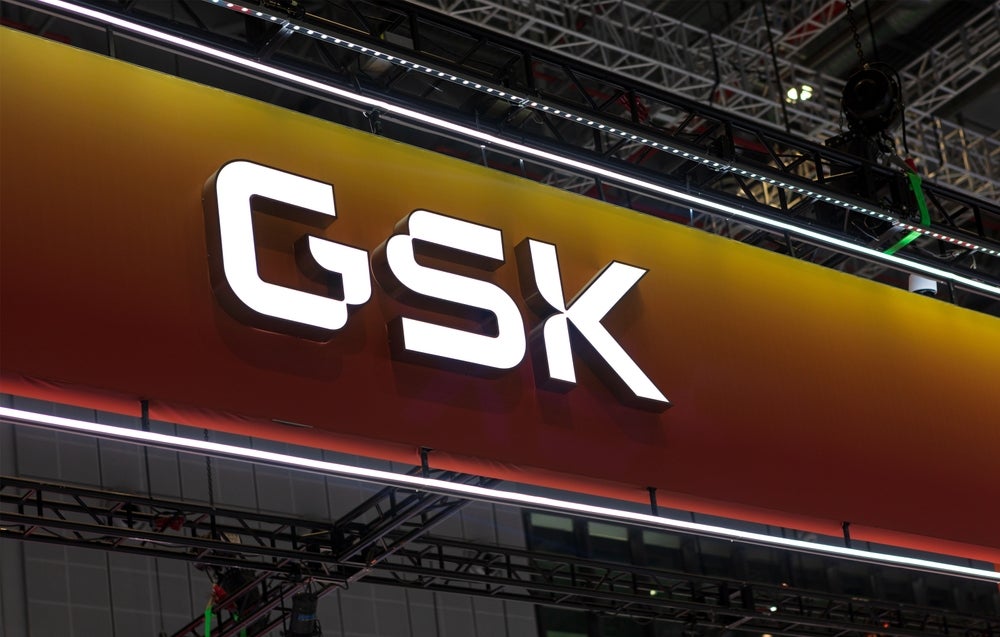
GSK will pay a subsidiary of HUTCHMED $110m upfront for a novel type of drug designed to selectively target solid tumours.
Under the licensing deal, a subsidiary of GSK will gain global rights to the cancer candidate HMPL-A830, although HUTCHMED will retain development and commercialisation activities in Mainland China, Hong Kong, Macau and Taiwan.
China-based HUTCHMED is also in line for development, regulatory and commercial milestone payments worth $1.185bn, meaning the deal could reach a total value of $1.295bn.
HMPL-A830 is an antibody-targeted therapy conjugate (ATTC), comprising of a Kirsten rat sarcoma (KRAS) small molecule inhibitor payload joined to an anti-epidermal growth factor receptor (EGFR) antibody. According to HUTCHMED, ATTCs mark an advancement on traditional cytotoxin-based antibody-drug conjugates (ADCs), allowing strong anti-tumour activity while maintaining durability.
HMPL-A830 is designed to deliver a KRAS inhibitor directly to EGFR-expressing tumours, while simultaneously blocking EGFR and KRAS signalling to enhance efficacy, durability, and tolerability.
GSK’s global head of oncology R&D, Dr Hesham Abdullah, said: “The dual KRAS-EGFR mechanism of HMPL-A830 has the potential to significantly improve upon current standard of care.”
KRAS is a specific type of gene and protein belonging to the broader RAS family, which acts as a cellular switch for growth and division. Mutations across the entire RAS family drive roughly 15% to 20% of all human cancers, meaning the protein has become one of the most prevalent drivers in human oncology.
KRAS, the most dominant RAS isoform, is mutated in approximately 44% of colorectal cancer, 34% of lung adenocarcinoma and up to 89% of pancreatic ductal adenocarcinoma patients. Because of this, HUTCHMED said that clinical development with HMPL-A830 will initially focus on these three cancer indications.
The top-selling KRAS inhibitor is Amgen’s Lumakras/Lumykras (sotorasib), which reached sales of $363m in 2025. Bristol Myers Squibb’s (BMS) Krazati (adagrasib) is also emerging as a widely used therapy, with sales growing 62% to $205m in 2025.
HUTCHMED plans to initiate a global Phase I development programme (NCT07718581) in the second half of 2026, which it will still be responsible for as part of the deal terms with GSK. The study will feature both a dose escalation part and a dose optimisation portion, with enrolled patients having confirmed, unresectable, advanced, or metastatic solid tumours who are refractory or not responding to standard treatment.
HMPL-A830 is HUTCHMED’s third candidate using this payload framework. HMPL-A251, a PI3K/PIKK–HER2 ATTC, and HMPL-A580, a PI3K/PIKK–EGFR ATTC, are both in clinical trials. HMPL-A830, however, marks the first licensed to a global partner.
For GSK, licensing HMPL-A830 aligns with a new R&D strategy debuted by recently appointed CEO Luke Miels in July 2026. In its Q2 earnings, the company announced it would save $2.5bn between now and 2029, most of which will be reallocated to bolstering its pipeline through dealmaking, regular portfolio reviews and the acceleration of late-stage R&D programmes.
GSK’s deal with HUTCHMED marks the latest in a long line of licensing activities between Western pharma companies and Chinese drug developers. An October 2025 report from GlobalData, parent company of Pharmaceutical Technology, found that China-based companies were responsible for 20% of drugs in development globally, reflecting the powerhouse role the country has embraced in the pharmaceutical industry. Cross-border licensing hit $136bn in 2025 – a value more than 27 times higher than the $5bn rate seen in 2020.