
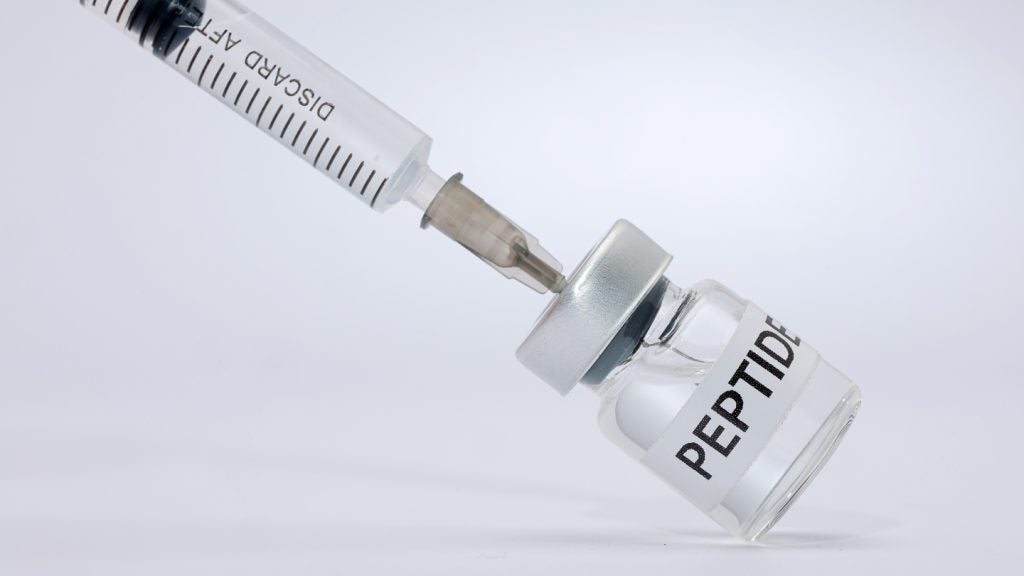
The FDA’s acceptance of several untested peptides for human use has left one drug innovator calling for a greater clarity of understanding around a drug class that is widely known but often poorly understood.
Peptides have become some of the most profitable medicines in the world as glucagon-like peptide-1 receptor agonists (GLP-1RAs) have generated billions of dollars. GLP-1Ras have been so successful that regulators have had to contend with a shadow industry of compounders that offer unauthorised versions of the blockbuster drugs from Eli Lilly and Novo Nordisk.
Beyond GLP-1RAs, peptide drugs are also highly sought after for their versatility. Their potential to enhance the immune system, gut health, and other aspects in the wellness industry has spurred a huge online market for these drugs, many of which are unauthorised and scarcely studied in humans. Online trends focused on “biohacking” and “looksmaxxing” have further increased the demand for such drugs for their promised aesthetic benefits.
Additionally, US Health and Human Services Secretary Robert F Kennedy Jr., a vocal fan of peptides, has committed to reversing restrictions placed on the industry. To this end, recently, a US Food and Drug Administration (FDA) advisory panel voted to allow specialised pharmacies to produce several peptides without full clinical testing.
Meanwhile, a few biotechs are innovating on peptides through well-established channels in the industry. One of these is Sethera Therapeutics, a Salt Lake City, Utah-based biotech, which is using enzymes to link amino acids in peptides into multiple ‘macrocycles’, creating elaborate molecular structures that could enhance the efficacy and stability of these drugs and potentially open new applications for the class.
Pharmaceutical Technology spoke with Sethera CEO Karsten Eastman, to understand these innovations. As the size and complexity of Sethera’s candidates stretch regulators’ current definition of peptides, he says a greater clarity of understanding around this drug class is due.

This interview has been edited for length and clarity.
Frankie Fattorini (FF): How are macrocylic and poly-macrocyclic peptides made?
Karsten Eastman (KE): Macrocycles—which are a way of linking peptides together to give it shape—are made naturally and by pharmaceutical companies by using a disulfide bond.
Sethera is using an enzyme to make a much stronger bond than the usual disulfide bond, and program where that bond goes in the context of the peptide. This allows us to move from a simple single macrocyclic peptide to a poly-macrocyclic one, allowing us to go for higher order architectures.
FF: As an example, can you tell us about the work you have done cyclizing GLP-1RA peptides?
KE: We have modified GLP-1RAs to give them a longer half-life. We cyclized the head and the tail of a peptide and were able to show that the half-life of the peptide in physiological conditions was longer, so we were able to make GLP-1RAs last longer in physiological states, but peptides are still processed by the body and undergo digestion. We said let's start enabling some properties that could, say, allow a once every two weeks shot to go to a once-a-month shot, which we're actively working on.
FF: How is the innovation environment around poly-macrocyclic peptides developing?
KE: The FDA has a limit on how large a peptide could be before it would begin to classify it as a biologic, which changes [a therapy’s] regulatory path. So far, everything that we've been pulling from the [screening studies] falls under that amino acid residue limit, so the regulatory path would be more akin to a small molecule than a biologic.
That is to say that there really isn't a lot in the poly-macrocyclic space yet. Bicycle Therapeutics uses a specialised linker to rigidify its peptides, and there are not too many other examples of pMCPs out there. There haven't been a lot of enabling technologies that allow them to exist.
We still have to do IND enabling studies, toxicology, and production, similar to any other molecule that would be nominated [for further development], but I think that there will still be some questions associated [given that] this is kind of a new modality. What does that new modality actually look like?
FF: Are regulators adapting to innovations in peptides like this?
KE: Maybe, but there has been a lot on the FDA side pushing towards having more peptides be available. We've had recent news that certain peptides are to be allowed to be made by compounding pharmacies.
That has nothing to do with their efficacy or how well they work in humans, but it recognises that people are taking peptides. Whether those peptides have been approved by the FDA or not is a separate question, but [the advisory committee] voted to enable the production of peptides in safer environments, and that's something to think about too.
If there is a lot of black market production, there can be some pretty severe health effects if [the peptides] are not handled carefully. So, there are positive signals showing that the FDA is viewing peptides as a positive thing.
FF: With this heightened attention on peptides, is a crystallisation of our understanding of peptides due?
KE: I think so. A lot of it still depends on public perception because if the public is viewing peptides in a positive light, then that means that there's going to be more push on the commercialisation side to have more peptide opportunities, which is going to push the regulators to say, how do we address this growing trend?
There needs to be some additional discussions with the public to say that some of these peptides are not doing what you think that they're doing. A lot of these peptides have never been evaluated, so let's think carefully and not just spend money on something that is not going to do anything for you. I hope that there's more crystallisation, and it does seem like there will be.