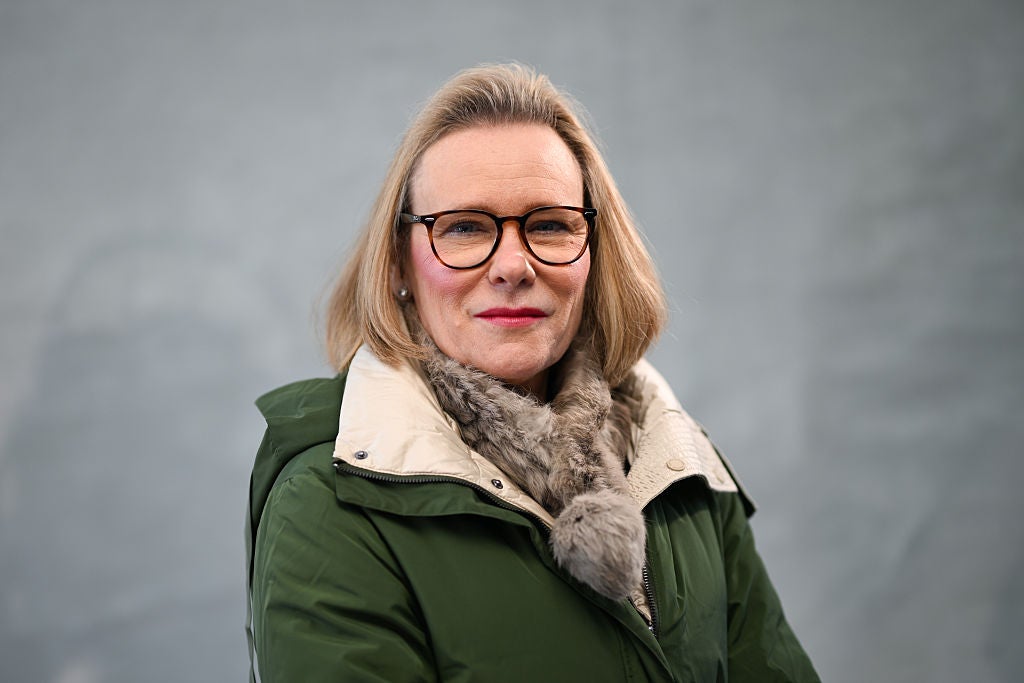
Outgoing Merck KGaA CEO Belén Garijo is set take the helm at Sanofi, after the French vaccine specialist announced it would not renew existing CEO Paul Hudson’s contract.
The abrupt leadership change at Sanofi brings a close to a six-year tenure under Hudson. Sanofi’s board thanked him for “valuable contributions to the transformation and development of the group.”
Belén Garijo has been CEO at Merck KGaA since 2021 – at the time she became the first woman to lead a major German blue-chip company. The Spanish-born pharma exec previously spent 15 years at Sanofi, overseeing pharma operations in Europe and Canada for part of that time.
Garijo announced she would leave Merck KGaA in September 2025, with her five-year tenure ending at the end of April 2026. Garijo will take up her duties on 29 April, with Olivier Charmeil, Sanofi’s executive vice president of general medicines, assuming the interim role of leadership.
Hudson’s exit comes as Sanofi feels the pressure from headwinds in the US vaccine sector. Since assuming office in January 2025, the Trump administration has overseen significant policy changes to vaccine frameworks, with health agencies like the US Centers for Disease Control and Prevention (CDC) and the US Food and Drug Administration (FDA) adjusting immunisation recommendations and rejecting new candidates.
Since February 2025, Paris-listed Sanofi, which is reliant on its expansive vaccine portfolio for a proportion of its revenue, has seen its share price slump by more than 20%.
In 2025, Sanofi's vaccines generated €7.9bn in revenue, representig a 5% drop from the €8.3bn made by the segment in 2024. However, the company’s net sales still grew 9.9% at constant exchange rates (CER) to reach €43.6bn ($51.7bn).
Sanofi is bracing its revenue streams for the loss of patent protection for blockbuster immunology therapy Dupixent (dupilumab), which generated €14.7bn last year. Hudson has overseen a big investment into R&D, though not all results have come out as expected.
A series of pipeline disappointments have hit the company in recent times. This included an FDA rejection for oral BTK inhibitor tolebrutinib in multiple sclerosis, a Phase III failure for venglustat in Fabry disease, and a separate failure of tolebrutinib in a rarer form of multiple sclerosis. In addition, there have been mixed results for chronic obstructive pulmonary disease (COPD) candidate itepekimab and the shelving of Escherichia coli vaccine (ExPEC9V) due to low effectiveness.
Sanofi said Garijo’s priority will be to strengthen the productivity, governance, and innovation capacity of R&D at the company.
Reacting to the news, Citi analysts said: “While Sanofi has suffered several R&D setbacks in the last year, we feel the abrupt change only adds to near-term uncertainty for Sanofi. While Garijo has a long career in pharma, given Sanofi's focus on R&D turnaround, we would have seen the appointment from a major pharma company with a strong R&D/BD reputation as likely to have had more immediate impact on the shares.”
Hudson has also steered Sanofi to conduct several M&A deals over the past years as it looks elsewhere for pipeline growth. This includes the purchase of Dren Bio’s bispecific antibody and a takeover of blood disorder drugmaker Blueprint Medicines for up to $1.9bn and $9.5bn, respectively, in 2025. Most recently, Sanofi inked a $2.56bn autoimmune partnership with Earendil Labs. Drug candidates involved in these deals are in clinical trials, so it remains to be seen if the financial outlays will be effective.