Japanese pharma company Shionogi has secured a contract worth up to $482m with the US’s Biomedical Advanced Research and Development Authority (BARDA), as the American government looks to boost the nation’s health preparedness.
The grant, which falls under BARDA’s Project BioShield, will see Shionogi gain access to $119m in initial funding, as well as up to $363m in additional capital over multiple years to establish a US-based drug product manufacturing facility capable of producing its marketed gram-negative antibiotic, Fetroja (cefiderocol), to tackle antimicrobial resistance (AMR).
The injectable antibiotic first secured US approval for use in patients with complex urinary tract infections (cUTIs) who have little to no alternative treatment options back in 2019. Shionogi later secured a label expansion for Fetroja in ventilator-associated and hospital-acquired bacterial pneumonia in 2020. GlobalData, parent company of Pharmaceutical Technology, forecasts that over 60% ($237m) of Fetroja’s $388m global sales in 2031 will stem from the US.
With this cash from BARDA in hand, Shionogi will also look to expand the use cases for Fetroja – specifically focusing on the antibiotic’s potential in paediatric patients with ventilator-associated and hospital-acquired bacterial pneumonia, as well as hard-to-treat infections associated with “high priority biothreat pathogens” like Burkholderia pseudomallei and Yersinia pestis.
Shionogi’s contract with BARDA comes shortly after the company’s home nation inked a trade agreement with the US, which will see Japanese companies pay 15% tariffs on branded drug imports. This is a notable 85% reduction from the 100% tariff rate recently imposed on companies outside of the EU, UK, Switzerland, South Korea, Japan or Liechtenstein without a Most Favored Nation (MFN) pricing deal.
The US addresses AMR
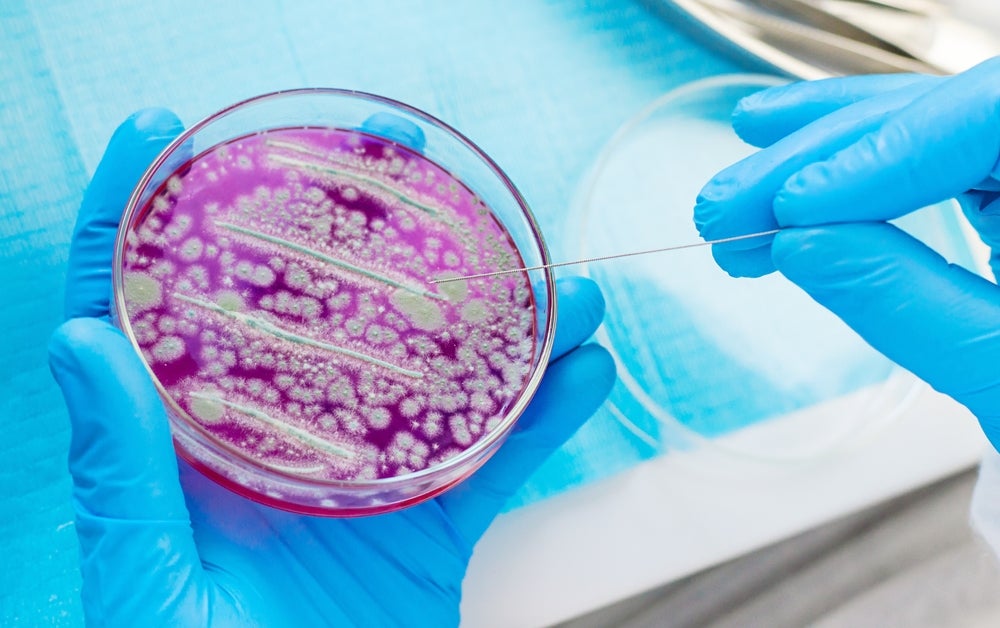
BARDA signs its contract with Shinogi as the growing threat of drug-resistant bacteria looms over the global population, with Wellcome estimating that 39 million will die due to AMR between 2025 and 2050.
In a bid to curb this threat, BARDA has poured more than $2.7bn into the development of antimicrobial products since 2010, which has helped six new antibiotics to secure the US Food and Drug Administration (FDA) go-ahead.
Across the Atlantic, other nations are making similar moves, with the EU recently pledging €30m ($35m) to fend off AMR by supporting the development of antibiotics with novel mechanisms of action. Meanwhile, the UK government introduced a subscription-style antibiotic funding scheme back in 2024, where developers are renumerated for their drugs based on its value to the healthcare system, rather than the volume of sales.
As AMR comes to the forefront of conversations, the Trump administration is also looking to onshore manufacturing in the US, which has led several pharma companies to pledge billions of dollars to bolster their American drug production infrastructure. US President Donald Trump has used tariffs as an incentive for companies to place their new operations in the US, as the American government warns that the US relies too heavily on drug imports, which it says poses a threat to national security.