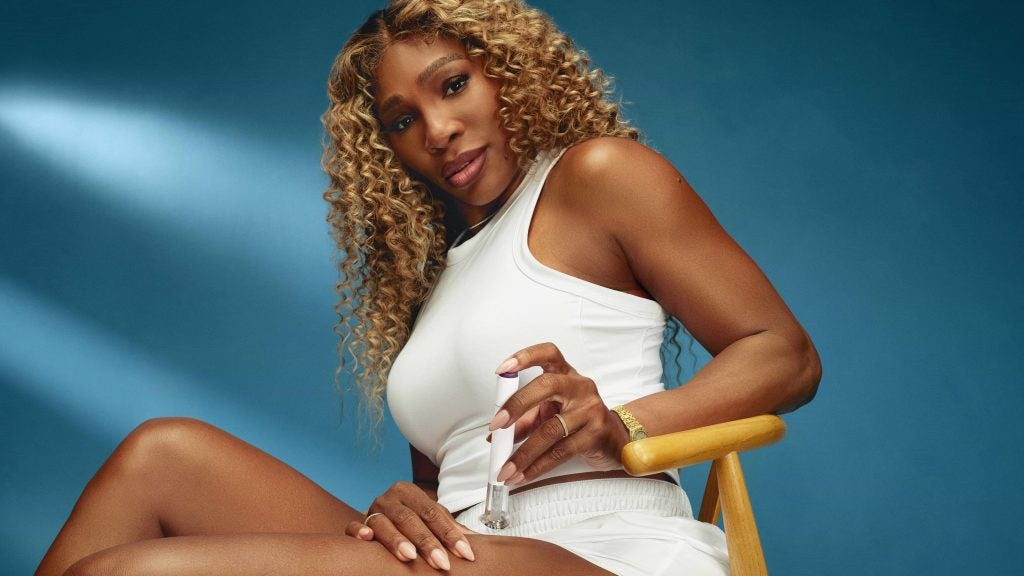
For years, Serena Williams was the defining face of women’s tennis. Now, her ongoing alliance with a telehealth company may be signifying a broader shift in US healthcare advertising, reflecting a changing of the guard in celebrity endorsements.
The 23-time Grand Slam champion is approaching the one-year anniversary of her partnership with Ro, a direct-to-patient healthcare company specialising in weight loss medications. The aim of the collaboration, inked in August 2025, was to “normalise” the use of glucagon-like peptide-1 receptor agonists (GLP-1RAs) for obesity treatment.
“I trained at the highest level, ate a clean diet, pushed myself, and still, after having kids, my body just wouldn’t respond. I realised it wasn’t about willpower; it was biological. My body needed the GLP-1 and clinical support,” said Williams at the time.
Williams joined a long list of celebrities who have teamed up with pharmaceutical and medtech companies in recent years, either to promote a therapeutic product or bring awareness of a medical condition in the US.
“It gives the audience a face that they know, and that makes use of the product more real and personal. Celebrity endorsements have value in their own right, and we’ve seen many examples of that over the years,” says a US-based lawyer familiar with healthcare advertising regulation.
The list of ambassadors – as the industry calls them – spans actors, singers, and sports stars. Lenz Therapeutics recruited actor Sarah Jessica Parker, basketball legend Shaquille O'Neal is working on a campaign with Eli Lilly, and musician Nick Jonas is an ambassador for diabetes device specialist Dexcom.
Jeff Bridges previously worked with AstraZeneca, while actor and singer Mandy Moore was part of a “celebrity mum squad” formed by Sanofi to promote immunisation against respiratory syncytial virus (RSV).
Eleanor Carey, media strategist at AMS, an advertising services company, says celebrity partnerships can be powerful in healthcare, but they succeed for different reasons than they do in traditional consumer marketing.
“Consumer brands often use celebrity endorsements to generate buzz, showcase creativity, and ultimately move products. In healthcare, the stakes are higher, and awareness alone isn't enough. The partnership has to build trust, reduce stigma, or help people better understand a condition or treatment in a way that feels authentic.”
Many of these link-ups are borne from the well-known individual living with a condition. For example, Williams has often spoken candidly about her weight and said that GLP-1RAs have improved her health. Bridges nearly died from Covid-19 after contracting the virus while his immune system was severely weakened by chemotherapy for lymphoma treatment. His campaign with AstraZeneca focused on educating the immunocompromised community about the power of antibodies.
In 2022, Bridges said: “A lot of the world is trying to move forward and put Covid-19 behind them, but people with compromised immune systems can’t do that yet. That’s why this partnership with AstraZeneca and Up The Antibodies is incredibly personal to me.”
Carey emphasises that personal campaigns are often the most powerful.
“The strongest ambassador relationships are grounded in genuine relevance, whether that's a personal connection to the condition, credibility with the intended audience, or the ability to make complex health topics more approachable,” she explains.
“Patients are increasingly discerning, and if a partnership feels purely transactional, it can undermine trust rather than strengthen it. And trust is critical in healthcare.”
Disclosures and an FDA clampdown
As partnerships grow in scope, so does the spotlight on their underpinnings. In the case of Ro’s alliance with Williams, both parties were up front that the tennis star’s husband is an investor in Ro and serves on its board. The lawyer Pharmaceutical Technology spoke to says such disclosures, among others, are important as celebrity partnerships become more common.
“One issue is the extent to which the person is receiving compensation for their appearance. That’s information the audience needs to have to evaluate what they’re seeing and hearing, with that understanding in mind,” they highlight.
While the Federal Trade Commission (FTC) is the primary federal agency in the US that regulates advertising, the FDA has taken a more hands-on approach in the past year. For example, the agency is conducting research into whether audiences react differently to celebrity endorsers of healthcare products when they are aware of financial disclosures.
In September 2025, President Donald Trump tasked health secretary Robert F Kennedy Jr (RFK Jr) with a clamp down on misleading direct-to-consumer (DTC) prescription drug adverts. The push also included increasing the amount of information regarding any risks associated with using the medicine. Much of this was catalysed by the controversial advert aired by telehealth company Hims & Hers during the 2026 Super Bowl final.
At the time, Trump blamed the weakening of FDA requirements over time, which he said has allowed drug companies to include less information, particularly in broadcast advertising. Marty Makary, the former FDA commissioner, admitted that decades of regulatory failure were to blame for misleading pharma ads.
Since Trump’s request, the FDA has sent more than a hundred letters to pharmaceutical companies either warning or demanding a stop to misleading and deceptive ads.
The regulatory lawyer says: “Celebrity partnerships will be scrutinised the same way as any other technique or form of promotion. There has been a significant uptick in the enforcement letters that FDA has been issuing on promotion – they've styled it as a crackdown on DTC promotion, but it's gone a little bit broader than that.
“However, there hasn’t been a specific push on celebrity endorsers. Some of the letters issued did relate to campaigns with celebrities, but this more of a general pick up rather than a targeted initiative to go after a celebrity or influencer.”
Social media’s defining role
The US is the only country besides New Zealand that allows direct advertising of prescription drugs to consumers. In the US, this has created a market worth billions of dollars for commercials via television, radio, and billboards, among others. The boom in popularity of social media has created another avenue for promotion but thrown up issues, too.
In June 2026, the UK’s Medicines and Healthcare products Regulatory Agency (MHRA) issued a warning to businesses in breach of pharmaceutical advertising laws. The agency said it had “seen recent examples” of unlicensed weight loss therapies being advertised, along with prescription medicines being promoted to the public. While the former case is also illegal in the US, the latter’s alerted presence in the UK shows the divergence in advertising laws between the two countries.
Social media has ultimately created a cyber framework in which drug promotion can thrive. For example, it is unclear whether virtual private networks (VPNs) – encrypted connections that can conceal a user's location – may facilitate DTC advertising across borders. According to research, most teenagers and young adults use social media to ascertain health information. This makes apps a likely determinant in the future of medicine advertising.
For example, Khloé Kardashian has been as an ambassador for Biohaven Pharmaceuticals, now under the owned by Pfizer via a $11.6bn deal since 2020. The media personality has promoted Nurtec ODT (rimegepant), a prescription migraine medication, on Instagram. While videos were uploaded with a sponsorship tag, they can still be viewed in the UK. This creates a grey area between legal campaigns and lawfully targeted audiences.
While it remains to be seen whether the FDA will maintain its regulatory enforcement on DTC promotion for prescription drugs and medical devices, technological advancements mean celebrity campaigns are no longer just restricted to billboards or television commercials. Kardashian has 292 million followers on Instagram, which is more than double the average viewership of the Super Bowl, signifying an evolution in how healthcare product information now reaches the public.