

Beyond Antigen Recognition: Why the Fc Region Dictates the Fate of Your Biotherapeutic
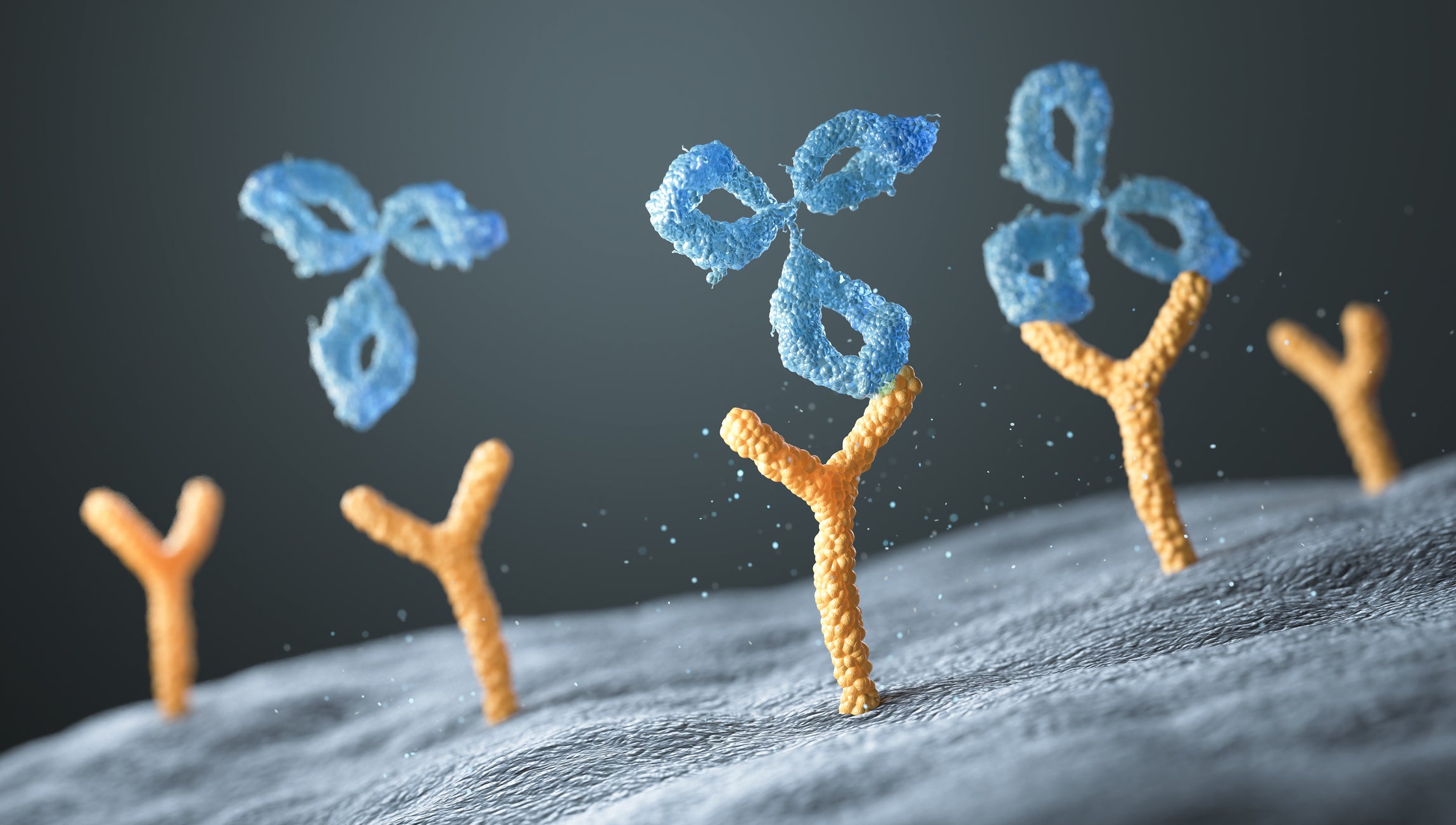
In the rapidly evolving landscape of biotherapeutics, the success of monoclonal antibodies (mAbs) and antibody-drug conjugates (ADCs) hinges on more than just antigen recognition. While the Fab region dictates specificity, the Fc region (Fragment crystallizable) governs the molecule’s clinical fate—influencing everything from half-life to immune-mediated effector functions1.

The Strategic Necessity of FcR Characterization
In antibody drug discovery, characterizing the interaction between an antibody and Fc receptors (FcRs) is not just a regulatory requirement; it is a strategic necessity for optimizing therapeutic efficacy and safety. A primary challenge for researchers is ensuring that recombinant Fc receptors behave in a “native-like” manner and exhibit true functional authenticity2.
To address this, Sino Biological has rigorously validated the binding affinities of our Fc receptors across various IgG subclasses using Surface Plasmon Resonance (SPR)—the industry’s “gold standard” for kinetic analysis3. Our results demonstrate that Sino Biological’s Fc receptors exhibit binding profiles highly consistent with established literature4. This alignment confirms the proteins’ authentic conformational integrity, positioning them as essential tools for reliable antibody evaluation.
Biological Significance and Standard Affinity of FcR Binding
Fc receptors serve as the essential bridge between the adaptive and innate immune systems. When an antibody binds to its target, the Fc region connects target recognition to downstream immune responses through interactions with Fc receptors expressed on innate immune cells. These interactions trigger critical mechanisms, including:
- Antibody-Dependent Cellular Cytotoxicity (ADCC): Mediated by FcγRIIIa.
- Antibody-Dependent Cellular Phagocytosis (ADCP): Mediated by FcγRIIa.
- Serum Half-life Regulation: Via the neonatal Fc receptor (FcRn)5-7.
However, not all Fc receptors share the same function or affinity for IgG subclasses. The human immune system expresses a diverse array of FcRs, including FcγRI (CD64), FcγRII (CD32a/b), and FcγRIII (CD16a/b), each with distinct affinities. Furthermore, genetic polymorphisms—such as the V158/F158 variants of CD16a—can dramatically alter binding kinetics, leading to variations in patient response during clinical trials8.
As a leading manufacturer of recombinant proteins and antibodies, Sino Biological provides a comprehensive collections of human Fc receptors that are “must-have” in antibody binding tests and validations. We have conducted extensive validation of our FcR series—including FcγRI (CD64), FcγRII (CD32a/b), and FcγRIII (CD16a/b)—against human IgG1 and IgG4 subclasses. Our data demonstrates a binding profile that is highly consistent with the values reported, confirming the “native-like” conformation and bioactivity of our proteins.
Table 1. Comparative Binding Data (KD) for IgG1
| Data Source | FcγRI (CD64) | FcγRIIa (R131) | FcγRIIIa (V158) | FcγRIIIb (NA1) | FcγRIIIb (SH) |
| Reported Data | 15.4 nM | 286 nM | 500 nM | 5,000 nM | 5,000 nM |
| Sino Biological | ~10 nM | 300–800 nM | ~300 nM | 3,000–5,000 nM | ~5,000 nM |
Why Choose Sino Biological’s Fc Receptors?
- High Fidelity & Bioactivity: Sino Biological’s Fc receptors are expressed in mammalian systems to ensure proper folding and glycosylation, closely mimicking the true behavior of FcRs in the human body.
- Polymorphic Accuracy: We offer the full range of polymorphic variants (e.g., CD16a 158V/F, CD32a 131H/R), allowing screen for patient-specific variability early in development.
- Lot-to-Lot Consistency: Our rigorous QC on purity by HPLC/MALS and activity by SPR/BLI ensures the consistency of every batch of the products.
- Optimized for SPR: Our Fc receptors are available with His-tag version as well as His-Avi Biotinylating version to facilitate different ways of screening using SPR assay.
In the competitive race to bring new antibodies and ADCs to market, the accuracy of the analytical data is the most important thing along the way of drug development. By providing Fc receptors that are validated to match the reported binding affinities, Sino Biological would offer the clients the functional authenticity required for reliable antibody profiling.
References
- Abdeldaim, D. T., & Schindowski, K. (2023). Fc-engineered therapeutic antibodies: Recent advances and future directions. Pharmaceutics, 15(10), 2402. https://doi.org/10.3390/pharmaceutics15102402
- Crescioli, S., Jatiani, S., & Moise, L. (2025). With great power, comes great responsibility: The importance of broadly measuring Fc-mediated effector function early in the antibody development process. mAbs, 17(1), 2453515. https://doi.org/10.1080/19420862.2025.2453515
- Sino Biological. (n.d.). Internal validation data: Surface plasmon resonance (SPR) analysis of recombinant Fcγ receptors against IgG1 and IgG4 subclasses.
- Bruhns, P., Iannascoli, B., England, P., Mancardi, D. A., Fernandez, N., Jorieux, S., & Daëron, M. (2009). Specificity and affinity of human Fc receptors and their polymorphic variants for human IgG subclasses. Blood, 113(16), 3716–3725. https://doi.org/10.1182/blood-2008-09-179754
- Damelang, T., Brinkhaus, M., van Osch, T. L. J., Schuurman, J., Labrijn, A. F., Rispens, T., & Vidarsson, G. (2024). Impact of structural modifications of IgG antibodies on effector functions. Frontiers in Immunology, 14, 1304365. https://doi.org/10.3389/fimmu.2023.1304365
- Isoda, Y., Yagi, H., Satoh, T., Shibata-Koyama, M., Masuda, K., Satoh, M., et al. (2015). Importance of the side chain at position 296 of antibody Fc in interactions with FcγRIIIa and other Fcγ receptors. PLOS ONE, 10(10), e0140120. https://doi.org/10.1371/journal.pone.0140120
- Ko, S., Jo, M., & Jung, S. T. (2021). Recent achievements and challenges in prolonging the serum half-lives of therapeutic IgG antibodies through Fc engineering. BioDrugs, 35(2), 147–157. https://doi.org/10.1007/s40259-021-00471-0
Lazar, G. A., Dang, W., Karki, S., Vafa, O., Peng, J. S., Hyun, L., et al. (2006). Engineered antibody Fc variants with enhanced effector function. Proceedings of the National Academy of Sciences, 103(11), 4005–4010. https://doi.org/10.1073/pnas.0508123103