

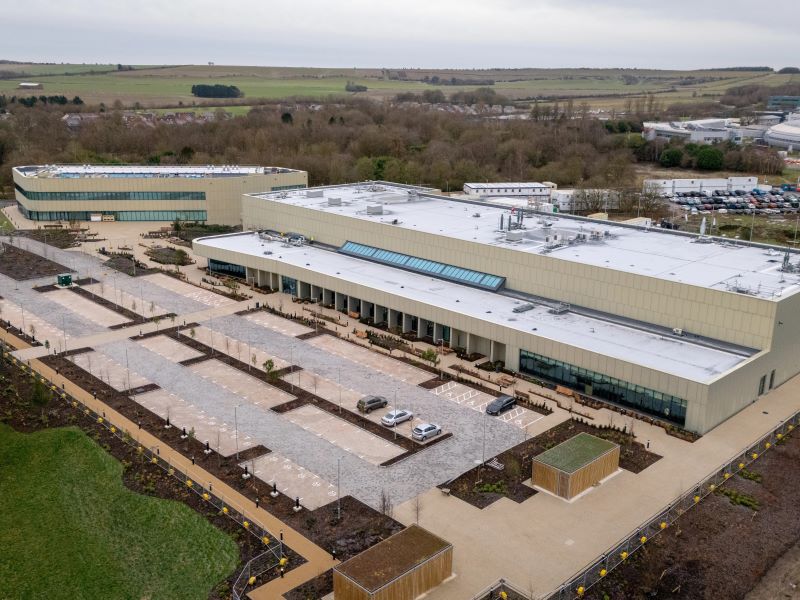

US-based biotech company Moderna established a state-of-the-art mRNA vaccine manufacturing facility, named the Moderna Innovation and Technology Centre (MITC), in Harwell, Oxfordshire, UK.
The facility develops and manufactures mRNA vaccines against Covid-19, seasonal influenza and other respiratory viruses. It enables access to a portfolio of future mRNA vaccines against respiratory viruses, pending regulatory approval and licensing.
Recommended Buyers Guides

The annual production capacity of the new facility is up to 100 million mRNA vaccine doses, which can be expanded up to 250 million vaccine doses in the event of a pandemic.
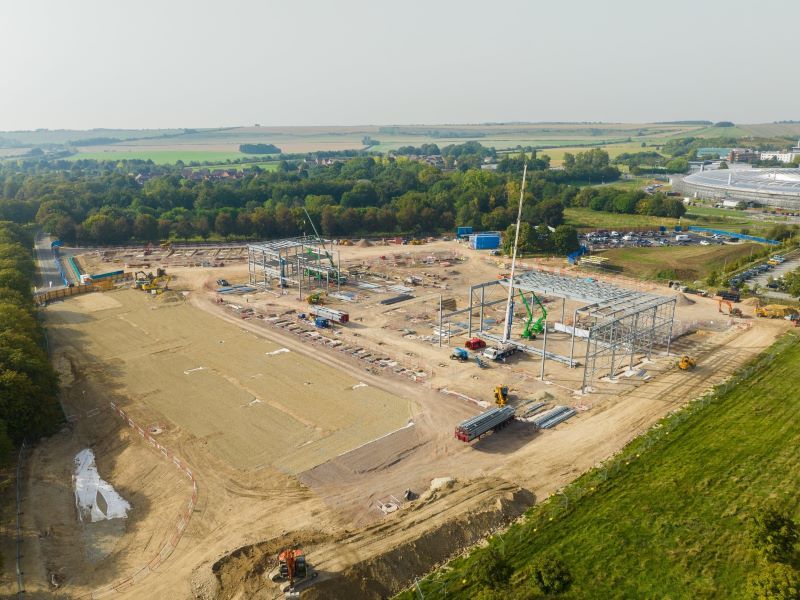
Construction began upon securing planning permission from the Vale of White Horse District Council in April 2023 and was completed in February 2025.
The Medicines and Healthcare products Regulatory Agency granted a Manufacturer’s/Importer’s Authorisation for the facility in April 2025.
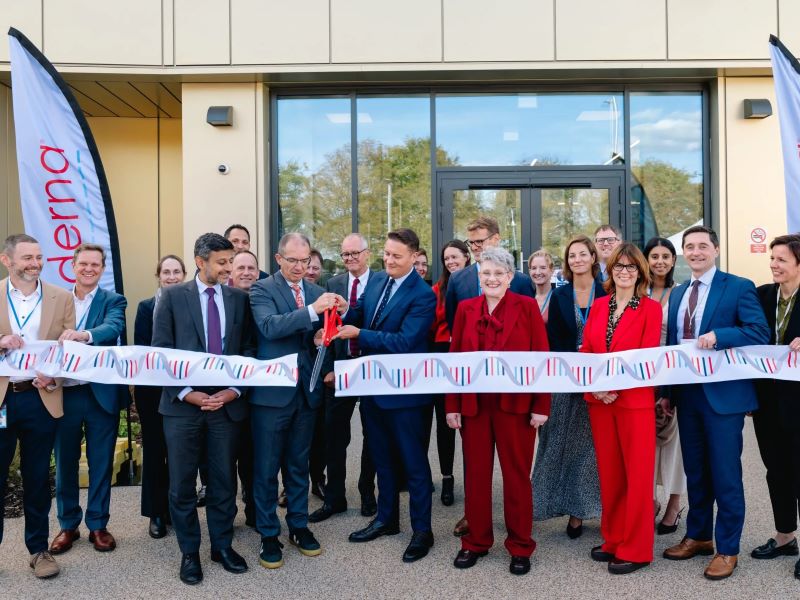
The MITC was officially opened in September 2025 and operates 24/7, employing around 150 people.
Location
The MITC is located at the Harwell Science and Innovation Campus, a science and technology business park in Oxfordshire, England, the UK.
Spanning 700 acres (283 hectares), the campus houses more than 250 organisations.
Development background of the MITC
The MITC was built as part of a £1bn ($13.bn) ten-year strategic partnership between Moderna and the UK Government to invest in research and development (R&D) activities in the country.
The partnership aims to strengthen the UK’s pandemic response capabilities and ensure future preparedness for any emerging health risks. It aims to boost health research in the UK, as the UK Health Security Agency collaborates with Moderna to ensure the early development of vaccines.
The facility aims to provide UK National Health Service patients with constant access to Covid-19 vaccines and other next-generation mRNA vaccines and treatments. It is also intended to be activated on an emergency basis to provide the UK with direct access to its pandemic response capabilities, as part of the UK and G7’s worldwide efforts under the ‘100 Days Mission’ to minimise the effect of future pandemics.
Details of the MITC
The MITC development is spread over 13,326m2 (143,440ft2), encompassing two main buildings: a GMP-compliant drug substance manufacturing facility dedicated to mRNA production and a clinical R&D building incorporating BSL-2 and BSL-3 laboratories. The movement between the buildings is created by a 70mm expansion joint.
The drug substance manufacturing plant is set up as a multi-product facility, allowing operations to be reconfigured to produce vaccines targeting emerging pathogens or variants of concern, pending clinical evaluation and regulatory approval.
The clinical labs, which enable priority pre-clinical and clinical assay work, were built in Northumberland in North East England and relocated to the Harwell campus. The laboratories analyse specimens from Moderna’s clinical studies throughout the UK and Europe, supporting swift review of trial data to determine the efficacy of candidate medicines and vaccines.
The facility also features 1,858m2 of integrated office space with modular labs and a 2.5m ceiling void, managing services routing and acoustic separation. Amenities include meeting rooms, reception areas, collaborative common spaces and open plan zones.
The innovation centre is designed according to LEED Silver certification, Zero Scope 1 carbon, BREEAM Excellent and Energy Performance Certificate standards.
Moderna’s mRNA platform
Moderna’s mRNA platform is based on continuous advancements in fundamental and applied mRNA research, delivery technology and manufacturing, allowing for the development of therapies and vaccines for infectious diseases, immuno-oncology, rare diseases, cardiovascular disorders and autoimmune diseases.
The mRNA technology is one of the fastest routes of developing highly effective vaccines and played a pivotal role in protecting people during the Covid-19 pandemic.
Moderna is developing vaccines for diseases such as Covid-19, flu, respiratory syncytial virus, cytomegalovirus, Epstein-Barr virus, human immunodeficiency virus and Nipah virus.
Contractors involved in the MITC
The MITC was designed by Scott Brownrigg, a UK-based architecture company, while BNP was the engineer and Bidwells, a property and agribusiness consulting company, provided project management.
Glencar Construction, a construction and development company, was the principal contractor for the project and was responsible for the design and construction of the MITC according to the BIM Level 2 standard.
Sisk, a construction and property company, provided interior fit-out for the facility.
The office and amenity spaces within the complex were designed and built by Tétris Design x Build, a JLL company. The JLL Sustainability Consulting team was also involved in the design of the facility.
Merit Industrialised Construction, an off-site construction and manufacturing specialist, delivered a clinical laboratory for the project.
Kingsley Napley, a law firm, advised Harwell Campus on the development, lease and construction of the MITC.
Marketing commentary on Moderna
Based in Massachusetts, US, Moderna focuses on the development and manufacturing of mRNA therapeutics and vaccines, employing around 5,000 people.
The company is currently focusing on infectious diseases, immuno-oncology and rare disorders.
The MITC forms part of the company’s international network of advanced manufacturing centres, working alongside sites in Australia and Canada. Together, these hubs enhance pandemic preparedness by broadening regional reach, reducing delivery lead times, and enabling rapid, efficient distribution of vaccines and treatments to areas of demand.
