


The revised EU GMP Annex 1 has ushered in a new phase for sterile manufacturing. Published in 2022, with most provisions taking effect in August 2023 and full applicability following in August 2024, the guidance has sharpened expectations for contamination control, process understanding and validated sterile manufacturing pathways.
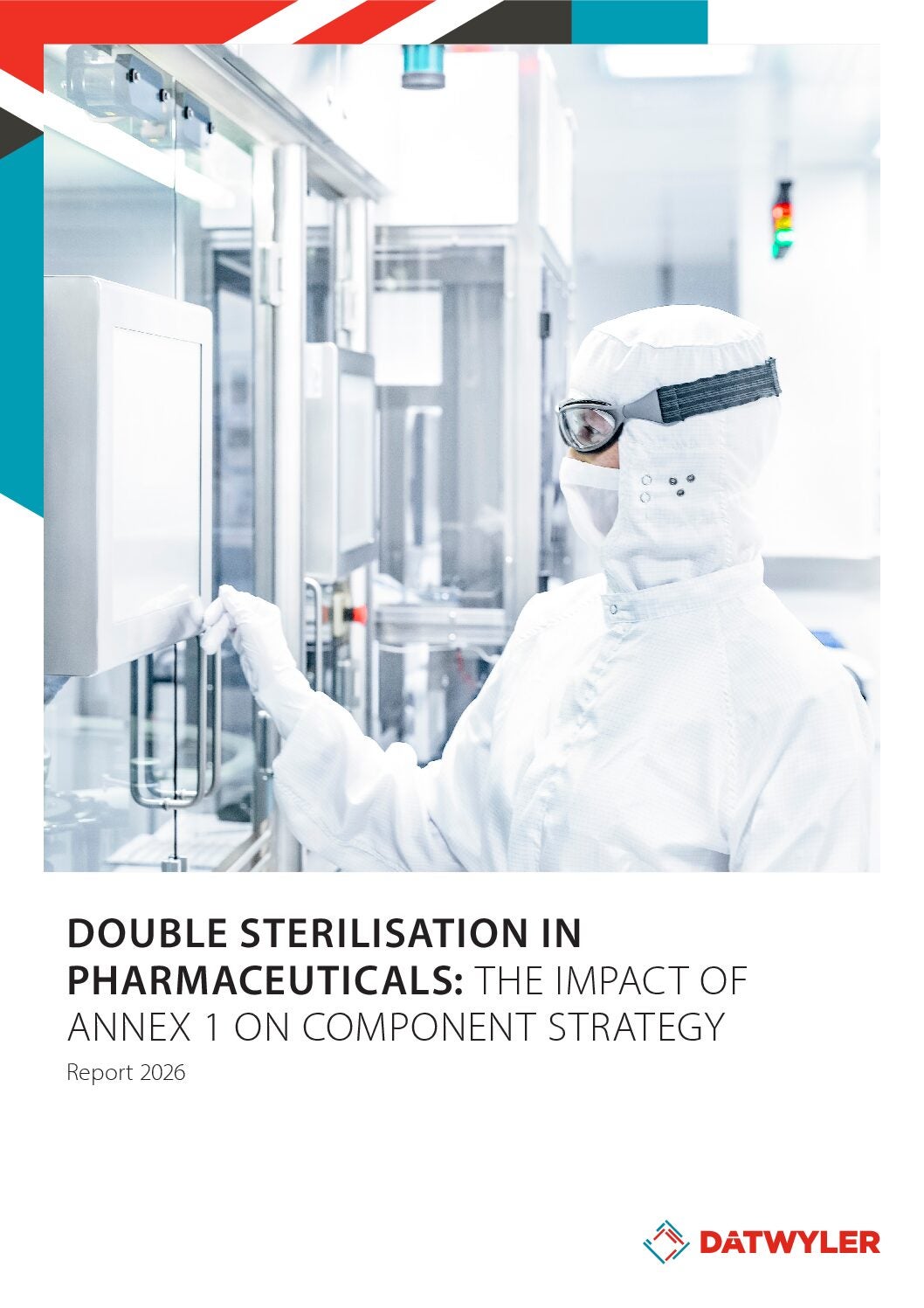
For pharmaceutical manufacturers, this means that sterility assurance must be built into every step, from component sourcing and washing to filling, closing, transport, and final sterilisation. Annex 1 frames the contamination control strategy (CCS) as a facility-wide requirement and lists product containers, closures, vendor approval, and sterilisation process validation as areas to be considered.
This is changing how companies think about primary packaging components. Elastomeric parts such as vial stoppers, syringe plungers and cartridge closures were once viewed largely through the lens of material performance, compatibility and availability. Those factors remain critical, but they now sit within a broader compliance question: can the component support a defensible, validated, and repeatable contamination control strategy?
The benefits of double sterilisation
Instead of choosing between aseptic processing and terminal sterilisation, more manufacturers are combining ready-to-use (RTU) or pre-sterilised components with terminal sterilisation of the filled and assembled product. RTU components reduce the contamination burden upstream, while terminal sterilisation addresses risks introduced during filling and assembly.
The trend is particularly relevant for high-value injectables, biologics and advanced therapies, where contamination risks can carry significant clinical, regulatory and commercial consequences. It also places pressure on manufacturers to evaluate the full sterilisation history of each component. A stopper, plunger, or closure is no longer assessed only at the point of receipt; it must be able to maintain its integrity and functionality throughout the complete manufacturing pathway.
Meanwhile, both steam and gamma sterilisation remain established, trusted methods for pharmaceutical elastomers. Steam sterilisation uses saturated steam, heat, and pressure and is widely understood in pharmaceutical manufacturing. Gamma sterilisation uses ionising radiation, typically from cobalt-60, and can penetrate sealed packaging without heat or moisture exposure. The question is not which method is universally better, but which sequence best supports the product, the component and the final sterilisation step. Dynamic components such as syringe plungers are especially sensitive because delivery performance depends on surface characteristics, glide force and consistent machinability. Repeated irradiation may affect those properties in ways that matter for fill-finish operations and administration. Static components, such as vial stoppers, may be less exposed to these functional risks but still require careful validation.
Each pathway creates its own evidence requirement: steam followed by gamma, gamma followed by gamma, different doses, different elastomer formulations, different coatings and different terminal sterilisation conditions. Suppliers can provide validated data for their own manufacturing and sterilisation processes, but pharmaceutical companies must still assess how components behave within their specific fill-finish and terminal sterilisation environments.
This is where supplier selection becomes central. Datwyler’s FirstLine® manufacturing standard, validated RTU options, and steam and gamma sterilisation capabilities are positioned to help manufacturers evaluate method suitability earlier in the development process. Datwyler has also added a steam sterilisation option for RTU components, including coated and non-coated stoppers and plungers, with packaging designed to provide a two-year shelf life after steam sterilisation.
Annex 1 encourages a Quality by Design mindset, in which packaging, component functionality, container-closure integrity, extractables and leachables, supplier qualification, and sterilisation validation are considered together.
Download the full whitepaper to explore how double sterilisation is influencing component strategy, why steam and gamma decisions are becoming more nuanced, and how early collaboration with packaging partners can help manufacturers build Annex 1-ready sterile manufacturing pathways.
