


Large molecule medicines are transforming treatment paradigms for many chronic and debilitating diseases, targeting previously “undruggable” pathways and marking a shift from symptom management to long-term, curative options. Today, most of the trending drug modalities are large molecules, from bispecific antibodies, monoclonal antibodies, and antibody-drug conjugates to cell and gene therapies and mRNA therapeutics.
According to GlobalData, biologics make up approximately 58% of drugs in the development pipeline, with monoclonal antibodies (mAbs) the leading molecule type. In 2025, mAbs continued to dominate pharmaceutical sales, with Keytruda (pembrolizumab) remaining the top selling drug worldwide, generating $31 billion. Other key mAb blockbusters by sales in 2025 include Skyrizi (risankizumab) and Rinvoq (upadacitinib)(combined $17.6 billion), Dupixent (dupilumab) ($17.8 billion), and Darzalex (daratumumab)($14.35 billion), which are driving high revenue in oncology, inflammatory, and autoimmune diseases such as asthma, eczema, and Chron’s disease.
Yet while biologics like mAbs represent a key pillar of innovation and a major growth driver for the pharmaceutical industry, they introduce significant challenges across manufacturing, storage, distribution, and administration. Biologics are complex medications derived from living cells. Unlike small molecules, they are highly sensitive to environmental factors such as temperature and light. pH and humidity fluctuations, moisture ingress, and contaminants can all wreak havoc with their fragile nature, potentially rendering these delicate drugs unstable and ineffective by the time they get to patients.
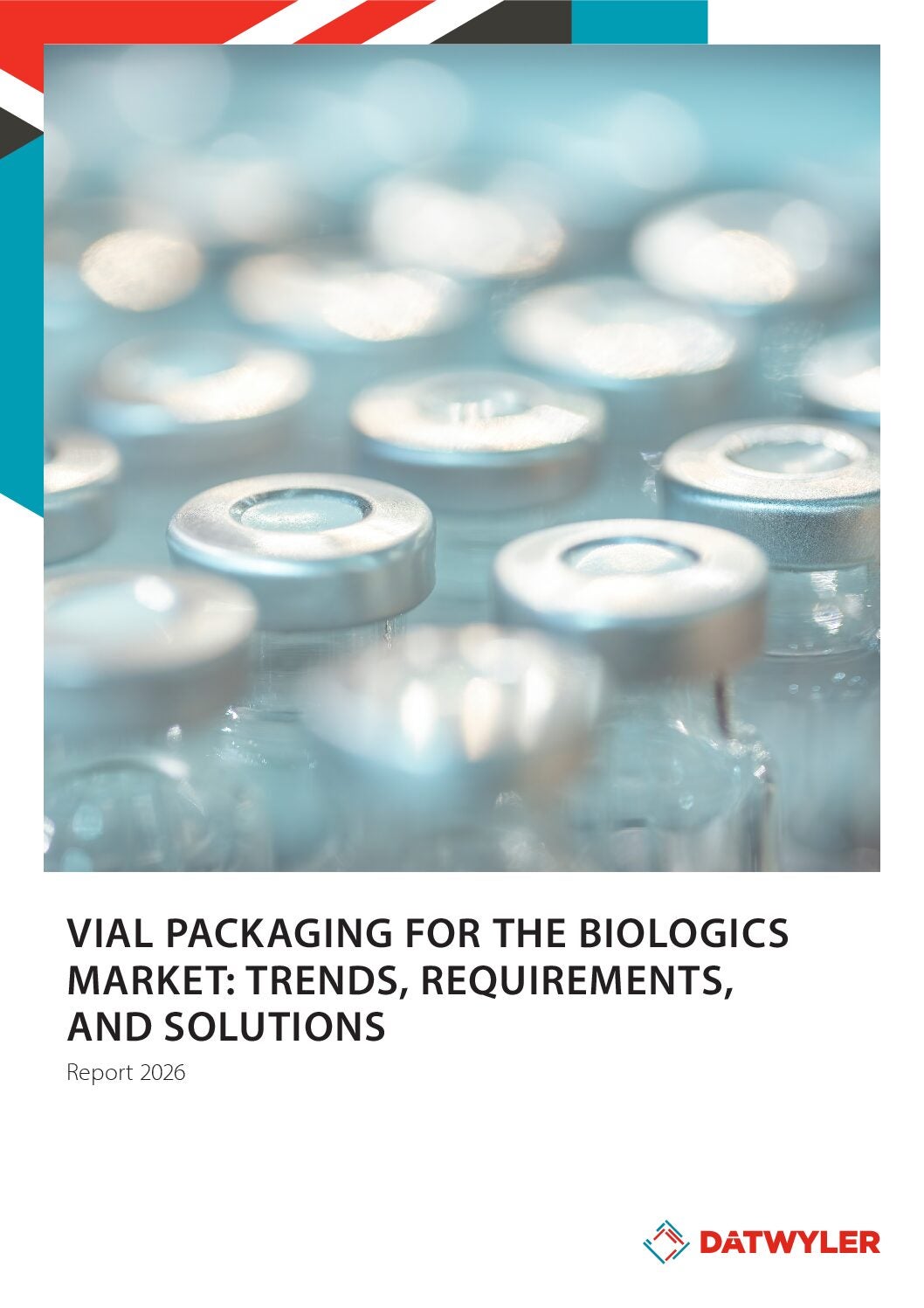
For pharmaceutical manufacturers, the safety and efficacy of large molecules is highly dependent on robust packaging and reliable storage conditions. With the vast majority of biologics administered by injection, packaging options consist of vials, ampoules, intravenous infusion (IV) bags, prefilled syringes and cartridges. While the latter options are seeing growing adoption within lifecycle management strategies, vials remain a dominant packaging format in 2026.
Vial considerations
Vials are suitable across many stages of a biologic’s lifecycle, from initial development all the way to commercial launch and scale-up. They offer compatibility with many different filling lines and with multiple sterilization methods such as steam and gamma. Crucially, vials also enable lyophilization, where water is removed from the biologic drug product under low pressure and freezing temperatures to enhance stability over shelf life.
Since biologics are very prone to instability, vial systems are mostly judged on their ability to keep the drug pure and sterile throughout its shelf life, preventing ingress of microorganisms, gases, and moisture. After the vial is filled with product, elastomer stoppers are used to close the container, and container closure integrity tests are required to evaluate the seal’s reliability.
During the biologic’s clinical use phase, key packaging requirements shift to safe, smooth needle insertion and, in multi-dose cases, natural resealing to keep remaining product safe from leakage, contaminants, and environmental factors. To this end, penetrability and self-sealing ability become essential attributes of the elastomer stopper. Meanwhile, fragmentation risks are important to understand for multi-use stoppers, with thorough testing necessary to determine the likelihood of fragments being released into the drug product upon needle penetration.
Managing the E&L risk
Because biologics are sensitive and structurally complex, they are more likely to interact with extractables and leachables (E&L) such as additives or stabilizers that may migrate from rubber stoppers or plastic vials into the drug. To minimise these risks, pharmaceutical companies require inert, high-purity materials. For elastomer compounds, brominated isobutylene-paramethylstyrene (BIMS) represent the gold standard for ultra-clean formulations, completely eliminating the rubber oligomer extractables that can be found in typical halobutyl rubber formulations.
For an additional layer of protection, many packaging providers offer coated options that create a barrier between the drug product and the elastomer material. Datwyler’s OmniFlex stoppers are covered in a full-surface layer of fluoropolymer to reduce E&L risks and avoid the use of external lubricants such as silicone. This also makes the components easy to handle on filling lines – another key attribute of a well-optimised stopper for biologic packaging.
Download new whitepaper to learn more
Datwyler’s latest whitepaper examines the rise of biologics and the important role of vial systems in greater detail. It covers biologic-specific packaging challenges in general, core requirements for vial systems, and key attributes for rubber stoppers specifically, from essential features for overcoming lyophilisation challenges to functional and regulatory requirements that ensure safe and effective packaging solutions at scale.
