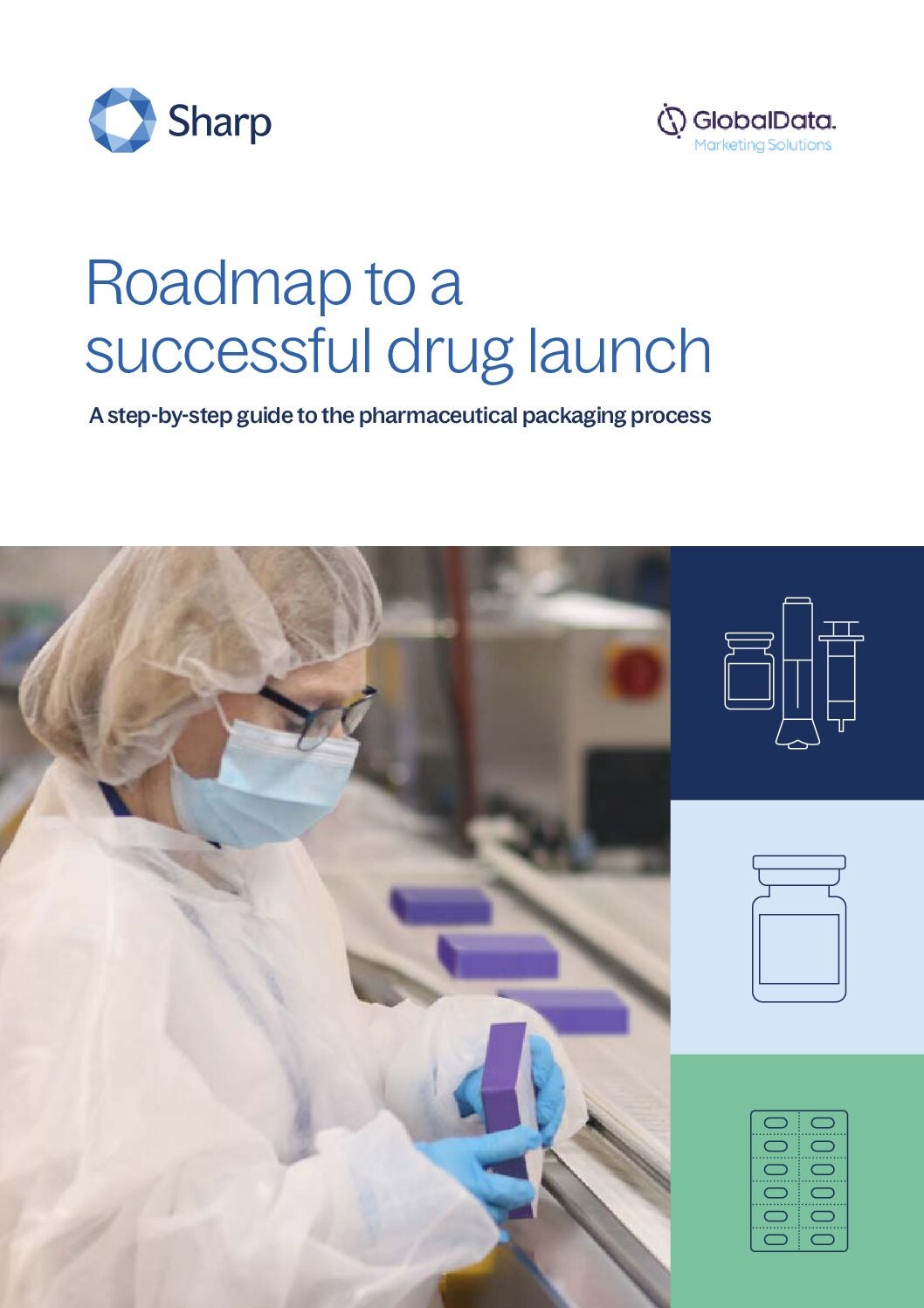

We spoke with Grace Breen, Senior Vice President, Quality at Sharp about the role of quality in a CDMO environment, the leadership strength required to succeed in today’s pharmaceutical industry, and the journey toward a mature Pharmaceutical Quality System (PQS).

Grace leads the quality function across Sharp’s global network. In this role, she drives sustainable cGMP compliance through the promotion of a Quality Management Maturity (QMM) model, in support of Sharp’s purpose: to help make lives better. During her 30-plus years of experience in the biopharma industry, Grace has held global quality leadership roles in the CDMO, brand, and generic pharmaceutical sectors. Her career experiences have given her a deep appreciation for how quality is promoted, built, and governed across the entire supply chain—and how it directly impacts patient safety and business performance.
Q: How should pharma think about ensuring product quality?
Grace Breen (GB): Quality is built upstream and throughout the supply chain, not inspected in at the end. From active ingredient and component suppliers to contract laboratories, finished product manufacturers, contract packagers, and distributors, every actor in the supply chain contributes to the quality of the finished drug product and ultimately the patient outcome.
This principle has shaped my perspective on quality stewardship to be more than compliance and oversight—it is a leadership obligation to design, protect and strengthen quality across the supply chain to safeguard patient outcomes long before final inspection. When quality systems are appropriately designed, when supplier selection and process capability are valued, and when deviations or complaints are considered signals of systemic weakness, organizations recognize that quality is built upstream, not inspected in at the end. Conversely, without a supply chain perspective, weak design and governance at any node become risk everywhere. This reality reframes the supply chain as a single quality system and breaks the illusion that quality “belongs” to one function or one site.
Q: What early experiences have reinforced the need for a holistic view of quality in your career?
GB: Several of my formative experiences highlighted how vulnerabilities upstream in the supply chain can have downstream consequences. In one example, I saw how a tier 2 supplier could adversely impact the quality of a finished product. Inadequate oversight of the tier 2 supplier by the primary supplier led to a product defect that went undetected until customer complaints began to surface. In another example, a seemingly minor change in API particle size, undetected by the drug product manufacturer, adversely impacted the dissolution profile of the drug product, disrupting supply, and limiting patient access to vital medication.
Early experiences like these informed my knowledge of the complex web that creates quality. I learned to look more broadly beyond the immediate failure, to understand where system vulnerabilities may exist and why they matter. In many cases I saw the need for stronger process development and challenge of variables—now better known as ‘Quality by Design’. These learnings were essential as I transitioned into pharma leadership roles where I had to navigate increasing drug and supply chain complexity, heightened regulatory scrutiny, and rising customer expectations.
Q: What role does frontline insight play in building a proactive quality culture?
GB: Another formative lesson in my quality journey was to trust my intuition. As I gained experience in manufacturing and laboratory environments, I began to cultivate an ability to recognize patterns. This often led me to detect early and subtle cues that were not yet visible in the data, sometimes triggering an early intervention to mitigate an issue before it escalated. Examples included recognizing a cultural tendency to shortcut before deviation trends emerged or questioning an aseptic process simulation exercise that met formal criteria but appeared intervention-heavy in practice (passing results do not automatically mean sustainable sterility assurance).
Intuition is valuable, however, it must always complement and never replace data‑driven decision‑making. Regulators expect evidence‑based conclusions, for good reason. When data is incomplete, delayed, or overly narrow, intuition can prompt the need for a deeper investigation rather than blindly relying on metrics. In some cases, it supports erring on the side of caution, such as holding a batch when operational conditions do not feel right, even if formal controls appear to be met, while additional analysis is performed to safeguard patient safety.
I learned early on that production operators are often the first to notice subtle anomalies that are not yet measurable. Empowering them to speak up when something “feels wrong” fosters personal ownership and accountability for quality, strengthening compliance, and improving outcomes. Over time, I have found this empowerment to be foundational to fostering a proactive quality culture—one that prevents issues rather than reacting to them.
Q: Why do you now see quality as a driver of business success rather than just compliance?
Another defining moment for me was when I shifted from viewing quality as just compliance to seeing it as a driver of excellence, value, and business success. I came to understand that true quality is about continuous improvement and exceeding expectations, making compliance a baseline for quality, not its ceiling. I found that by simplifying and right‑sizing quality systems, companies spend less time navigating bureaucracy and more time focused on execution, problem‑solving, and customer needs. These efforts improve agility, reduce cycle times, and strengthen customer relationships—evidence that exceeding expectations is not at odds with compliance, but it enables it.
In the past, I saw that quality was often measured by whether a company passed a regulatory inspection or met regulatory commitments on time, i.e. compliance. Such companies often continued to struggle with rework, delays, and recurring deviations—issues that directly impacted supply reliability and customer confidence. These experiences helped me realize that compliance alone did not equal quality. True quality emerged when processes were intentionally designed to enable ‘right the first time’, reducing errors, accelerating release timelines, and improving predictability for the business. Compliance becomes the foundation; operational excellence becomes the differentiator.
Lastly, I learned an enduring lesson about the difference between selecting a supplier who is compliant and selecting one who truly enables quality. In one instance, cost was prioritized once regulatory requirements were met. However, the importance of process capability and system maturity was underestimated. The downstream effects were significant—poor process control, prolonged investigations, unreliable supply, drug shortages, and erosion of customer confidence. While the financial impact was measurable, the reputational and patient‑access consequences were far more lasting. That experience reinforced a principle that has guided my leadership ever since: compliance will get you into the system, quality determines whether the system performs.
Q: How did past experiences inform your leadership style and how you approach quality discussions?
GB: Experiences like these pushed me to fundamentally reframe how I talk about quality. Rather than focusing solely on failure and the cost of such failure, I began emphasizing the value of prevention. I found that when teams fully grasp the hidden cost of failure—lost revenue, inventory destruction, rework‑driven capacity constraints, and the slow erosion of trust—they start to understand the deeper purpose behind quality stewardship. Those realizations consistently led to better conversations, grounded not in blame, but in prevention.
Earlier in my career, I spent time in the field with sales colleagues, visiting hospital pharmacies and seeing the real‑world impact of drug shortages. Understanding the impact on patients with delayed treatment and medication switches and seeing the added caregiver burden, made quality personal in a way data alone never could. These moments shaped how I lead today. They reinforced my conviction that right‑first‑time execution and uninterrupted supply are not just operational goals—they are commitments we make to patients, customers, and each other.
Q: Why do you believe quality leadership is business leadership?
GB: Over time I’ve come to see that when quality is treated as a business and leadership discipline, not just a functional requirement, it does far more than prevent errors. It shapes how work gets done every day—reducing waste, creating space for innovation, and building systems that perform consistently and endure over time. I’ve seen this show up in the trust our customers place in us, the pride employees take in their work, and the confidence that what we deliver is genuinely better for patients and the environment.
While quality may not directly generate revenue, its value to the business is undeniable. It protects revenue streams, enables speed‑to‑market, reduces risk, safeguards a company’s license to operate, and preserves trust with both customers and regulators. Through these experiences, I’ve learned that leading quality is inseparable from leading the business itself—requiring strategic thinking, a focus on sustainable performance, and a responsibility to help shape our organization’s future.
Thank you for reading Part 1 of this Q&A. Stay tuned for Part 2, which covers the five phases involved in a pharma company or CDMO’s evolution to a mature Pharmaceutical Quality System (PQS) framework.