
Aseptic manufacturing plays a crucial role in the pharmaceutical supply chain, ensuring sterility for complex injectable biologics. In recent years, however, production capacity has been stretched thin by a global pandemic and a rapidly shifting biopharma landscape.
During COVID-19, vaccine manufacturing soared as other production lines slowed down[i]. While the industry recovered from the backlogs, strong growth for biologics meant that sterile manufacturing demand has continued to rise. According to a GlobalData report titled Looking Ahead to 2025 – the Future of Pharma, the biologics market is now expected to expand at a compound annual growth rate of 10.4% over the next four years, generating $881 billion sales by 2030 and outpacing small molecules by a significant margin.
A quick glance at the biopharma pipeline suggests this growth is unlikely to slow down. According to GlobalData’s Clinical Trials database, the number of new Phase 0-III clinical trials for biologics has grown 78% over the last decade compared to a 50% increase for small molecules.
These market conditions are creating a pressing need for infrastructure investments around the world. With many companies outsourcing sterile fill-finish to specialised partners, the CDMO industry is readying itself for the incoming wave. In the US, Sharp recently announced a project to double its aseptic fill-finish capacity in Lee, Massachusetts[ii], while in Europe, CordenPharma is installing two new isolator filling lines in Caponago, Italy[iii] – just two examples of CDMOs preparing their business for the increased demand.
The GLP-1 impact
While most of the biologics boom is driven by the oncology market, the diabetes and obesity landscape is also playing a part. In recent years, global shortages for GLP-1 receptor agonists have highlighted the industry’s struggle whereby supply and demand are precariously balanced.
With GLP-1 sales forecast to hit $168bn across 68 markets by 2033[iv], major players have been ramping up production to keep pace, investing in brownfield expansions and new greenfield sites. Novo Nordisk, for example, is currently building a large-scale facility on its existing Clayton campus in North Carolina, adding 1.4 million square feet of production space for aseptic manufacturing[v]. At the same time, the company is expanding its Montes Claros production site in Brazil, which will cater to multiple product formats, including GLP-1s.[vi]
A changing global picture
While demand for injectables continues to grow, it is not the sole driver behind the industry’s recent sterile manufacturing investments. There is also an increasing focus on domestic manufacturing and supply chain efficiency, alongside the 2025 announcements of US tariffs on pharmaceutical products.[vii]
The tariffs had been anticipated for months, meaning reshoring or US expansion projects are already gaining momentum. Amongst numerous potential examples, MSD is currently constructing a ‘biologics centre of excellence’ in Wilmington, Delaware[viii], while GSK announced a $30bn US expansion plan in September, including construction of a new ‘biologics flex factory’ in Upper Merion, Pennsylvania.[ix]
The end of 2025 also saw the BIOSECURE Act get signed into US law. First announced in 2023, the law is now shaking up the CDMO landscape, with several US companies preparing to end long-standing partnerships with Chinese CDMOs and diversify their supply chains[x]. As companies strike up new partnerships, Indian and other global CDMOs could stand to gain from increased activity, potentially signalling further infrastructure expansions for this region in the coming years.
Biopharma’s growing pains
Unfortunately, it is neither quick nor simple to scale sterile manufacturing infrastructure, which requires specialised clean room environments with advanced systems to maintain pressure differentials, environmental conditions, and particulate levels. Careful consideration of layouts and workflows is essential for preventing contamination, and staff must be trained extensively on aseptic techniques to reduce the risk of human error compromising sterility.
Given the complexity, building a new line typically takes two to three years but can extend to five or more for more complex projects[xi], with talent shortages and long lead times for specialised equipment often causing delays.
The principal challenge is ensuring regulatory compliance, since sterile and aseptically sterile manufacturers must comply with a rigorous set of global regulations focused on preventing contamination. This leads to lengthy validation and qualification timelines as companies prove to regulators that their facilities meet the complex requirements. Part of this process involves establishing a robust contamination control program.
Contamination control essentials for new sterile environments
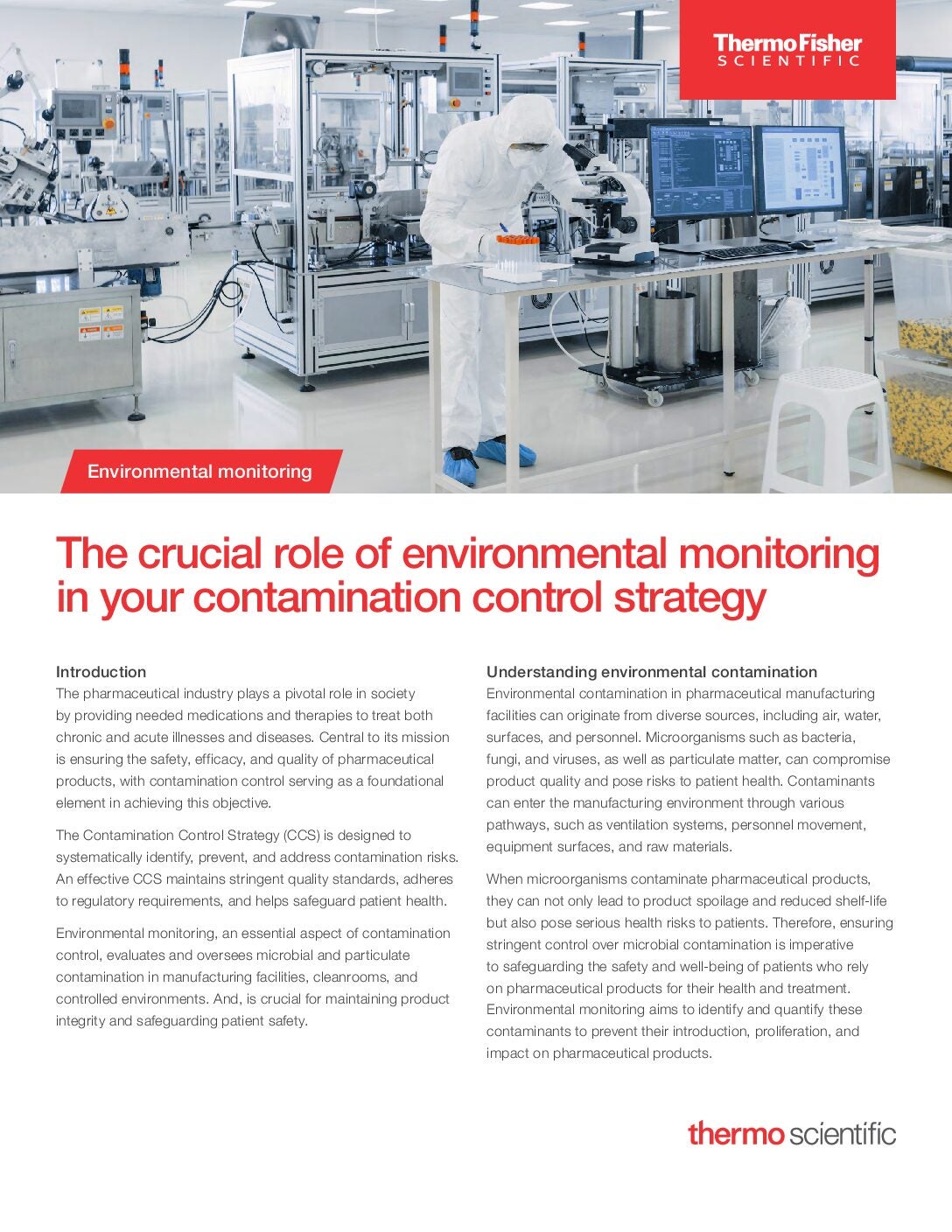
Environmental monitoring (EM) is an ongoing and important part of any contamination control strategy. EM involves routinely measuring air, surfaces, and personnel for particles and microorganisms (such as bacteria and fungi) which could compromise product safety. Programs typically include air sampling, surface sampling, and personnel sampling such as finger dabs and PPE testing, alongside defined limits which would trigger further investigation. An effective EM program provides assurance that outlined contamination control measures are working effectively and helps to protect patients by ensuring products are manufactured in a clean and controlled environment.
When setting up a new line, aseptic process simulations, or media fills, provide a vital source of quality assurance. Media fills also occur during ongoing production and involve running the production line with a pre-sterilised, growth-promoting media which is then inspected for microbial growth. Parameters are designed based on a number of factors specific to the type of pharmaceutical product being manufactured and other considerations across the production facilities, including personnel access on the production line.
Crucial for batch release, sterility testing can serve as final proof of the entire line’s effectiveness at preventing contamination. The testing involves adding the filtered pharmaceutical product to sterilised growth-promoting culture media, which is then incubated and inspected for microbes. To ensure valid results, the media must first be evaluated for its ability to support growth of relevant microorganisms (through Growth Promotion Testing, or GPT), while the sterility testing method itself is also validated using QC (Quality Control) organisms.
In 2026, pharmaceutical companies and CDMOs are scaling sterile operations strategically in order to secure supplies, control costs, and react to an evolving geopolitical environment. At the same time, they must navigate challenging regulatory expectations that demand consistent quality, guaranteed sterility, and close monitoring.
To learn more about the role of environmental monitoring (EM) within a contamination control strategy, as well as key considerations when building an EM program, download the whitepaper below.
[i] https://pmc.ncbi.nlm.nih.gov/articles/PMC7958046/ [ii] https://www.sharpservices.com/about-us/news/sharp-sterile-manufacturing-increases-capacity-with-28-million-investment/ [iii] https://cordenpharma.com/articles/sterile-injectable-drug-product-expansions-development-clinical-commerical/ [iv] GlobalData, Glucagon-Like Peptide-1 Receptor (GLP-1R) Agonists in Type 2 Diabetes and Obesity: 68-Market Analysis and Sales Forecast. May 2024 [v] https://www.pharmaceutical-technology.com/projects/novo-nordisk-aseptic-and-finished-product-manufacturing-facility-clayton-usa/ [vi] https://www.novonordisk.com/news-and-media/latest-news/production-expansion-montes-claros-brazil.html [vii] https://www.aljazeera.com/news/2025/9/26/trumps-latest-100-percent-tariff-on-pharmaceuticals-what-we-know [viii] https://www.merck.com/news/merck-breaks-ground-on-new-1-billion-biologics-center-of-excellence-in-wilmington-delaware/ [ix] https://www.gsk.com/en-gb/media/press-releases/gsk-to-invest-30-billion-in-rd-and-manufacturing-in-the-united-states-over-next-5-years/ [x] https://www.pharmavoice.com/news/biopharma-china-biosecure-act-wuxi/727018/ [xi] https://phrma.org/blog/setting-up-a-pharmaceutical-manufacturing-supply-chain-is-a-complex-and-lengthy-process