

Granulation processes are used regularly in pharmaceutical development to transform the properties of powder blends, often in order to create an optimised feed for subsequent processing. When preparing tablets, the granulation process generally consists of seven steps:
- Weighing and mixing the formulation ingredients (apart from the lubricant)
- Preparing the damp mass to be granulated
- Screening the dampened powder to prepare pellets or wet granules
- Drying the moist granules in an oven
- Sizing the granulation by dry screening
- Lubricating the granules on a sieve
- Compressing the granules into tablets
Being able to streamline your operations while keeping them repeatable is essential to the pharmaceutical product development process, from initial research and development (R&D) to scaling-up production. This ensures higher-quality products at the lowest possible costs while minimising the amount of lab space used. In addition, there is no danger of material segregation when moving from one step to the next, as well as less chance of human error in the production or scaling-up process.
Integrated manufacturing methods have been proven to yield positive results. More and more companies in the industry are using modular solutions to manufacture their products, and this is especially relevant for the mixing, granulation, drying and coating of tablets, which often need to be sold in batches of millions in diverse markets worldwide.
Integrated granulation as good manufacturing practice
Since launching its Process Analytical Technology (PAT) initiative in 2003, the US Food and Drug Administration (FDA) has promoted the use of continuous processing as a means of improving the quality of pharmaceutical production. Being able to manufacture constantly with a ceaseless flow of materials fits very well within the concept of quality by design (QbD), which the FDA particularly favours.
Continuous manufacturing takes less time than batch processing and can be scaled more easily. In addition, it removes the need to stop and handle drugs between steps, which can improve quality and consistency. Though there are complexities attached to the process method, the FDA has worked to develop regulatory standards and ensure they match guidelines in the rest of the world in order to make it easier for manufacturers to adopt this methodology.
Choosing the right apparatus for your project
Modular granulation solutions allow you to select standard process modules to meet your exact project needs. These can include fully integrated turnkey installations, fluid bed process equipment, wet and dry milling facilities, product handling systems, units for binder and coating preparation, filtration units, or tablet compression machines.
Mixer granulators, also known as high-shear mixers, are used widely in tablet granulation to mix pharmaceutical ingredients and produce granules before they are compressed. The wet granulation is carried out by impellers in the stainless-steel bowl, which feature four blades of variable lengths, and choppers at the bottom of the dome, which rotate at high speed to ensure easy and uniform granulation.
Integrated solutions for tablet granulation
DIOSNA’s fluid bed processors can perform several processes, such as drying, agglomeration and coating, all in one system, making them ideal for R&D, clinical batch and production scales. The solutions are designed for increased profitability with reduced space requirements, easy handling and to offer several individual options. Likewise, our mixer-granulator solutions allow both mixing and granulating to be done using the same device, offering single machines as well as complete lines for R&D, clinical trial and production scale.

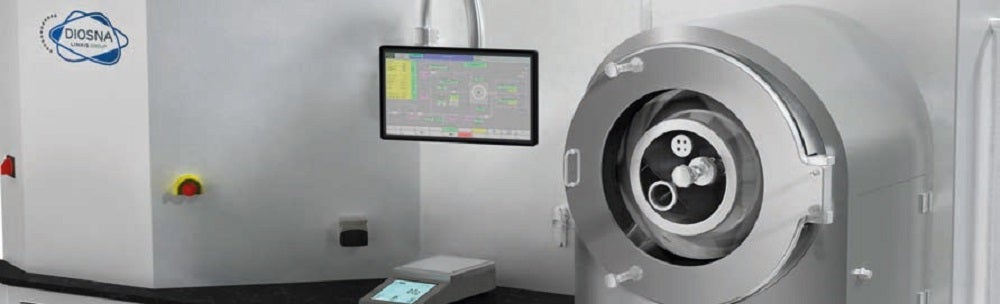
The DIOSNA Minilab RC fluid bed processor includes fluid bed and drum coating modules and allows you to carry out drying, granulation and coating all in one device. Designed to offer all known possibilities of fluid bed technology and tablet coating, the processor’s bowls can be swapped out to accommodate different batch sizes. The system is operated via an integrated fully graphical display and features glass components for good visual monitoring. It can process batches of between 0.2kg and 3.2kg, and can be cleaned easily because of its tool-free disassembly.
Our P 1-6 pharmaceutical mixer offers a range of bowl sizes to allow you to scale up production easily, with no tools required to change the bowl. The mixer can handle both mixing and wet granulation processes. It features a flexible spheroniser to dry or coat tablets after they have been granulated, while its modular design allows components to be retrofitted easily.
The DIOSNA Compact Granulation System (CGS) allows you to carry out mixing, granulating and drying in one compact granulation unit. Its outlet is directly linked to the fluid bed dryer inlet so there are no long transfer chutes, minimising product contact surfaces and increasing yields. Even sticky granules, which can be more difficult to transport using pneumatic conveying methods, can be transferred easily and quickly into the dryer.
Contact us today via the link in the upper-right corner of this article to find out how our integrated solutions can benefit your tablet granulation.

