

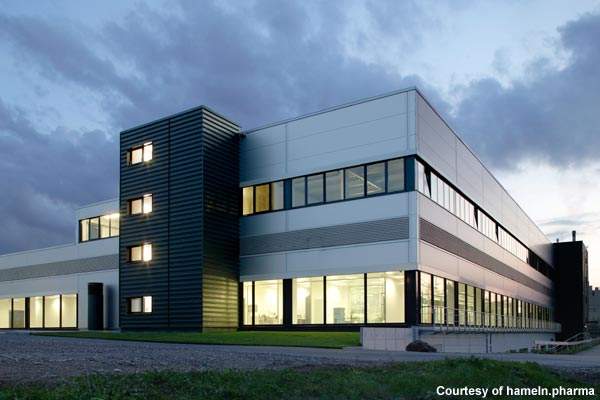
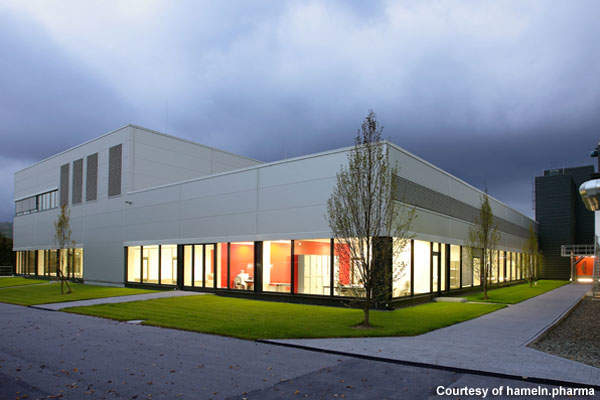
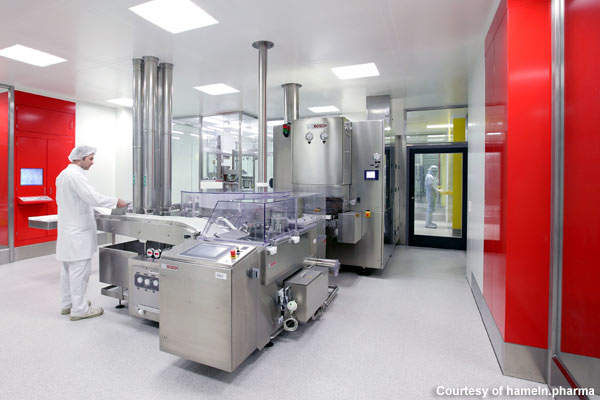
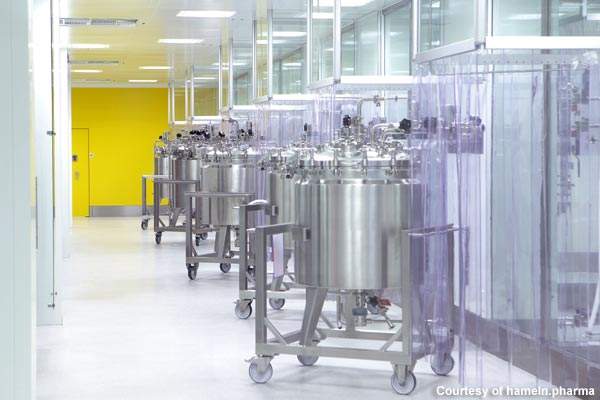
Contract manufacturer hameln pharma’s sterile production facility at Hameln, Germany was built to enhance the production capacities of parenteral drugs, enable expansion possibilities for the company, and ensure compliance with international regulatory standards, especially the EU and US cGMP requirements.
The €39m facility, built on an area of 8,400m², received its GMP certification and manufacturing license in April 2008 – 25 months after the initial planning. The facility began operations in the same month. A new ampoule line was added in 2010.
Recommended Buyers Guides

The Hameln facility processes around 300 products on the bulk products level – aseptic or terminally sterilised. These are mostly used in hospitals and intensive care in more than 70 markets globally. In January 2009, the facility received the Facility of the Year Award in the category of operational excellence.
The Hameln plant has been co-financed by European Fonds for regional development. The general contractors for the plant were Daldrop + Dr.Ing.Huber and Bauunternehmung Hans Lamers.
Design and structure of the hameln facility
The highly innovative facility has been planned and implemented on the basis of lean manufacturing and the layout has been designed to optimise the production process. For instance, the work areas have been arranged logically taking the sequence of the individual production steps into consideration i.e. from the receipt of raw material, weighing and compounding to the filling process and finally shipment of filled vials and ampoules.
Short ways, decreased interim storage and optimised material flow are distinctive of the entire production layout of hameln pharma.
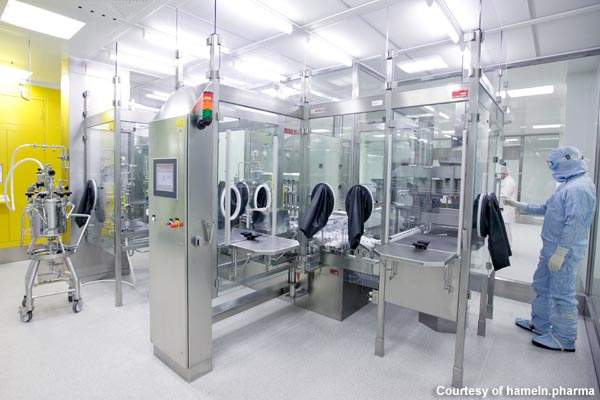
One more characteristic feature of this flexible facility is that the configuration of the new filling systems is no longer linear but U-shaped, as a result of which it can be operated with 33% less staff than the existing sterile plant. Cleaning and sterilisation of equipment and filters is automated to increase efficiency and also process security. State-of-the-art RABS (restricted access barrier system) technology has also been implemented throughout the bottling facilities.
To maximise transparency, glass walls have been used generously (70% of all interior walls). This also helps in audits which are quite frequent in the contract manufacturing sector and in turn improves drug safety.
Construction work at operating level is being supplemented with projects to improve the value stream and boost efficiency. For instance, set-up time optimisation projects help to significantly improve general processing times, as is systematic management using the 5-S method.
The 5-S method warrants safe, clean workplaces and avoids the unnecessary wasting of time searching for equipment and tools. It helps in detecting defects and maintenance needs at an early stage and therefore prevents outages.
High purity
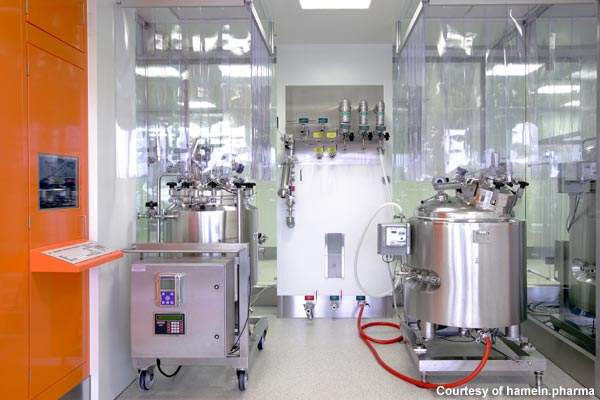
The hameln pharma sterile production plant has an enhanced supply of high purity elements such as. sterile air, ultra-pure steam and water for injections. The plant can produce 5,000l of HPW (highly purified water) within one hour.
About 2.6t of ultra-pure steam is produced from this every hour for sterilising production batch and filtrate containers, the filling lines, autoclaves and all the machine parts in direct contact with the product. More than 3,000l of HPW is processed every hour for water for injections (WfI) via distillation.
Four independent air filtration units are integrated into the new sterile production facility of hameln pharma. They produce a total air output of 180,000 cubic metre / hour to supply sterile air to the 4,000m² large cleanroom.
A directly accessible pharmaceutical cleanroom ceiling monitors and maintains all the air filtration facilities.
Future consideration
Taking future development of the building into consideration, the sterile production facility is designed so it can be easily adapted to future requirements in terms of space and technology. The hameln pharma plant is flexible to the adoption of new technologies and expansions in four dimensions. Further expansions will include the second phase of construction, which is expected to start in 2011.
